



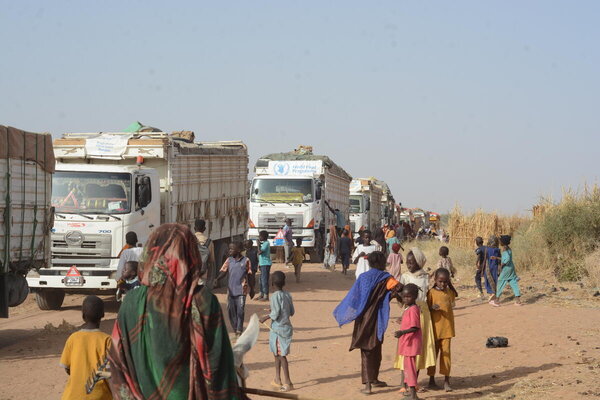
The World Food Programme’s funding for Sudan — the world’s largest hunger crisis — has fallen by about half this year, its acting head told the press, as war drives more people into hunger while the regional crisis raises prices and aid budgets plummet.
Speaking from the Darfur region after a trip across the country, acting Executive Director Carl Skau said that while access had represented humanitarians’ largest obstacle in the past, now “we have a presence that we are not fully utilizing because of the lack of funding.”
The gap to sustain current operations was just short of $300 million, he said. “This year, we’re about half what we were in terms of funding last year.”
Last year, WFP received $645 million, but almost three-quarters into this year, funding is only at $206 million.
The war between Sudan’s army and the paramilitary Rapid Support Forces has devastated wide swaths of the country, displacing up to 14 million people, ruining harvests and decimating the economy.
Almost 20 million people face hunger in Sudan, but budget cuts have forced the WFP to focus efforts on the 5 million most in need, of whom it has recently scaled up to reach 4 million people.
Even then, the organization, the UN’s largest by budget, is forced to make difficult decisions.
In Tawila, North Darfur, the makeshift home to about 1 million people, the WFP is able to reach everyone monthly, but with only a half ration that covers two weeks’ food, Skau said.
“It’s not clear how they really are surviving the other two weeks,” he said.
In El Obeid, the central Sudanese city where about 1 million and counting have sought refuge since the start of the war in April 2023, WFP is only able to provide help to those who arrived in the past several months.
“We are providing, but less and less. A year ago it was better because of resources,” Skau said.
WFP recently began providing aid in the city of al-Fashir, once home to 1 million people, where an RSF attack last year “bore the hallmarks of genocide,” according to investigators. Skau said, “There is little sign of life having returned.”
His organization is not the only one struggling as major donors reduce aid. The International Organization for Migration said on Monday that emergency relief supplies for hundreds of thousands of people displaced by the war could run out within weeks unless donors step in with urgent funding.
The UN agency said supplies of shelter materials, sanitation items and emergency household goods are expected to run out by the end of September. The aid system itself can only keep functioning until December without more money.

 and then