



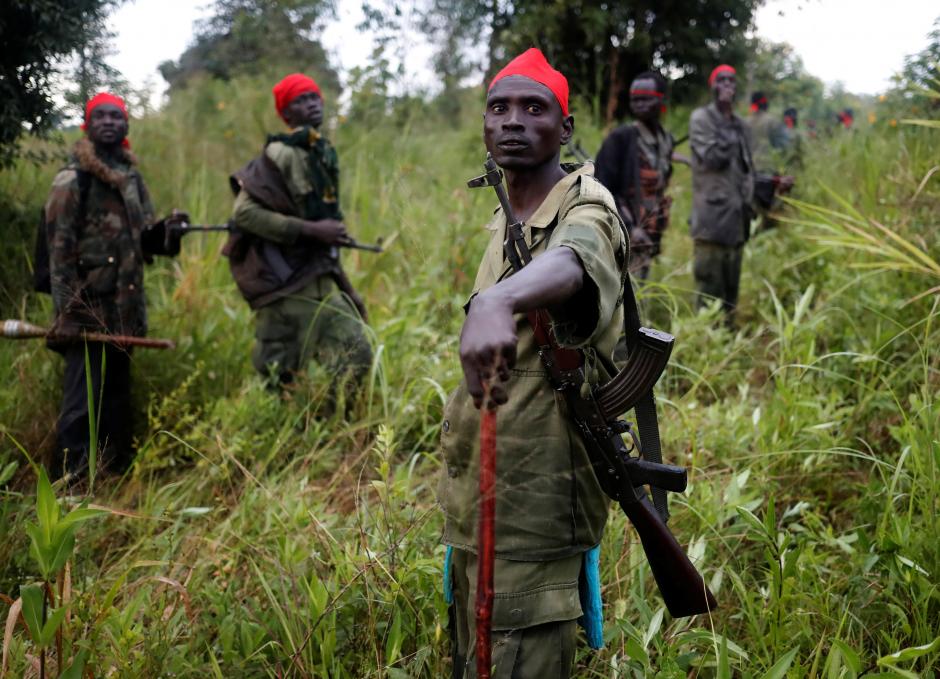
South Sudan’s conflict politics have entered a new phase, not because of unverified claims surrounding the whereabouts of Nathaniel Oyet, but because of publicly reported developments that show a formal convergence between the SPLM/A-IO faction associated with Oyet and the National Salvation Front (NAS).
According to the reported text of the March 2026 memorandum of understanding (MoU), the parties committed themselves to addressing what they describe as the root causes of South Sudan’s conflict through closer political and military coordination. The agreement outlined objectives that included promoting a federal democratic system of governance, pursuing an inclusive transitional government, developing a people-led permanent constitution, coordinating political positions, strengthening military cooperation, and promoting greater unity among opposition forces. It also established a joint mechanism to oversee cooperation and resolve disputes.
These stated objectives are significant because they extend beyond battlefield coordination and touch on broader questions of governance, constitutional reform, and the future political direction of the country. The agreement can reasonably be viewed as carrying implications beyond the internal affairs of opposition movements and into the wider debate about South Sudan’s peace process.
That distinction matters because SPLM/A-IO remains a signatory to the 2018 Revitalized Agreement on the Resolution of the Conflict in the Republic of South Sudan (R-ARCSS), while NAS, led by Thomas Cirillo, remains outside the agreement. The central question is therefore not whether one opposition figure’s circumstances have altered NAS’s trajectory, but whether cooperation between a peace-agreement signatory and a non-signatory armed movement complicates implementation of an already fragile peace framework.
Some of the most consequential documented concerns about the alliance have come from South Sudan’s ceasefire monitoring architecture. On 25 March 2026, CTSAMVM Chairperson Maj. Gen. Teshome Anagawe Ayana stated that the SPLM/A-IO–NAS memorandum of understanding was incompatible with obligations under the R-ARCSS and directly contravened the principle that signatory parties must transition away from conflict-related activities toward peace. He urged SPLM/A-IO to revoke the cooperation agreement and recommit itself to its obligations under the peace accord.
In subsequent remarks, CTSAMVM warned that the alliance risked undermining the Revitalized Peace Agreement at a time when the monitoring body reported that the overall security situation had not improved. CTSAMVM cited repeated violations and continuing armed clashes across several regions, stating that these developments posed a serious threat to implementation of the peace process.
NAS’s status remains central to understanding the implications of the agreement. In World Report 2026: South Sudan, Human Rights Watch stated that NAS, a non-signatory to the peace agreement, “continued its insurgency campaign in Greater Equatoria and formed a military alliance with the SPLA-IO in September.” The report further documented escalating violence involving government forces, aligned militias, and armed opposition groups during 2025 amid a broader deterioration in South Sudan’s political and security environment.
These findings indicate that NAS continues to play a significant role in South Sudan’s conflict dynamics. Its reported insurgency activities, military cooperation with SPLA-IO, and involvement in areas affected by insecurity demonstrate that it remains relevant to ongoing political and security developments.
At the same time, analysts should resist claims that go beyond available evidence. Public reporting supports organizational cooperation between SPLM/A-IO and NAS, but it does not establish that Nathaniel Oyet personally directed NAS operations, determined military strategy, or functioned as the movement’s political shield. Nor does current evidence demonstrate that NAS’s cohesion depends on his personal circumstances.
The risk, therefore, is not a proven organizational collapse but the possibility of further escalation in an already fragile security environment. Human Rights Watch reported that South Sudan’s human rights situation “significantly deteriorated” during 2025 amid escalating political violence and intensified clashes involving government forces, militias, and armed opposition groups, including SPLA-IO. The organization further concluded that these clashes contributed to bringing implementation of the 2018 peace agreement “to a standstill.”
The credibility implications for SPLM/A-IO are particularly significant. As a signatory to R-ARCSS, the movement is expected to advance implementation of the peace agreement and contribute to reducing conflict. CTSAMVM’s criticism raises important questions about whether formal cooperation with a non-signatory armed group is compatible with those obligations. At a time when implementation delays, political mistrust, and recurring violence continue to undermine confidence in the peace process, those questions are difficult to ignore.
The policy opportunity presented at this moment does not depend on assumptions that NAS has weakened. Rather, it arises because the alliance has drawn scrutiny from peace monitors and highlighted unresolved tensions within the peace process. Regional guarantors, monitoring institutions, and South Sudanese leaders should use this moment to reinforce commitment to the R-ARCSS, strengthen civilian protection, encourage restraint by armed actors, and expand opportunities for political engagement with non-signatory groups through dialogue rather than military coordination.
The evidence supports a measured conclusion: cooperation between a peace-agreement signatory and a non-signatory armed movement risks weakening confidence in the ceasefire architecture and complicating implementation of the 2018 peace agreement. Whether that risk develops into a broader crisis will depend less on the existence of the alliance itself and more on whether South Sudan’s leaders, opposition movements, and regional partners recommit themselves to implementation, civilian protection, and accountable political dialogue.
The writer is a member of the Sudan People’s Liberation Movement (SPLM) Party and resides in Omaha, Nebraska, USA. He writes on governance, peacebuilding, conflict resolution, and political affairs in South Sudan. His commentary advocates for peaceful political engagement, effective implementation of the Revitalized Agreement on the Resolution of the Conflict in the Republic of South Sudan (R-ARCSS), protection of civilians, democratic governance, accountable leadership, and institutional reform as foundations for lasting peace and stability. He can be reached at manyielpaulino@gmail.com.
The views expressed in ‘opinion’ articles published by Radio Tamazuj are solely those of the writer. The veracity of any claims made is the responsibility of the author, not Radio Tamazuj.
References
Ceasefire and Transitional Security Arrangements Monitoring and Verification Mechanism (CTSAMVM). (2026, March 25). Chairperson’s Opening Statement at the CTSAMVM Technical Committee Meeting.
Human Rights Watch. (2026). World Report 2026: South Sudan. Human Rights Watch.
CTSAMVM Calls on SPLM/A-IO to Revoke Agreement with NAS. (2026, March 26). Eye Radio.
CTSAMVM: SPLM/A-IO–NAS Alliance Violates Peace Deal. (2026, March 31). Radio Tamazuj.
Memorandum of Understanding Between SPLM/A-IO and NAS. (2026, March 6).
Two Key South Sudan Opposition Groups Sign Cooperation Deal. (2026, March 6). Radio Tamazuj.

 and then