



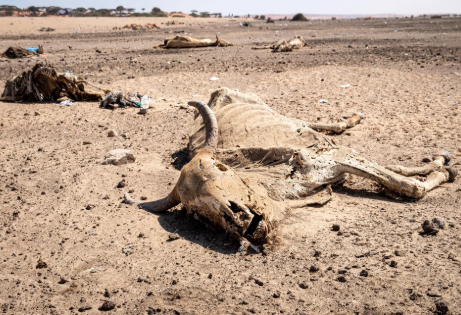
Residents of Ain Siro in Kutum locality in Sudan’s North Darfur State are facing deteriorating humanitarian conditions amid a severe drought, acute water shortages and the deaths of large numbers of livestock, threatening livelihoods in the area.
Abdelkarim Musa, a resident of Ain Siro, described the situation as a “humanitarian catastrophe” driven by water shortages and a lack of rainfall. He said the drought had damaged crops and resulted in the deaths of large numbers of livestock.
He said a single well had become the area’s main source of water and was facing heavy congestion as over 1,000 residents from six neighboring areas flocked to it daily.
“The situation reflects mounting pressure on the area’s limited water resources, as residents and displaced people increasingly rely on scarce supplies to meet their basic needs,” Musa said.
Another resident, Musa Abakar, confirmed that the population was suffering severely from water shortages caused by poor rainfall.
He said the drought began unusually early this year, with the dry season starting in June instead of September, as is typically the case. He warned that the early onset could herald a major crisis as water resources continue to dry up.
Meanwhile, the Ain Siro Emergency Room said in a report issued on 7 September that the area was experiencing difficult humanitarian conditions due to drought and insufficient rainfall.
“The crisis has affected farms and led to shortages of water and animal fodder, as well as a decline in livestock and the deaths of some animals,” the report said.
The emergency room appealed to humanitarian organizations, donors, and individuals to intervene urgently to provide drinking water, food, animal fodder, and health and veterinary services. It also called for the maintenance and rehabilitation of wells and water tanks to prevent the crisis from worsening and protect the livelihoods of residents and displaced people.
The water crisis has raised concerns that the humanitarian impact of the drought could spread further, particularly as pressure on water resources intensifies and food and fodder supplies decline, posing a direct threat to agriculture, livestock and livelihoods.
The North Darfur Emergency Rooms Coordination Council also reported that more than 420 livestock had died in the Jebel Issa area of Kutum locality in North Darfur.

 and then