



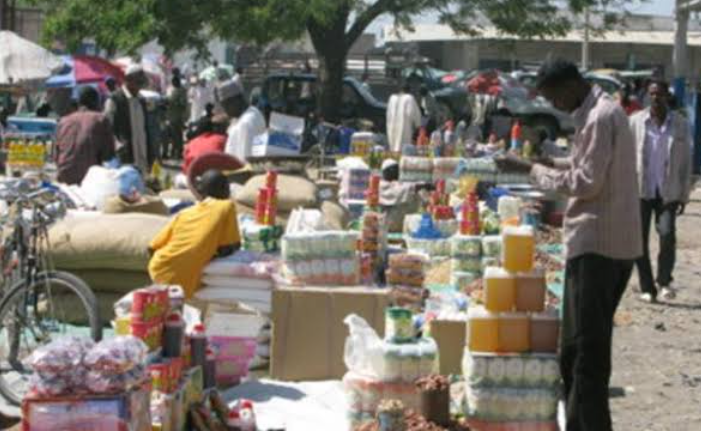
The continued rise of the US dollar against the South Sudanese pound is placing increasing pressure on households and businesses in Upper Nile State, with residents saying the soaring exchange rate has driven up the cost of basic commodities and made daily life increasingly difficult.
In recent days, the exchange rate has continued to climb across South Sudan. In Malakal, traders say the value of 100 US dollars has exceeded 680,000 South Sudanese pounds in the parallel market, with fears that the rate could rise even further if current economic conditions persist.
Economists and traders attribute the depreciation of the local currency to a combination of factors, including limited foreign currency reserves held by the Bank of South Sudan, continued reliance on the parallel market, and a shortage of dollars in circulation.
Market observers also point to the movement of foreign currency outside the formal banking system, where dollars are often kept or transferred through informal channels rather than commercial banks or licensed exchange bureaus. The resulting shortage has increased demand for the US dollar, further weakening the South Sudanese pound.
The rising exchange rate has had a direct impact on the prices of imported goods, reducing the purchasing power of ordinary citizens and increasing the cost of living.
During an Interview conducted by Radio Tamazuj in Malakal this week to assess the effects of the soaring exchange rate, traders, exchange bureau employees, and residents expressed concern over the worsening economic situation and appealed to the government to stabilize the currency.
Haroun Abdullah, an electronics trader in Malakal market, said the rapid appreciation of the US dollar has forced businesses to increase prices, making many goods unaffordable for customers.
“These days, and especially today, we are witnessing a sharp increase in the dollar exchange rate here in Upper Nile State,” he said. “The rising exchange rate has pushed up the prices of consumer goods beyond the purchasing power of many citizens. People are finding it increasingly difficult to buy even necessities. We urge the authorities to intervene and bring the exchange rate under control.”
Residents say the effects extend beyond the marketplace.
Thomas James, a resident of Malakal, said the weakening value of the South Sudanese pound is affecting families across the country.
“The continuous rise in the dollar’s value is negatively affecting the country’s economic situation,” he said. “We are feeling the impact every day through higher prices for food and other essential goods. Many citizens can no longer afford what they need because the dollar continues to gain value against our currency.”
He added that the country’s economic difficulties also undermine the government’s ability to provide essential public services.
Currency exchange operators say the situation has become increasingly unpredictable.
Santino Joseph, an employee at Al-Muhajir Exchange Bureau in Malakal market, told Radio Tamazuj that exchange rates now fluctuate several times within a single week, creating uncertainty for businesses and customers alike.
“We are witnessing constant increases in the dollar exchange rate against the South Sudanese pound,” he said. “Sometimes the rate changes three times in one week. This volatility affects our work and creates uncertainty for everyone. We call on the relevant authorities to take urgent measures to stabilize the market.”
The depreciation of the local currency is also affecting traders who depend on imported goods.
Banga Najm al-Din, a mobile phone dealer in Malakal market, said the rising dollar has significantly increased the cost of importing electronic products, forcing retailers to pass those costs on to consumers.
“As the dollar continues to rise, the prices of imported mobile phones also increase,” he explained. “That has reduced customers’ ability to buy and slowed business.”
Najm al-Din also argued that the concentration of import trade among a limited number of foreign traders and the hoarding of some goods may be contributing to market instability.
“We urge the government to regulate the foreign exchange market, stabilize the dollar exchange rate and protect the value of the South Sudanese pound,” he said.
Other residents echoed similar concerns, saying rising prices have made it increasingly difficult to meet their daily needs.
“As citizens of Upper Nile State, we are directly affected by the rising dollar,” one resident said. “We can no longer afford many essential goods, especially basic consumer items.”
Charles James, another employee at a currency exchange bureau, acknowledged the difficulties facing businesses but urged residents not to panic.
He expressed hope that the government would introduce measures to stabilize exchange rates, while noting that exchange bureaus themselves have also been affected by the constant fluctuations in the value of the dollar across South Sudan.
The experiences shared by traders, exchange bureau operators and residents in Malakal paint a clear picture of an economy under strain. As the US dollar continues to strengthen against the South Sudanese pound, the prices of imported goods continue to rise, squeezing household incomes and increasing the cost of living.
Unless effective monetary and economic measures are introduced to stabilize the exchange rate and restore confidence in the local currency, many residents fear that the financial burden on families and businesses will continue to grow, further deepening the country’s economic challenges.

 and then