



The DAFI scholarship programme has selected 650 new students in South Sudan for 2026, surpassing the total number of beneficiaries supported by the programme in the country over the previous nine years.
The DAFI programme — the Albert Einstein German Academic Refugee Initiative — was established in 1992 and introduced in South Sudan in 2016. Globally, UNHCR says the programme has supported more than 27,000 students.
The new cohort was selected from about 1,400 applications and includes refugees, returnees and, for the first time, students from host communities, according to officials at an onboarding ceremony in Juba on Friday.
“This is the highest number, and it has exceeded the overall numbers from 2016 up to 2025,” said Kenyi Beneth Emmanuel, Education Project Manager at the Lutheran World Federation (LWF), which implements the programme in partnership with UNHCR.
From 2016 to 2025, the programme supported 414 students in South Sudan, while the 2026 intake alone has reached 650 beneficiaries.
The expansion also marks a significant shift in the programme’s reach, with host-community students joining refugees and returnees among the beneficiaries.
Yawusa Daud Kintha, Deputy Director for Protection and Refugee Education at the Commission for Refugee Affairs, said the inclusion of host communities and returnees had been a longstanding request from the government.
He said communities hosting refugees had repeatedly asked why their students were not benefiting from the scholarship, describing the needs of refugees, returnees and host communities as similar.
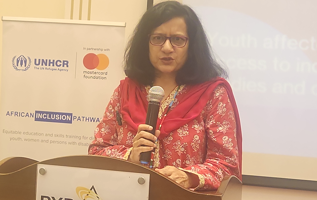
Meanwhile, UNHCR Protection Officer Tabasum Noor Jamal said the 2026 scholarship cycle attracted around 1,400 applications, with about 650 students eventually selected through a competitive process.
She urged the beneficiaries to make the most of the opportunity, saying the scholarship was not simply a financial payment but a partnership that requires students to work hard and complete their studies.
The scholarship provides support including tuition fees, transport, food, medical care and housing, according to UNHCR.
The selected students will study at recognized universities and institutions within South Sudan. Officials said students can pursue courses lasting up to four years, with priority given to fields that can improve their employment prospects, including education, social work and medical-related courses at diploma level.
Noor described education as one of the most lasting forms of protection for refugees, saying the programme is intended to help young people build their futures while contributing to sustainable solutions for displaced communities.
She also said the inclusion of host-community students could help strengthen peaceful coexistence between refugees and their host communities.
Officials said the broader scholarship intake is also intended to help build human capital, producing professionals who could contribute to the reconstruction and development of their communities and countries.

 and then