



UNDP, IFAD and other development partners are supporting farmers and rural enterprises in Western Equatoria State to transition from subsistence farming to commercial agriculture, improving food security, incomes and employment.
The support is being provided under the Rural Enterprise for Agricultural Development (READ) Project, implemented in partnership with the United Nations Development Programme (UNDP), the International Fund for Agricultural Development (IFAD), the Cooperative Bank of South Sudan, Star Trust Organization (STO), and the Western Equatoria State Government.
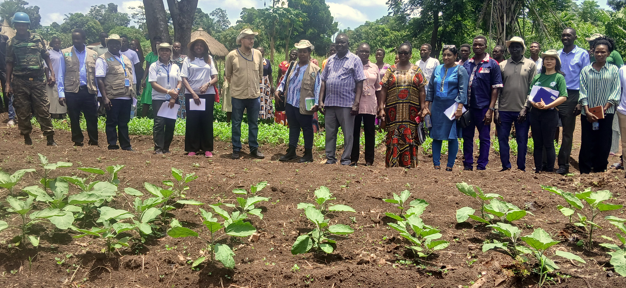
A high-level delegation from Juba recently visited Yambio to assess progress and meet farmers, cooperatives, savings groups and other beneficiaries.
The delegation was led by Sheila Ngatia, UNDP Deputy Resident Representative in South Sudan, and Dr. Caroline Mwongera, IFAD Country Director, Department of Country Operations.
Speaking during the mission, Ngatia said agriculture must be treated as a business rather than only a means of producing food for household consumption.
“We must now look at agriculture beyond subsistence, beyond what is just consumed at family level,” she said.
According to Ngatia, the READ Project is supporting agricultural value chains, commercial farming, employment for women and young people, and stronger rural economies.
She said South Sudan has the potential to produce enough agricultural products for domestic consumption and regional markets.
Dr. Caroline Mwongera said Western Equatoria has significant agricultural potential, but farmers need better access to markets, finance, technology and value addition. She said she was particularly encouraged by pineapple production observed during the field visits.
“It is very exciting to see the potential that is there,” she said. “It is immense potential for agricultural development in the county and in the state.”
Dr. Mwongera said IFAD is supporting rural enterprises, cooperatives, VSLAs and SACCOs through financial literacy, business skills, improved agricultural practices and access to technology and inputs.
Meanwhile, the Cooperative Bank of South Sudan is supporting the financial inclusion component of the project.
“We want our farmers and cooperatives to have access to financial services, and this is a key mandate of the project,” said Stephen Almadi, Head of Institutions and Cooperative Department at the bank. “We want to see people living a dignified life. We want to see people taking their kids to school through agriculture.”
He urged farmers to see agriculture as a business capable of generating income and supporting their families.
For her part, Nagamoro Brigade, Minister for Agriculture in Western Equatoria State, urged farmers to move beyond subsistence farming and embrace commercial agriculture.
“Agriculture should not only remain subsistence farming for home consumption. We need to take a step forward to commercialize,” she urged. “Agriculture should bring money into our families and into our pockets.”
Yona Robert Mark, State Minister for Cooperatives and Rural Development, said the READ Project is important for empowering rural producers, women and young people.
“These are the kind of projects that we need in Western Equatoria because they empower our rural producers, youth and women,” he said.
Stephen Tangun, the co-founder and Executive Director of Star Trust Organization (STO), said his organization is responsible for the capacity-building component of the READ Project. He said STO trains beneficiaries while the Cooperative Bank supports financial inclusion.
Andrew Kumbagami, Secretary General of Food Basket Primary Cooperative Society, said the cooperative has 37 members, including 29 young people, three people living with disabilities and three internally displaced persons.
He said a demonstration plot supported by STO has introduced members to improved farming techniques that can also be applied at household level.
“This is a demonstration plot where STO brought new technology to help us in case you do not have a big plot at your household,” Kumbagami said.
The READ Project partners say the aim is to connect agriculture, savings, finance, skills and markets so rural communities can build sustainable sources of income.
With Western Equatoria’s strong agricultural potential, UNDP, IFAD, the Cooperative Bank, STO and the state government say continued investment in farmers and rural enterprises could increase food production, create jobs and reduce dependence on humanitarian assistance.

 and then