



South Sudan stands at a defining political crossroads. After years of armed conflict, fragile peace arrangements, displacement, institutional paralysis and repeated extensions of transitional governance, the country faces a familiar but increasingly dangerous dilemma: whether to proceed toward national elections before the political, constitutional, security and administrative foundations of credible democracy are in place, or to prolong transitional rule without fundamentally altering the political architecture that has sustained instability. Neither course offers a durable solution.
The country needs a third path—a fixed, inclusive, and reform-driven five-year political settlement designed not to postpone democracy, but to prepare the State for a credible democratic order. Such a settlement would immediately federalize governance, rationalize national institutions, professionalize the security sector, complete the Permanent Constitution, conduct a credible Population and Housing Census, reform public finance, promote reconciliation and economic diversification, and culminate in free, fair and peaceful national elections under a legitimate constitutional framework.
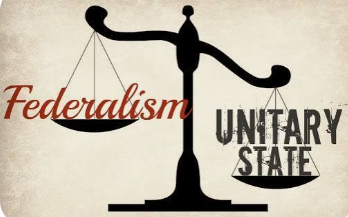
At the heart of this proposal is the conviction that federalism must become an instrument of peace rather than merely an administrative theory. Upon adoption of the settlement, South Sudan should immediately begin operating as a Federal System comprising the Federal Government, State Governments and Local Governments, with each level assigned clearly defined powers, responsibilities and financial resources. The Federal Government would retain authority over foreign affairs, defence, national security, citizenship, immigration, monetary and macroeconomic policy, federal taxation and strategic national infrastructure, while States would exercise substantial authority over administration, health, education, agriculture, livestock, local infrastructure, culture and economic development, with Local Governments serving as the principal interface between citizens and the State. Guided by subsidiarity, government should be exercised as close to the people as efficiency permits. Properly designed, federalism would not weaken national unity; it would reduce the destructive competition for control of the national centre by distributing legitimate political authority across the Republic while preserving sovereignty, territorial integrity and equal citizenship.
The proposed Alternative Transitional Government of the Republic of South Sudan (ATGSS) would provide the political vehicle for this transformation. It would operate for exactly five years, with no ambiguity about its expiry. Its purpose would be to stabilize the country, implement federal governance, reform institutions, transform the security sector, complete the constitutional order, and prepare the country for elections.
The executive would deliberately separate the Head of State from the Head of Government: the President, nominated by the SPLM-IG, would serve as Head of State and symbol of national unity, sovereignty and territorial integrity; one Vice President, nominated by the SPLM-IO, would serve as a principal guarantor of the peace settlement, with responsibilities in reconciliation, political dialogue, constitutional reform and security transformation; and one Prime Minister, selected through an agreed mechanism involving opposition parties and participating political constituencies, would serve as Head of Government and assume responsibility for day-to-day administration.
The principle would be unequivocal: The President heads the State; the Prime Minister runs the Government. Limiting the executive to one Vice President and a clearly defined premiership would prevent overlapping centres of authority while preserving political inclusion.
The national Government should also be lean, professional and financially sustainable, rather than an expanding collection of political offices created to accommodate competing interests. The proposed Federal Cabinet would therefore comprise only fourteen core Ministries: Federal Affairs and Intergovernmental Relations; Finance and National Planning; Foreign Affairs and International Cooperation; Defence and Veterans Affairs; Interior and Public Security; Justice and Constitutional Affairs; Public Service and Institutional Reform; Basic and Higher Education; Health and Social Protection; Agriculture, Livestock and Fisheries; Infrastructure, Transport and Energy; Petroleum, Mining and Natural Resources; Trade, Industry, Labour and Investment; and Environment, Humanitarian Affairs and Disaster Management.
Each Ministry would have one political Minister supported by a professional Permanent Secretary, while overlapping agencies, redundant commissions and politically created structures would be reviewed and eliminated. The objective is not government by exclusion, but government by efficiency: public resources should finance security, education, health, infrastructure, economic recovery and institutional capacity rather than excessive political accommodation.
Political representation would be anchored in a 300-member bicameral Transitional Legislature, comprising a 240-member National Legislative Assembly and a 60-member Council of States. The Assembly would represent citizens and political constituencies, exercise legislative authority, scrutinize public expenditure and hold the Executive accountable. At the same time, the Council of States would give the constituent States a direct institutional voice and protect the federal compact, particularly in matters concerning State powers, fiscal transfers, natural resources, boundaries, decentralization and constitutional amendments affecting federalism.
The Legislature should be an institution of oversight rather than patronage, with members subject to integrity standards, financial disclosure and conflict-of-interest rules. This structure seeks to strike a careful balance between meaningful representation and the financial realities of a country that cannot afford an oversized political establishment.
No political settlement, however sophisticated, can endure while political competition remains backed by competing armed forces. Security-sector transformation must therefore constitute the foundation of the transition. The parties should commit to the progressive unification, professionalization and constitutional regulation of the national security sector through standardized command structures, common professional standards, training, personnel verification, appropriate disarmament, demobilization and reintegration, retirement arrangements and mechanisms for resolving disputes.
All security institutions must remain under civilian constitutional authority and must never be deployed by political parties or individual leaders to secure electoral or political advantage. At the same time, policing should be progressively professionalized and oriented toward protecting citizens, maintaining public order, preventing crime, and respecting human rights, with Federal, State, and Local policing responsibilities clearly defined.
The transition must simultaneously produce the Permanent Constitution that South Sudan has yet to fully consolidate. Constitutional development should not remain an elite negotiation conducted behind closed doors; it must become a genuinely national process involving political parties, civil society, women, youth, traditional authorities, faith-based organizations, professional associations, persons with disabilities, internally displaced persons, refugees, returnees, pastoral and nomadic communities and other constituencies.
The Permanent Constitution should entrench federalism, separation of powers, fundamental rights, judicial independence, civilian control of security institutions, fiscal federalism, transparent natural-resource governance, independent electoral institutions and peaceful democratic succession. Complementing this process, the country should undertake a credible Population and Housing Census under professional and internationally acceptable standards, with special measures to include displaced populations, returnees, nomadic communities and people living in remote or insecure areas. Reliable demographic information is indispensable for equitable representation, resource allocation, planning, public-service delivery and credible electoral administration.
Fiscal federalism and economic reform must give substance to political decentralization. States cannot be expected to govern effectively if political responsibilities are devolved while financial resources remain concentrated at the centre. The settlement should therefore establish predictable and transparent intergovernmental transfers based on objective criteria such as population, geography, poverty, revenue capacity, infrastructure needs and service-delivery obligations.
Petroleum and other natural resources must be governed transparently, with revenues properly accounted for, audited and publicly reported, while arrangements recognize the national interest, producing communities and States. At the same time, South Sudan must begin reducing its excessive dependence on oil through investment in agriculture, livestock, fisheries, infrastructure, manufacturing, trade, entrepreneurship and employment.
Public financial management should be strengthened through better budgeting, procurement, taxation, auditing, debt management and revenue administration, while payroll verification should eliminate ghost workers, duplicate appointments and unauthorized positions. Economic diversification should be understood not merely as an economic objective, but as a peace and national-security strategy.
The transition should also confront the social wounds that have accumulated through years of violence. National reconciliation and transitional justice must therefore stand alongside institutional reform, addressing historical grievances, political divisions, communal violence and the broader causes of recurrent conflict. Through an inclusive national process, South Sudan should consider truth-seeking, accountability, reparations, institutional reform and reconciliation mechanisms appropriate to its circumstances and applicable law.
At the same time, civic and political space must be protected: political parties, civil society, journalists and citizens should be able to participate peacefully in public affairs, while State resources, public institutions, security forces and public employees must remain politically neutral. Electoral institutions should be strengthened, electoral and political-party laws reviewed, voter registration made credible and inclusive, campaign financing regulated, media access protected, election observation facilitated and effective mechanisms established for resolving electoral disputes.
The five-year transition should operate according to a clear sequence of measurable milestones rather than an open-ended political timetable. Year One should concentrate on stabilization, the establishment of transitional institutions, immediate federalization, political dialogue, security confidence-building, economic stabilization and the commencement of the constitutional and Census processes.
Year Two should prioritize security-sector transformation, judicial and civil-service reform, public financial management and economic recovery. Year Three should complete the Census, advance the Permanent Constitution and consolidate fiscal federalism. Year Four should operationalize the Constitution and intensify voter registration, electoral-law reform, civic education, political-party preparation and election administration, accompanied by an independent election-readiness assessment. Year Five should be devoted to final electoral preparations, national elections under the Permanent Constitution, certification of results and the peaceful transfer of authority. The transition must therefore have a destination clearly visible from its first day: constitutional democracy through credible elections.
The international community can help create the political space for this settlement, but it must not replace South Sudanese ownership. The African Union, IGAD, United Nations, European Union, United Kingdom, United States and other partners could support mediation, monitoring, constitutional development, security-sector reform, technical assistance, economic recovery and confidence-building, with assistance linked where appropriate to measurable progress in human rights, institutional reform, public financial transparency, civic freedoms and democratic preparation.
In particular, the United States could use its diplomatic influence to encourage President Salva Kiir Mayardit, the Government of South Sudan, opposition parties, civil society and other stakeholders to enter into inclusive negotiations on a comprehensive five-year settlement, while coordinating its approach with African and international partners. The objective should not be to impose a political outcome, but to help create conditions in which South Sudanese actors can negotiate a sustainable one.
Ultimately, South Sudan does not need another transitional arrangement that merely redistributes offices; it needs a political settlement that changes the architecture of power itself. The choice should not be between premature elections and indefinite transition. A third path is possible: a disciplined five-year national transformation in which federalism reduces excessive centralization, a lean government limits political patronage, a clear executive structure establishes accountability, a bicameral Legislature represents both citizens and States, professional security institutions protect the nation, a Permanent Constitution establishes durable rules, fiscal federalism gives decentralization substance, economic diversification strengthens resilience, reconciliation addresses the wounds of conflict and electoral reform prepares the people to choose their government.
The transition should be a bridge, not a destination; a mechanism for institutional renewal, not political perpetuation. Its ultimate measure of success should not be how many offices are distributed among political elites, but whether ordinary South Sudanese become safer, freer, and more confident that their political differences can be resolved through institutions rather than violence. The fundamental question before South Sudan is therefore no longer who controls the State, but how the State should be governed. That is the third path—and it is a path worth negotiating for.
The writer is a South Sudanese political commentator and advocate for institutional reform, federal governance, peacebuilding, and democratic transition. His areas of interest include South Sudan’s political settlement, constitutional development, federalism, public-sector reform, institutional accountability, peacebuilding, and democratic governance. He can be reached via lokonyenaldo@hotmail.com.
The views expressed in ‘opinion’ articles published by Radio Tamazuj are solely those of the writer. The veracity of any claims made is the responsibility of the author, not Radio Tamazuj.

 and then