



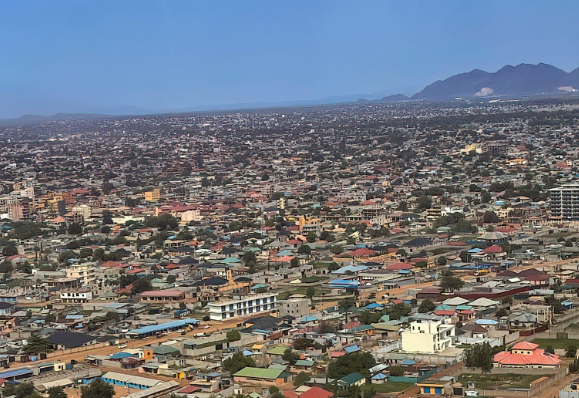
South Sudan’s rapidly growing urban population is putting increasing pressure on land, housing, infrastructure, and public services, according to a new urbanization review launched by the government and the World Bank in Juba on Tuesday.
The South Sudan Urbanization Review, launched under the theme “Cities as Anchors of Recovery and Resilience,” examines urban growth trends in the country and outlines measures to help cities become drivers of economic development and recovery.
Vice President for the Economic Cluster James Wani Igga said urbanization should be embraced as a key pillar of South Sudan’s development despite the challenges associated with rapid population growth in towns and cities.
“Urbanisation is the engine of modern South Sudan,” he said. “It is how we diversify our economy beyond oil, improve access to services, and create opportunities for our people.”
He acknowledged that many urban centres have expanded faster than planning and infrastructure development, leading to pressure on roads, housing, water systems, and other essential services.
Igga called for increased investment in secondary cities, saying Juba alone cannot absorb the country’s growing urban population.
“Juba currently cannot carry the weight of the entire country,” he said, urging authorities to strengthen infrastructure and services in towns such as Yei, Bor, Rumbek, and Nimule.
For his part, Michael Changjiek, Minister of Land, Housing and Urban Development, said the review comes at a critical time as South Sudan experiences rapid urban growth driven by population increase, displacement, climate shocks, and migration in search of economic opportunities.
“Cities can serve as engines of economic growth, innovation, service delivery, and social transformation,” he stated. “However, if not properly planned and managed, rapid urbanisation can place immense pressure on land management, housing, infrastructure, public services and the environment.”
He warned that informal settlements, land disputes, and unregulated urban expansion remain major challenges in many towns and cities across the country.
Meanwhile, Central Equatoria State Governor Emmanuel Adil Anthony said Juba continues to experience unprecedented population growth as people move to the capital seeking security, education, healthcare, and employment opportunities.
He said the rapid expansion of the city has increased demand for land, housing, roads, water, and sanitation services, placing significant pressure on state authorities.
Adil called for stronger cooperation between national and state governments, development partners, and local communities to ensure urban growth is properly planned and managed.
Charles Undeland, the World Bank’s country manager for South Sudan, said urbanisation should be viewed as an opportunity rather than a burden.
“Around the world and across history, no country has achieved sustained growth without having successful cities,” he stated.
He noted that cities create markets, connect producers to consumers, and generate jobs and livelihoods. According to Undeland, South Sudan’s urban centres have the potential to become engines of economic growth, resilience, and employment if supported by sound policies and effective governance.
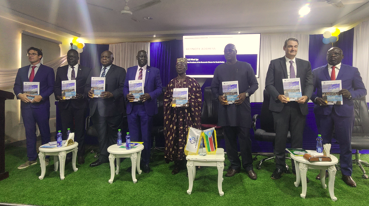
Presenting the report’s technical findings, Alikaya Aligo Samson, Dean of the School of Architecture, Land Management and Regional Planning at the University of Juba, said South Sudan’s urban population is growing at an estimated annual rate of between 4 and 6 percent, among the highest in East Africa.
He said an estimated one-quarter of the country’s population now lives in urban areas, with conflict, climate change, displacement, and economic opportunities driving migration into towns and cities.
Aligo warned that unplanned urbanisation has contributed to rising land and housing costs, inadequate infrastructure, environmental degradation, and growing pressure on public services.
He called for a national urbanisation policy, stronger land governance systems, and evidence-based planning to help cities manage future growth sustainably.
The report recommends increased investment in infrastructure, improved urban planning, stronger local governments, and enhanced land administration systems to help South Sudan harness urbanisation as a driver of economic transformation and recovery.

 and then