



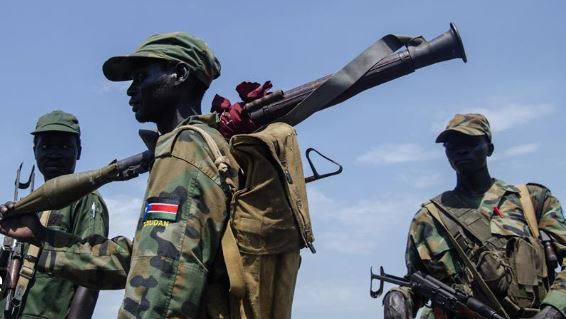
A national lawmaker on Wednesday alleged that some members of the South Sudan People’s Defence Forces (SSPDF) had returned to their home communities with military-issued weapons, fuelling deadly communal violence in Warrap State, as lawmakers moved to summon senior government officials over the worsening insecurity.
Kornelio Mawien Dhor, who represents Warrap State in the Transitional National Legislative Assembly (TNLA), told lawmakers that the security situation across Tonj North, Tonj East and Tonj South counties had reached “an alarming level”, citing persistent communal violence, revenge killings, cattle raiding and what he described as a breakdown in governance and the rule of law.
Dhor alleged that some SSPDF personnel, particularly from Division 11, had returned to their communities carrying military-issued weapons to defend relatives during local disputes, escalating the violence.
“The security situation across the three counties of Greater Tonj has reached an alarming level, reflecting a serious breakdown of governance in the state, public security and the rule of law,” he said.
The SSPDF could not immediately be reached for comment on the allegations.
According to Dhor, the violence has continued despite the declaration of a state of emergency and the deployment of security forces.
He cited several recent incidents to illustrate the deteriorating security situation. On July 24, clashes reportedly broke out in Tonj North County among members of the Lou Paher community in Marial Lou Payam before escalating into fighting with the Apuk Padoc community, leaving at least 24 people dead, according to community leaders cited by the lawmaker.
He also said unidentified armed groups believed to be linked to an ongoing dispute between the Leer and Noi communities attacked Warrap Town on July 9, killing 32 people on both sides.
In Tonj East County, fighting between July 17 and 18 involving the Wun Adel and Chier Toich sections of the Luanyjang community killed seven people and injured 10 others, Dhor said.
He added that Tonj South County had also witnessed deadly clashes involving the Mouk, Yar and Thony communities in and around Tonj Town, although he did not provide casualty figures.
The lawmaker also referred to recurring violence in Alabek Payam, saying more than 108 people were killed and more than 100 others injured between April and December 2025 in communal fighting involving the Lou Ariik community.
Dhor acknowledged previous government efforts to restore peace, including security operations led by Division 11 Commander Maj. Gen. Jemma Rehan and the establishment of a Special Court by the Ministry of Justice and Constitutional Development to prosecute crimes arising from the conflict.
However, he said those initiatives had failed to secure lasting peace.
“The implementation of the Special Court’s decisions generated widespread dissatisfaction due to concerns regarding the court’s mandate, procedures and perceived fairness,” Dhor said.
He further alleged that implementation of the court’s rulings was later suspended and claimed that a 70-year-old man was detained for four months without charge after being found carrying an appeal letter. He also alleged that the man was tortured while in detention at Kuajok National Security Prison.
Dhor said violence resumed after the suspension of the court’s decisions, resulting in the reported deaths of another 22 people, while nine injured people were evacuated by the International Committee of the Red Cross to Juba Military Hospital for treatment.
He urged lawmakers to summon senior constitutional office holders to explain the government’s response to the deteriorating security situation.
“The continued deterioration of security in Warrap State demands urgent parliamentary intervention. The constitutional responsibility to protect lives, property and maintain public order rests with the government,” he said.
Parliamentary Affairs Minister Michael Makuei Lueth backed the proposal, saying lawmakers should hear directly from officials responsible for managing the crisis before reaching conclusions.
“As stated by some of the honourable members, the solution to this problem is not in the security. It is how best we can address the root causes. It is not enough that we disarm them,” Makuei said.
He said resolving the conflict would ultimately depend on local communities.
“The solution is with the sons and daughters of the state,” he said.
Makuei recommended that lawmakers summon the ministers of interior and defence, as well as the governor of Warrap State, to explain the government’s response and measures being taken to restore peace in Greater Tonj.

 and then