



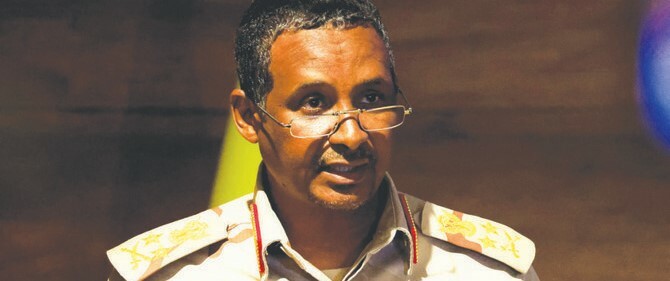
The paramilitary Rapid Support Forces (RSF) have sought to assert an interest in the administration of the disputed Abyei region, including appointing a parallel co-chair of a joint oversight committee, raising concerns about the Sudanese conflict spilling into the area, United Nations Special Envoy for the Horn of Africa Guang Cong told the Security Council on Thursday.
The RSF’s involvement in Abyei affairs, including its appointment of an Abyei Joint Oversight Committee (AJOC) co-chair in August, falls outside the framework of agreements and established mechanisms between Sudan and South Sudan, Cong said.
The development comes amid increased movements by the RSF, South Sudan People’s Defence Forces (SSPDF) and other armed elements within the Abyei Box, threatening efforts to maintain the territory’s demilitarised status, he said.
Cong said the RSF’s parallel appointment was not part of the arrangements agreed upon by the two governments.
“The RSF’s interest in engaging in Abyei affairs and its parallel appointment of an AJOC Co-Chair in August remain outside the framework of the signed agreements and subsequent mechanisms between the two countries,” he told the 15-member council.
This highlight growing concerns about the implications of Sudan’s war, which began in April 2023 between the Sudanese army (SAF) and the RSF, for the fragile security and political arrangements in Abyei.
The AJOC, a key bilateral mechanism for overseeing the disputed territory, has been inactive since 2017. Cong said his office had engaged officials from both countries on reactivating the committee, with both governments expressing willingness to resume its work. However, this had yet to translate into concrete action.
Sudan’s foreign minister pledged support for the AJOC mechanism in October following reports of a reshuffle and the appointment of a new committee co-chair in September, Cong said.
The resumption of a meeting of the Joint Political and Security Mechanism (JPSM) in Juba in August, after a suspension since 2023, marked an important step towards restoring bilateral cooperation. A follow-up meeting scheduled for October 20 was postponed to November 8-10.
Security concerns
Cong warned that the growing presence of armed elements in Abyei threatened efforts by the United Nations Interim Security Force for Abyei (UNISFA), the Abyei Area Special Administration and traditional leaders to preserve the area’s demilitarised status.
The warning followed clashes involving Misseriya, Nuba and Ngok Dinka groups around Amiet market in September, as well as tensions between the Ngok Dinka and Twic Dinka communities.
On October 19, drone attacks on Amiet market caused mass civilian casualties in one of the deadliest incidents in Abyei’s history, Cong said, condemning the strikes and calling for an independent investigation to establish the facts and hold those responsible accountable.
He said the attacks were a consequence of the spillover from Sudan’s conflict and had further worsened Abyei’s already severe humanitarian situation.
More than 50,000 South Sudanese returnees, Sudanese refugees and other asylum seekers have crossed into South Sudan through Abyei, while attacks on civilians, food shortages and funding constraints have compounded humanitarian needs.
Cong urged Sudan and South Sudan to uphold Abyei’s demilitarised status, prevent further attacks and respect international humanitarian law.
Unresolved status
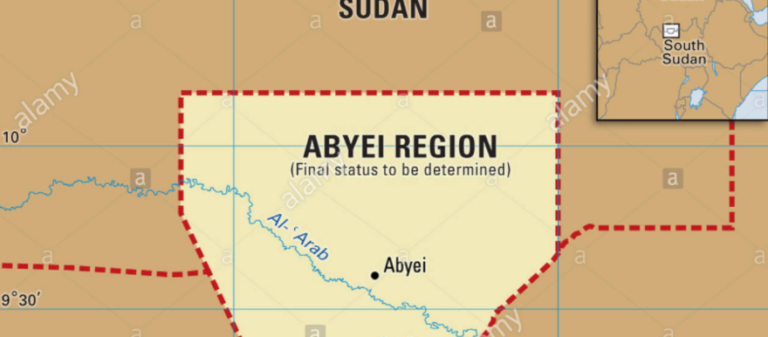
Abyei remains disputed between Sudan and South Sudan, with its final status unresolved since the two countries separated in 2011.
Under the 2005 Comprehensive Peace Agreement, the territory was supposed to hold a referendum to determine whether it would join Sudan or South Sudan. The vote has never taken place because the two governments have failed to agree on key issues, including voter eligibility.
Cong said the resolution of Abyei’s final status remained the most significant outstanding issue between the two countries, hampered by limited political will, domestic security pressures, the stalled referendum and disagreements over joint administration and police arrangements.
He urged both governments to strengthen the work of their respective committees, reactivate the AJOC and facilitate regular meetings of the JPSM to advance negotiations on Abyei’s future.
Cong also called for sustained diplomatic engagement involving the African Union, the Intergovernmental Authority on Development (IGAD) and the United Nations to prevent the disputed territory from being drawn further into Sudan’s conflict.
“The attacks on the Kadugli camp and the Amiet market underscore the increasing nexus between conflict dynamics in Sudan and the resolution of Abyei’s final status,” he told the council.
He warned that continued delays in implementing the 2005 peace agreement and subsequent arrangements could increase the risk of renewed violence in Abyei and the Two Areas of South Kordofan and Blue Nile.

 and then