



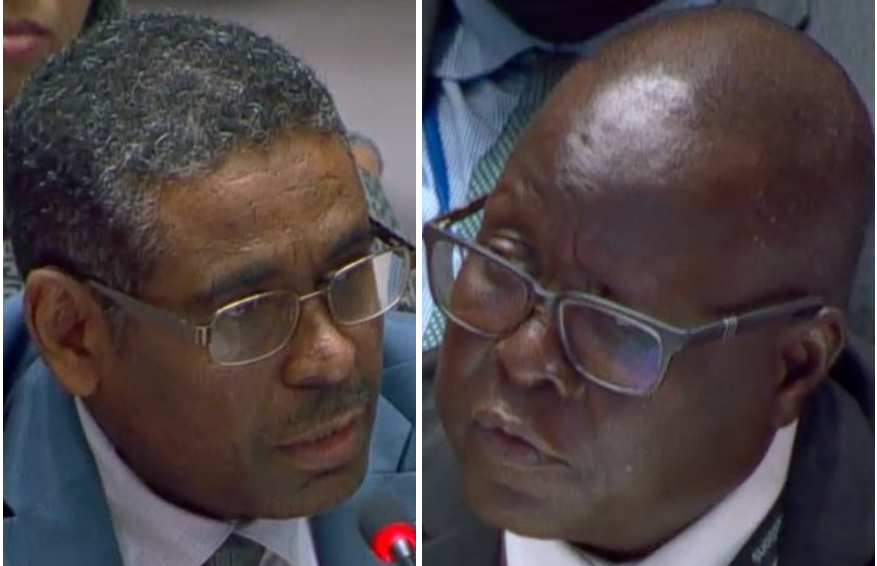
Sudan and South Sudan have clashed diplomatically at the United Nations Security Council over plans by Juba to include the disputed Abyei region in its December 2026 general elections, with Khartoum warning that the move violates agreements between the two countries.
The disagreement has exposed continuing tensions over Abyei’s unresolved political status, with the United Nations warning that South Sudan’s electoral plans could further strain relations between the neighbouring countries as the elections approach.
Speaking at a Security Council meeting in New York on Thursday, Sudan’s representative to the United Nations, Al-Harith Idriss Al-Harith Mohamed, said his government remained committed to advancing the political process on Abyei, which he said had received attention at the highest levels of the Sudanese state.
He expressed concern over South Sudan’s decision to include Abyei in its electoral constituencies, describing the move as a violation of agreements signed between the two countries and an attempt to undermine the territory’s existing legal status.
Sudan formally rejected the decision in a statement issued on July 13, while South Sudan reaffirmed its intention to proceed with the elections four days later.
South Sudan’s representative to the United Nations, Sabino Edward Nyawella Amaikwey, defended his country’s position, saying the electoral question should be considered in the context of Abyei’s unresolved final status.
“Until that status is determined through the agreed process, the rights and interests of the Ngok Dinka, particularly the nine Ngok chiefdoms, cannot be disregarded,” he told the council.
South Sudan plans to hold its first general elections since gaining independence in 2011 in December 2026. However, the inclusion of Abyei in its electoral constituencies has raised questions about holding elections in a territory whose final status remains contested by both countries.
In a report covering developments between April 16 and October 1, UN Secretary-General António Guterres warned that South Sudan’s intention to include Abyei in its electoral districts could significantly increase political tensions.
“The stated intention of the Government of South Sudan to include Abyei in its electoral districts for the December 2026 elections, which the Government of the Sudan considers contrary to signed agreements, is likely to significantly increase political tensions as the elections approach,” Guterres said.
He also warned that the lack of progress on Abyei’s final status and governance arrangements continued to create uncertainty, adding that unilateral actions could undermine efforts to reach a negotiated settlement.
Abyei governance dispute
Abyei has remained disputed since South Sudan gained independence in 2011, with the two countries unable to agree on arrangements for determining its final status.
Under the 2005 Comprehensive Peace Agreement, a referendum was planned to allow residents to decide whether Abyei should become part of Sudan or South Sudan. However, the vote has never taken place because the two governments failed to agree on voter eligibility and other arrangements.
The disagreement over elections has added to longstanding differences over the territory’s administration, security and political future.
Presence of RSF and SSPDF
Sudan’s representative also raised concerns over the continued presence of South Sudan People’s Defence Forces (SSPDF) in the southern sector of Abyei and Rapid Support Forces (RSF) elements in the northern sector.
He welcomed South Sudan’s commitment to withdraw its forces but criticised the RSF’s appointment of its own representative to the Abyei Joint Oversight Committee, saying the move had no legal validity.
He described the appointment as an attempt by an armed group to assume the responsibilities and powers of bilateral institutions established by Sudan and South Sudan.
South Sudan, meanwhile, defended the presence of its forces in areas south of the River Kiir, arguing that their deployment should not automatically be interpreted as an unauthorised military presence in Abyei.
Amaikwey said the distinction between the Abyei Area and locations south of the river was reflected in the 2011 mandate establishing the United Nations Interim Security Force for Abyei (UNISFA).
“We believe that greater geographical precision is necessary in reporting these matters,” he said, adding that the limited presence of SSPDF personnel south of the river had contributed to stabilising the situation and protecting civilians.
He also rejected allegations that his country had violated the Status of Forces Agreement governing UNISFA’s operations.
Security concerns
The council also discussed the security situation in Abyei, including the October 19 drone attack on Amiet Common Market, which killed civilians and destroyed economic infrastructure.
Amaikwey called for an impartial UN-led investigation into the attack, stressing the need to establish responsibility and ensure accountability.
Sudan’s representative said recorded security incidents in Abyei had declined by 32%, but expressed concern over the continued presence of armed forces and the failure to fully implement existing security arrangements.
Jeff Bartos, the U.S. representative to the United Nations for UN Management and Reform, condemned the drone strikes, saying 11 attacks had killed civilians and destroyed critical economic infrastructure.
Bartos described the October attack as the second drone strike in UNISFA’s area of operations in 10 months and said it demonstrated the failure of Sudan and South Sudan to protect the people of Abyei.
He called for a full, transparent and prompt investigation, stressing that attacks against civilians and civilian objects are prohibited under international humanitarian law.
Bartos identified the continued presence of unauthorised armed actors and the failure by Sudan and South Sudan to settle Abyei’s final status and implement security arrangements agreed in 2011 as two major factors contributing to insecurity.
He said 15 years of incremental steps had failed to resolve the territory’s fundamental problems, including its final status, demilitarisation and the establishment of an Abyei Police Service.
He urged the two countries to withdraw unauthorised forces, establish the Abyei Police Service, resume negotiations on the territory’s final status and reactivate joint political and security mechanisms.
Council members broadly supported the continued presence of UNISFA, while expressing frustration over the lack of progress on Abyei’s final status, governance and demilitarisation.

 and then