



It has become increasingly clear that South Sudan’s political climate remains shadowed by the events of December 2013, when an internal power struggle within the ruling Sudan People’s Liberation Movement (SPLM) fractured the country. Over the past decade, regional mediators and external actors have pursued various party-integration initiatives, most notably the 2015 Arusha Reunification Agreement. Yet recent political tensions, highlighted by controversial remarks from Vice President Rebecca Nyandeng de Mabior, also a member of the SPLM Political Bureau, suggest that beneath the veneer of institutional unity, many of the grievances, suspicions and unresolved structural questions of 2013 remain deeply rooted within the party’s leadership.
To understand the volatile reactions to recent political developments, it is necessary to examine the fragmentation that followed the 2013 crisis. While the armed rebellion led by then-First Vice President Riek Machar evolved into the Sudan People’s Liberation Movement-in-Opposition (SPLM-IO), operating as a separate political entity, the internal struggle over the direction of the original party remained a distinct battleground.
That internal contest primarily involved the party establishment under President Salva Kiir Mayardit and the SPLM Former Detainees, a group of senior political figures commonly known as the G-10 who were detained at the outset of the conflict. By avoiding the armed rebellion, the Former Detainees positioned themselves as a political and technocratic alternative, seeking to influence and reform the ruling party without taking up arms against it.
For years, the official narrative from the SPLM has emphasized formal mechanisms of reconciliation aimed at repairing this internal rift. Various diplomatic initiatives, from consultations in Tanzania to declarations in Cairo, sought to reintegrate the Former Detainees into the broader party structure as part of efforts to stabilize the country.
Yet subsequent developments have shown that formal party reunification does not necessarily resolve an underlying struggle for political power. Factional identities have not been systematically dismantled. Instead, they appear to have been temporarily contained by the imperatives of elite survival and transitional governance.
The fragile nature of this political settlement became evident following a public address by Vice President Rebecca Nyandeng de Mabior during a memorial service for the late veteran politician Kosti Manibe. Nyandeng, widow of South Sudan’s founding president, Dr John Garang de Mabior, and a prominent figure historically associated with the Former Detainees, criticized the performance of the current administration.
She questioned the effectiveness of governance, challenged the nature of the advisory structures surrounding President Kiir and lamented what she described as the marginalization of those who fought for the country’s liberation.
Her remarks resonated because they revived some of the grievances associated with the 2013 crisis: frustration over executive centralization, institutional stagnation and the perceived exclusion of historical liberation figures from meaningful decision-making.
The backlash that followed, however, exposed divisions over how internal dissent should be handled. Initially, the Former Detainees’ parliamentary chief whip in the Transitional National Legislative Assembly, Isaiah Hakim Garang, held a press conference in which he rebuked the vice president. He accused her of political incitement and said her remarks did not represent the official position of the integrated bloc.
The condemnation from the parliamentary leadership highlighted the divisions within the Former Detainees’ ranks.
The chief whip’s intervention soon triggered a counter-reaction within the group’s leadership. Senior figures, including Dr Majak D’Agoot, Gier Chuang Aluong and Madut Biar Yel, moved to distance themselves from the chief whip’s statement rather than from the vice president.
In a subsequent statement, the senior leaders rejected the chief whip’s rebuke, effectively affirming Nyandeng’s right to express her views and aligning themselves with aspects of her criticism of the government.
Their response suggests that significant elements of the Former Detainees continue to harbour concerns about the direction of the country and the distribution of political power within the unified SPLM.
The fallout from Nyandeng’s remarks, and the subsequent dispute over the chief whip’s intervention, has therefore reopened a critical debate about internal party democracy and the durability of the SPLM’s reunification.
It has also placed the Former Detainees at a political crossroads. Political analysts and some party elders argue that, for the sake of South Sudan’s future, the Former Detainees should move beyond the lingering divisions of 2013 and commit themselves fully to working within the unified SPLM under President Salva Kiir Mayardit as its chairman.
Unlike the SPLM-IO, which has pursued a separate course as a political rival, the Former Detainees have maintained that their primary objective is to preserve and strengthen the original liberation movement. Continuing to nurture old grievances or perpetuating internal divisions, however, risks weakening the party from within at a time when South Sudan faces significant political, economic and institutional challenges.
A sustainable political future requires the Former Detainees to move beyond superficial or transactional power-sharing arrangements and embrace a more coherent role within the party hierarchy. President Kiir, as chairman of the SPLM, represents the institutional continuity of the liberation movement and, in the author’s view, an important anchor of national stability.
By consolidating behind his leadership, the Former Detainees could move from being an insulated internal faction to becoming a more effective force within a unified party structure. Only through sustained cooperation under Chairman Kiir, this argument goes, can the SPLM finally move beyond the divisions of 2013, strengthen governance in Juba and lay a more stable foundation for South Sudan’s democratic future.
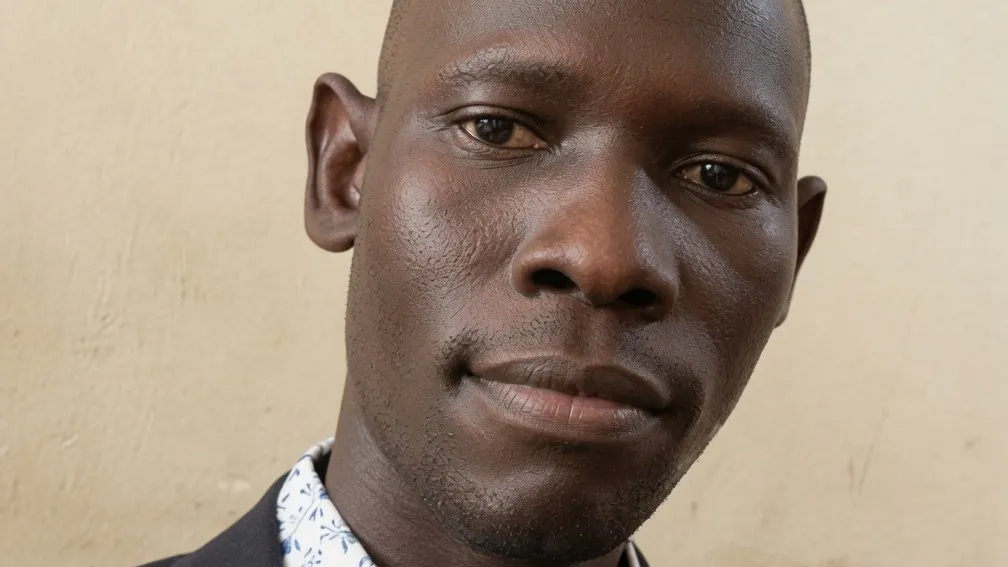
The writer, Amaju Ubur Yalamoi Ayani, is a teacher and political analyst. He can be reached at amajuayani@gmail.com.
The views expressed in ‘opinion’ articles published by Radio Tamazuj are solely those of the writer. The veracity of any claims made is the responsibility of the author, not Radio Tamazuj.

 and then