



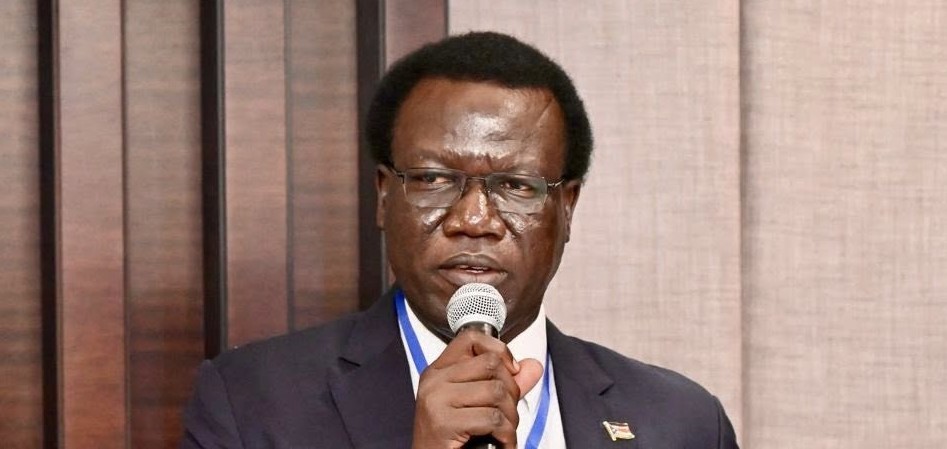
South Sudan’s Finance Minister Kuol Daniel Ayulo on Tuesday tabled a draft budget of 11.34 trillion South Sudanese pounds for the 2026/27 fiscal year before parliament, with oil revenue accounting for nearly 80% of projected income.
The tabling of the draft budget came more than two months after the financial year began in July.
The budget, presented under the theme “Building Resilience and Economic Prosperity for Sustainable Peace”, comes as the country grapples with an economic crisis and prepares for general elections scheduled for Dec. 22.
“The proposed resource envelope for fiscal year 2026/2027 amounts to SSP 11.34 trillion,” Kuol told lawmakers.
He said oil revenue is projected at SSP 9.01 trillion, or about 79.5% of total revenue, while non-oil revenue is expected to contribute SSP 2.32 trillion, or 20.5%.
“The budget shall be financed through domestic revenues comprising oil and non-oil sources,” Kuol said, adding that the government would seek to broaden the tax base through digital tax collection and stronger revenue administration.
Kuol said the budget had been prepared as the government sought to address economic difficulties, support recovery, strengthen state institutions and improve public services.
The proposed spending includes SSP 1.43 trillion for wages and salaries, SSP 1.33 trillion for goods and services and SSP 2.71 trillion for capital expenditure, according to the minister.
The government has allocated SSP 183 billion for the elections scheduled for Dec. 22, 2026, Kuol said.
Transfers and grants were set at SSP 933.4 billion, including transfers to states, administrative areas and counties.
The government also plans to make payments related to oil production, including SSP 1 trillion to Sudan, SSP 156 billion to oil-producing communities and SSP 234 billion to the Ministry of Petroleum, Kuol said.
He said SSP 244.3 billion had been allocated to accountability institutions, including the Audit Chamber, National Bureau of Statistics and Anti-Corruption Commission.
The budget also allocates SSP 513 billion to education, SSP 371.1 billion to health, SSP 1.187 trillion to infrastructure, SSP 406 billion to natural resources and SSP 927.4 billion to public administration.
A further SSP 721.1 billion was allocated to rule of law, while SSP 710.89 billion was earmarked for security and SSP 17.74 billion for social and humanitarian affairs.
The figures presented by the minister include SSP 5.728 trillion under “other payments”.
Kuol said the government would continue efforts to reduce its dependence on oil revenue and improve domestic revenue collection.
After the presentation, Speaker Joseph Ngere Paciko referred the draft budget to parliamentary committees for scrutiny.
The Finance and Planning Committee was tasked with reviewing the budget, while the Financial Bill 2026/27 and Appropriation Bill 2026/27 were referred to the Committee on Legislation and Legal Affairs, with committees expected to report back within 21 days.
“Each committee should scrutinize their respective spending agencies’ budgets and report their findings to their respective clusters within a week,” Paciko said.

 and then