



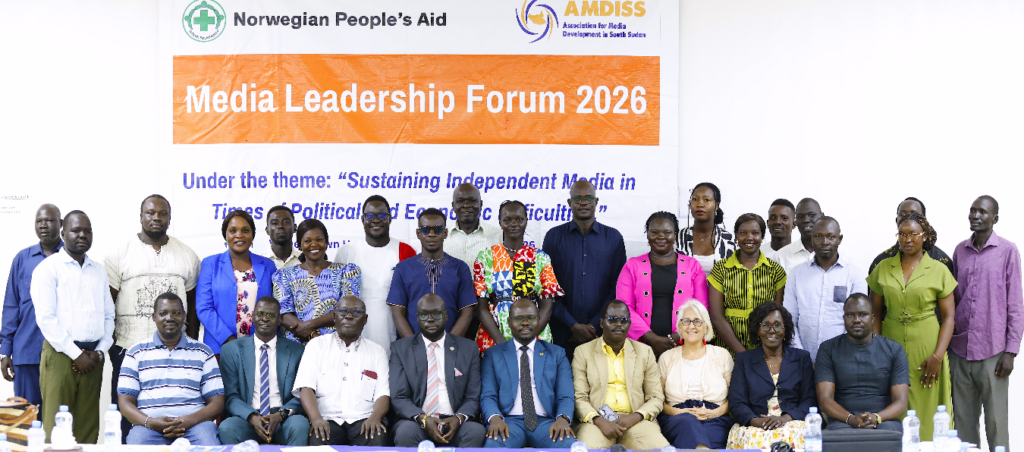
Media houses in South Sudan have warned that high regulatory fees and rising operating costs are threatening their survival and undermining their ability to report independently.
The warning was raised at a media stakeholders’ dialogue in the capital, Juba, organised by the Association for Media Development in South Sudan (AMDISS) with support from Norwegian People’s Aid (NPA).
The meeting on Tuesday brought together media representatives, government officials and regulators to discuss ways to improve the financial sustainability of the country’s struggling media sector.
AMDISS Director Ayaa Irene Lokang said media organisations should be consulted when regulations affecting their operations are developed.
She acknowledged the role of regulatory institutions in protecting and developing the media sector but stressed that consultation with media owners is essential.
Media organisations are legally required to comply with regulations, she said, but should also have a say in shaping the rules they are expected to follow.
During the meeting, AMDISS Board Chairperson Chris Marol presented a position paper calling for a review of high frequency charges and operational licence fees imposed on media houses.
The paper followed discussions among media leaders in April, when participants raised concerns about rising operating expenses, declining advertising revenue and limited opportunities to generate income from media content.
It argues that high regulatory charges are adding to the financial pressures on media organisations already struggling to operate in difficult economic conditions.
The paper calls for greater consultation between regulators and media houses, as well as a review of fees to reflect the sector’s financial realities.
Joyce Maker, NPA’s senior partnership officer for media rights, said the dialogue should help stakeholders better understand their respective responsibilities and identify practical solutions.
She said discussions should not focus solely on the costs of running media organisations but also on how to balance regulatory compliance with the need to sustain the media industry.
South Sudan’s Undersecretary for Information, Arok Dut Arok, acknowledged the challenges facing media outlets, including power shortages, high operating costs, limited advertising revenue and declining donor funding.
He said community radio stations and national media organisations are struggling to keep their operations running.
“A financially fragile press cannot remain genuinely independent,” Arok said.
He encouraged media owners to explore new business models, public-private partnerships and alternative sources of income to reduce their reliance on traditional funding.
The Ministry of Information, he added, would continue working with national partners to examine regulatory fees and possible support for local media organisations.
The dialogue concluded with calls for stronger cooperation between media organisations and regulators to improve the operating environment while ensuring that media houses comply with existing laws.
Participants said a more sustainable media sector is essential to maintaining independent journalism and ensuring that the public continues to receive reliable news and information.
South Sudan’s media sector faces persistent financial challenges, with many outlets relying on limited advertising revenue and external support to sustain their operations.

 and then