



This fact is clear: we are a young nation that has buried too many of its sons and daughters. We have survived wars, famines, and betrayals that would have broken even the older and stronger people.
After the exhaustive liberation struggle, having seen everything, an external observer would think that we had learned from experience that words have consequences, that rumours ignite fires, and that a country still finding its feet cannot afford the luxury of lies dressed as concerns. In actual sense, we have not learned enough.
I say these words as someone who has no brief for defending the government; my criticisms of its conduct are on record, and as a medical doctor, I understand accurately what it means to assess a person’s mental infirmity and physical capacity. My two identities compel me to speak plainly about what has happened this past week in relation to President Salva Kiir Mayardit’s working visit to South Africa.
Rumours were mongered about his health state. Having paid close attention, I discovered that the rumours were false. Sources within the presidential delegation confirm that the president arrived in South Africa in good health, briefed his team, conducted preparatory meetings ahead of his engagement with President Cyril Ramaphosa, and maintained his normal working routine throughout the visit.
There was no medical emergency. There was no amputation or even a limb pathology that would have necessitated a recommendation for any surgical procedure. There was a head of state doing his job. This was a normal routine that cannot be considered newsworthy enough on its own.
As if the rumours were about to subside, then came the People’s Coalition for Civil Action (PCCA), writing from the comfort of the diaspora to tell us that our president needs a compulsory medical examination.
They cited video clips of the president’s speeches at the AU Summit, the GERD inauguration, and EAC meetings as proof of cognitive and physical decline and called on Parliament to invoke Articles 102(d) and 103(6) of the Transitional Constitution.
On this, I want to be fair: the constitution does provide such mechanisms, and presidential fitness is a legitimate national concern. But legitimate concern and political weaponization of a fictional situation are not the same thing, and the PCCA has confused the two, or worse, it has disregarded the difference.
As a medic, I must be blunt. A clinical assessment of mental capacity is never triggered by political opponents watching videos on the internet. That is not medical practice; it is a witch-hunt with a stethoscope borrowed for the occasion. In proper medical practice, an evidence-based cognitive assessment is a thorough clinical process carried out by qualified professionals, relying on direct observation of the patient.
Speech difficulties and visible signs of aging do not, by themselves, justify declaring someone mentally infirm. Decisions based on such criteria are flawed. Even a patient’s immediate family cannot request a capacity assessment without proper clinical indicators and the involvement of certified health professionals. The PCCA’s attempt to “crowdsource a diagnosis” is unacceptable, as no credible medical framework in the world allows for such practices.
The PCCA based its claims regarding the president’s alleged ill health on constitutional grounds. However, this constitutional argument is as flawed as their erroneous diagnosis. Article 103(6) designates this decision solely to the Transitional National Legislative Assembly (TNLA).
It is not a responsibility of any civil society groups or diaspora-based political coalitions, regardless of their statements made from abroad. Consequently, the PCCA lacks constitutional authority in this matter. What they have presented is not a constitutional obligation; rather, it is a form of political pressure disguised in legal terminologies, and the citizens of South Sudan deserve to recognize it for what it truly is.
President Salva Kiir Mayardit has made decisions that many of us disagree with; this is an undeniable reality. However, he is also a man who fought for this country before most of his current critics were born, participating vigorously in two liberation wars for our freedom. He remains a human being deserving of basic dignity and respect. No one should wish him death or ill health as a means to achieve political change. A democratic process is on the horizon, and those aspiring for the presidency should prepare for the upcoming elections in December.
Opposing a regime should not involve dehumanizing its leader. If this is the standard we adopt for political discourse in South Sudan, we risk failing to build a better nation and instead prepare for the next conflict.
The president is in excellent health. He does not need public examination. What we urgently need to examine is our political culture, not his well-being.
Till then, yours truly, Mr. Teetotaler!
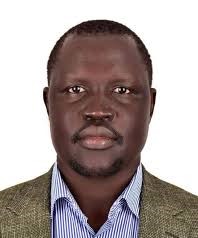
The writer, Dr. Sunday de John, holds an MBA and a Bachelor of Medicine and Bachelor of Surgery (MBChB) from the University of Nairobi, Faculty of Business and Management Sciences and Faculty of Medicine, respectively. He is the current Chairman of the South Sudan United Front-Progressive and can be reached via drsundayalong4@gmail.com
The views expressed in ‘opinion’ articles published by Radio Tamazuj are solely those of the writer. The veracity of any claims made is the responsibility of the author, not Radio Tamazuj.

 and then