



South Sudan heavily relies on imported petroleum for transport and industry; power generation has become one of the clearest signs of the country’s economic vulnerability. When the exchange rate plummeted in the black market from US $1 to 8,100 SSP last week, commuters and transport owners, businesses, and households in Juba and major towns felt the pressure instantly. A Weaker South Sudanese Pound against the United States dollar means higher prices for transport, water, food, healthcare, education, and other basic services.
Fuel prices and transport costs have emerged as one of the most serious challenges facing businesses and households in Juba and other major cities. 1 liter of petrol or diesel was selling for 18,500 SSP, equivalent to roughly $2.4 as of 16 July 2026; it later dropped to 14,800 SSP, equivalent of $1.9, on 19 July 2026, thanks to the intervention of the Economic Reform Committee (ERC), a government task force established by H.E. President Salva Kiir Mayardit to curb inflation, stabilize the economy, and address the rising cost of living. Although such intervention can offer temporary relief, it does not address the underlying issue: South Sudan is still vulnerable to fluctuating exchange rates, fuel prices, and external shocks.
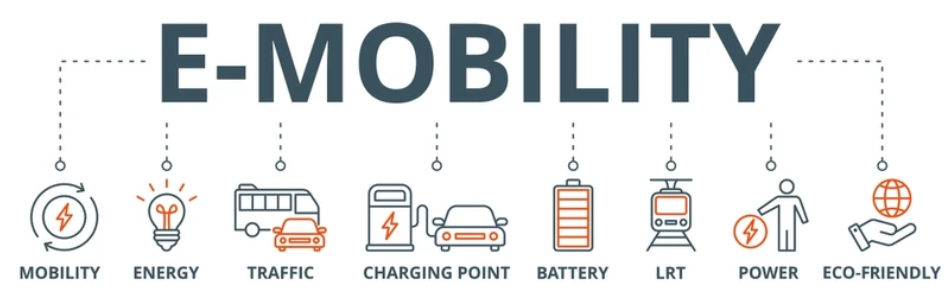
Looking at these staggering fuel prices, one must ask what both short-term and long-term solutions should be. The country currently does not have an oil refinery. In December 2024, the South Sudan cabinet approved $3 billion to build an oil refinery in Tharjirath in Unity State, an oil-producing region. If realized, such a project could be a major boost to the economy. However, refining oil alone will not be enough to secure the country’s future. South Sudan must also look ahead and embrace electric mobility and green energy as strategic pillars of national development and energy security.
With growing geopolitical tensions, the conflict in Sudan, the US-Iran War, and disruptions around strategic routes such as the Strait of Hormuz and the Red Sea all show how vulnerable fuel-importing economies can be.
South Sudan should invest in cleaner, locally supported alternatives to lessen its reliance on imported petroleum to achieve energy security. The country is endowed with so much potential in green energy, with an average sunshine of 2600 hours per year. According to the World Bank’s 2026 South Sudan Country Climate Development Report, one of the ways South Sudan can achieve resilience and inclusive growth is through renewable energy. This potential should be connected to transport policy. If solar and other renewable sources are gradually expanded, they can support charging infrastructure for electric motorcycles, buses, three-wheelers (Raksha), and eventually private and government vehicles.
Electric mobility would also support South Sudan’s climate commitments. The country’s climate vision includes reducing emissions by 109.87 million tonnes of CO₂ equivalent and sequestering a further 45 million tonnes by 2030. Achieving such ambition will require radical changes in the transport sector. A transition toward electric mobility would help decarbonize the transport system, reduce gas emissions, improve air quality, and strengthen South Sudan’s credibility in regional and international climate discussions.
To make such a transition possible, the government should develop a dedicated national electric mobility framework or policy. This effort should be spearheaded by the Ministry of Transport or the Ministry of Energy and Dams, stakeholders, and development partners. The framework should set clear targets for electric mobility, support charging infrastructure, provide tax relief for electric vehicles and spare parts, promote local awareness, encourage local assembly and maintenance capacity, incentivize adoption, and offer free or discounted license number plates; access to affordable financing could help accelerate adoption.
Without any doubt, the country is overwhelmed with competing priorities and challenges, from economic stabilization to healthcare, education, security, humanitarian crises, climate shocks, etc. But these challenges should not prevent the country from planning for the future, nor should they prevent it from keeping pace with neighboring countries and the wider world in policy adoption and transitioning to electric mobility. East African Community neighboring countries are already moving in this direction. In 2024, Uganda developed a National E-Mobility Strategy, and by 2030, the country hopes to have a significant change in public transport, including motorcycles and electric buses, and achieve a complete transition of passenger vehicles by 2040. Kenya formally unveiled its National Electric Mobility Policy in February 2026, a framework to encourage the use of electric vehicles and promote local innovation and investment in the industry and charging infrastructure. These regional examples show that electric mobility is becoming a policy priority across East African Community member states.
South Sudan should not wait until regional supply shocks worsen or fuel prices become unbearable. Rather, it should begin with concrete steps: pilot charging stations for motorcycle operators (boda boda and raksha), and private vehicles; electric buses should be introduced on specific routes in cities; solar-powered charging stations should be installed in public spaces; electrify selected government fleets to cut down costs on maintenance operations; and support young people to acquire skills in battery maintenance, charging systems, and electric vehicle repair.
In conclusion, embracing electric mobility should not be seen as a luxury but rather a strategic economic, environmental, and energy security decision. In fact, volatile fuel prices are precisely why long-term planning is crucial. The country is blessed with an abundant renewable resource; it has policy space, development partners, and regional and global examples to guide it. What is needed now is political will, strategic planning, and bold action. South Sudan must start reducing its dependence on imported fuel and embrace a cleaner, modern, efficient, and low-carbon transport system that is already taking shape across the region if it hopes to build a more robust economy.
The writer is a diplomat at the Ministry of Foreign Affairs and International Cooperation and a fellow at the Office of the President of the UN General Assembly, 2024. He can be reached via ladolobor@yahoo.com.
The views expressed in ‘opinion’ articles published by Radio Tamazuj are solely those of the writer. The veracity of any claims made is the responsibility of the author, not Radio Tamazuj.

 and then