



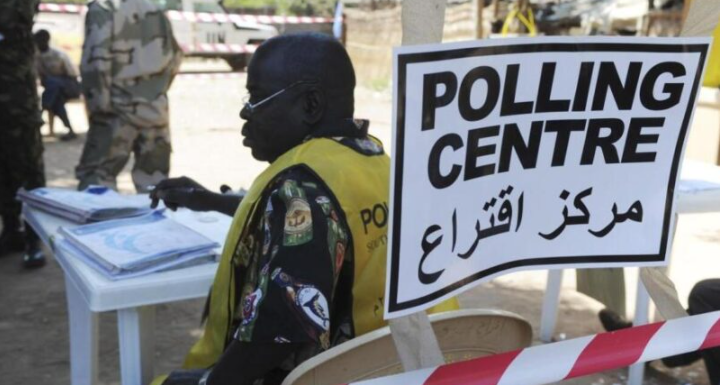
South Sudan is approaching 22 December 2026 with a question that extends far beyond whether ballot boxes will arrive at polling centers.
The core issue is whether the nation is organizing an election capable of producing institutions that citizens recognize as representative, accessible, and legally legitimate.
The amended National Elections Act was assented to on 21 September 2026. According to the government, the amendment harmonizes electoral law with the Transitional Constitution, operationalizes the decision to delink elections from the permanent constitution-making process and national census, and empowers the National Elections Commission (NEC) to conduct elections across all tiers of government. Under the enacted framework, the National Legislative Assembly is set at 270 members, State Legislative Assemblies at 58 members each, and Administrative Area Councils at 20 councilors each.
These are consequential structural shifts.
However, a smaller parliament does not automatically produce a better parliament. A new electoral law does not automatically deliver a more representative society. An election date, on its own, cannot manufacture democratic legitimacy.
Policymakers must confront a fundamental question before nominations and voting solidify the outcomes: Who exactly will be represented in the 270-member Parliament, and where do persons with disabilities fit into that architecture?
That question demands a clear, unambiguous answer.
The Numbers Are Changing; The Principle Should Not
South Sudan’s electoral framework has shifted dramatically over the past decade:
The 2012 Elections Act established a 250-member National Legislative Assembly structured around 60% geographical representation, 25% women’s representation, and 15% party lists. The 2023 Amendment expanded the Assembly to 332 members, reduced geographical representation to 50%, raised women’s representation to 35%, and retained the 15% party-list allocation, the 2026 Framework now compresses the national legislature to 270 members.
This is not routine political bookkeeping. Every seat represents power, every percentage reflects a deliberate policy choice, and every constituency determines whose voice reaches the floor of Parliament.
For this reason, the allocation of these 270 seats cannot remain a puzzle that voters, candidates, political parties, and civil society must decipher through rumors, leaked drafts, and conflicting public statements.
During the legislative process in September, official parliamentary updates cited a 332-member Assembly. Following presidential assent, government reporting shifted to the 270-member figure. While the post-assent figure is the operational law, this discrepancy demonstrates why the authenticated legislation and its implementing schedules must be published immediately.
An election law should not force citizens to become constitutional detectives.
Women’s Representation Is Not a Footnote
The 35% affirmative-action provision for women introduced in the 2023 law was a landmark commitment. It must be implemented with mathematical precision under the new framework.
However, the 270-seat Parliament introduces a clear arithmetic dilemma: 35% of 270 is 94.5.
Because there is no such thing as half a parliamentary seat, the NEC’s implementing rules must explicitly state how this fraction is converted into whole seats.
This is no mere administrative detail. A single seat determines whether a candidate crosses the threshold, whether a constituency gains representation, and whether an affirmative-action mandate is truly fulfilled. Electoral mathematics becomes constitutional law the moment the ballots are counted.
The Unresolved Disability Representation Question
This brings South Sudan’s electoral debate to a particularly uncomfortable truth.
During the 2023 legislative process, a proposal circulated advocating a 2% seat allocation for persons with disabilities—alongside 50% geographical representation, 35% women, 10% political parties, and 3% youth.
Crucially, that proposal was never codified into a standalone 2% parliamentary quota in the enacted 2023 law.
It is misleading to claim that the enacted 2023 Elections Act guaranteed a 2% disability quota. While the principle was debated, the final statutory breakdown remained strictly 50% geographical, 35% women, and 15% party lists.
South Sudan cannot afford to repeat this unresolved history in 2026. If persons with disabilities have a reserved representation mechanism under the new law, that mechanism must be explicitly defined. If they do not, policymakers owe the public a clear explanation of how meaningful participation will be guaranteed.
Silence is not a policy on representation.
A Ramp Is Not a Parliamentary Seat
South Sudan must stop confusing physical accessibility with political representation.
Accessible polling stations are essential; a voter who cannot physically enter a polling center is denied an equal constitutional right. Accessible voter education is vital; a citizen who cannot access electoral information in a usable format is disenfranchised before casting a ballot. Reasonable assistance at the ballot box is non-negotiable.
Yet none of these measures solve the challenge of representation. A citizen can successfully enter a polling center and still find that people sharing their lived experience remain entirely absent from the institutions shaping national policy.
Accessibility grants entry; representation grants impact. A functional democracy requires both.
The NEC has rightly framed inclusive voter registration as a fundamental right, conducting nationwide training for election officials across the ten states and three Administrative Areas. While necessary, these logistical steps alone are insufficient.
Persons with Disabilities Are Not Welfare Cases
Too often, disability policy is relegated to the language of welfare, charity, or social assistance. This framework is outdated and politically flawed.
Persons with disabilities are citizens, voters, candidates, professionals, taxpayers, and political actors. They are fully entitled to sit in the institutions that determine national priorities.
Disability policy intersects with every major sector of public governance: education, healthcare, infrastructure, employment, social protection, justice, and economic development. Excluding the individuals who understand these barriers firsthand from decision-making bodies is not merely a disability issue—it is a failure of national governance.
Transparency for the 102 Constituencies
The NEC has designated 102 national geographical constituencies for the December 2026 elections, relying on the 2010 constituency boundaries across the ten states and three Administrative Areas.
Reverting to historical boundaries creates an added duty of transparency. Citizens and political actors must be provided with a single, authoritative document detailing how these 102 geographical constituencies map into the 270-member Parliament.
Stakeholders must clearly know:
- Which seats are direct geographical contests.
- Which seats are allocated via proportional party lists.
- How the 35% women-list seats are calculated and distributed.
- Whether designated affirmative-action seats exist for marginalized groups, and how they are awarded.
Candidates must know the rules before contesting; voters must know the rules before casting their ballots. The country should not have to discover the true mechanics of its electoral law after the votes are counted.
Institutional Accountability: NEC Cannot Carry the Load Alone
The NEC bears the operational burden of managing voter registration, candidate nominations, voter education, and polling logistics. In September 2026, the NEC properly urged the public to rely exclusively on official announcements, clarifying that voter registration had not yet formally commenced.
This warning underscores a fundamental rule: In an election, information is infrastructure.
- A rumor about registration deters voters.
- A confusing nomination rule disqualifies credible candidates.
- An ambiguous seat formula triggers political disputes.
- An inaccessible polling site disenfranchises communities.
For these reasons, Parliament, the Executive, political parties, civil society, and Organizations of Persons with Disabilities (OPDs) must collaborate to eliminate these implementation and information gaps.
The Fundamental Test of Inclusion
The central issue is not whether persons with disabilities receive a passing mention in the text of the Elections Act. The real question is whether the legal framework guarantees a credible, enforceable pathway to political power.
Whether through reserved seats, enforceable party-list quotas, or other statutory affirmative action, the mechanics must be clear. Participation without a realistic pathway to representation is incomplete inclusion. Historically excluded citizens should not be forced to rely on informal promises, political patronage, or executive goodwill to secure a place in public office.
Rights must be grounded in law, not bestowed as favors.
Immediate Priorities Before Ballots Are Cast
To convert theoretical legal rights into actual political participation, South Sudan must urgently deliver on these baseline requirements:
- Publish the Authenticated Law: Make the signed 2026 National Elections Act fully accessible to the public.
- Release the Seat Allocation Schedule: Publish a clear breakdown detailing the distribution of all 270 parliamentary seats.
- Clarify the Mathematics: State the official methodology for calculating women’s representation and clarify the legal status of disability representation.
- Audit Infrastructure: Conduct accessibility audits on registration sites and polling centers.
- Ensure Party Accessibility: Enforce inclusive internal nomination processes within political parties.
- Incorporate OPDs: Formally include Organizations of Persons with Disabilities in election monitoring networks.
- Establish Grievance Redress: Provide accessible mechanisms for citizens to report and resolve electoral barriers.
Conclusion: Building a House for All Citizens
South Sudan’s electoral framework is being rebuilt while the clock ticks down toward 22 December 2026. The country has transitioned from 250 seats to 332, and now to 270. It has raised women’s representation from 25% to 35% and uncoupled elections from the census and permanent constitution-making processes.
This rapid transformation makes legal clarity more urgent, not less.
The nation’s goal must be broader than merely reaching Election Day. It must reach Election Day with rules that voters understand, rules that candidates trust, and procedures that do not systematically exclude citizens based on gender, disability, or geography.
A country can hold an election and still leave millions of its people standing outside the political house. South Sudan must not settle for a hollow exercise.
The true test of the 2026 elections will be whether the resulting institutions are genuinely representative of the entire population. That is why the allocation of the 270 seats matters. That is why the 35% threshold matters. That is why the disability quota question matters.
Electoral ambiguity is not a minor drafting error—it is a fundamental dispute over who gets a seat at the table of the Republic. South Sudan must answer that question through transparent law today, ensuring the ballot box serves as a gateway to full political citizenship.
The writer, Dr. Stephen Dhieu Kuach, is a South Sudanese governance expert, disability rights advocate, and senior SPLM member. He served as Director of Disability Affairs in the Ministry of Presidential Affairs and coordinated national programmes in the Office of the Vice President. He can be reached at dr.stephen.dhieu@gmail.com.
The views expressed in ‘opinion’ articles published by Radio Tamazuj are solely those of the writer. The veracity of any claims made is the responsibility of the author, not Radio Tamazuj.

 and then