



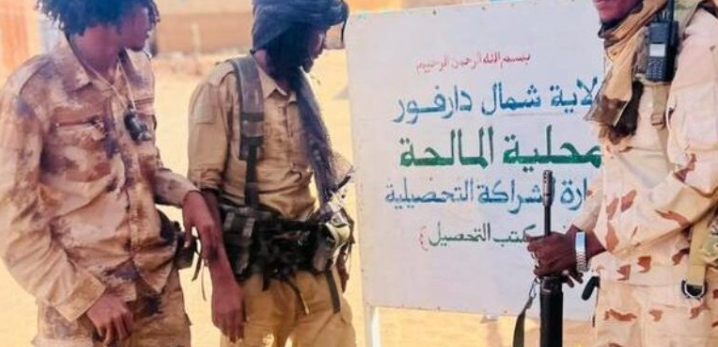
The humanitarian situation in Malha Locality in Sudan’s North Darfur state is deteriorating, with local emergency responders complaining about rising malnutrition and sharp increases in the prices of basic commodities amid disruptions to supply routes.
The Mellit Locality Emergency Room warned of a growing risk of famine, citing displacement, shortages of food and medicine and what it described as restrictions on the movement of supplies and attacks on infrastructure and markets.
Much of the population had been displaced, with people travelling on foot for between 30 and 150 km to remote areas and displacement centres following violence in 2025, the Emergency Room said.
Safa Yousif, a spokesperson for the Malha Locality Emergency Room, told Radio Tamazuj on Monday that malnutrition had increased sharply in the locality.
About 6,200 children were suffering from malnutrition, including 1,500 with severe acute malnutrition who required urgent medical and therapeutic care, she said. The figures could not be independently verified.
Yousif said shortages of food and medical services were putting people who remained in the area at risk.
Food supplies had previously reached Malha through Al-Dabba and from Libya, but both routes had been closed by the Rapid Support Forces (RSF), she said. The RSF, which controls large areas of Darfur, did not immediately respond to the allegation.
Yousif said the disruption had contributed to food shortages and worsening health conditions, particularly among children and pregnant women.
Stocks of millet from the previous agricultural season had also been exhausted, leaving residents with fewer options to sustain their livelihoods, she said.
Activist Farah Abdel Rahman reported steep increases in the prices of basic commodities in local markets. She said a quarter measure of millet was selling for between 40,000 and 45,000 Sudanese pounds, while the same quantity of sorghum cost between 35,000 and 37,000 pounds.
A sack of flour was selling for between 450,000 and 480,000 pounds, while a jerrycan of cooking oil cost between 235,000 and 250,000 pounds. A barrel of water was priced at 7,000 to 10,000 pounds, and a pound of sugar cost between 6,000 and 8,000 pounds, she said.
The Emergency Room called on the United Nations and international humanitarian organisations to facilitate humanitarian and commercial access to Malha and reopen supply routes, including those linking Malha with Al-Dabba, Chad, Libya, Mellit, El Fasher, Hamarat Al-Sheikh and Khartoum.
It said opening the routes is necessary to deliver food, medicine and other essential supplies and protect civilians affected by the conflict.
Sudan’s war between the army and the RSF, which began in April 2023, has disrupted trade and humanitarian access across much of the country, particularly in Darfur. Aid agencies have repeatedly warned of severe food insecurity in the region.

 and then