



South Sudan has raised its alert level for Ebola following confirmation of the first case in neighbouring Kenya, health authorities said on Wednesday, although no cases have been confirmed in South Sudan.
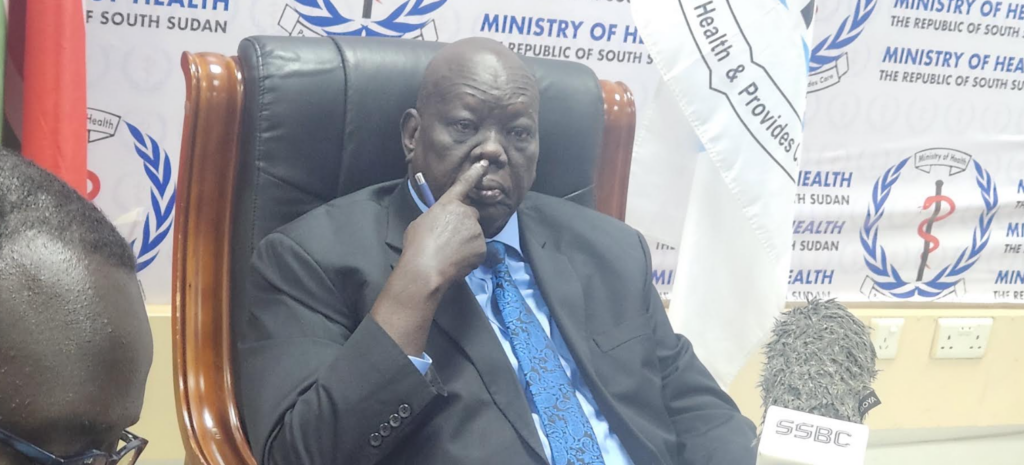
Caretaker Health Minister Dak Duop Bichiok said the government was closely monitoring the regional situation and had placed the national health system on a high state of alert because of South Sudan’s borders and the movement of people and goods across the region.
“We want to reassure the citizens of South Sudan and all the residents within our borders that no confirmed cases in South Sudan have been reported,” Bichiok said at a press conference in Juba.
He said the confirmation of Ebola in Kenya had increased the risk of cross-border transmission, particularly because of South Sudan’s proximity to affected areas of the Democratic Republic of Congo (DRC) and regional travel routes through Uganda and Kenya.
The government has urged communities, travellers, transport operators, religious leaders and civil society organisations to cooperate with health officials carrying out screening at border crossings and other points of entry.
Dr. Ader Machar Aciek, acting executive director of the National Public Health Institute, said preparedness measures had already been activated following Ebola outbreaks in the DRC and Uganda.
“We have people doing screening at the points of entry across the border, along the border in the 15 high-risk counties, as well as our international airport, Juba International Airport,” Aciek said.
He said South Sudan currently had eight infectious disease units equipped to isolate and manage suspected or confirmed cases.
According to the World Health Organization, South Sudan’s preparedness level has improved since the regional outbreak was first reported, rising from 29% in May to 45% in June and 65% currently.
Dr. Moses Ongom, WHO’s officer in charge in South Sudan, attributed the improvement to efforts by the Ministry of Health, the National Public Health Institute and partners to strengthen surveillance, response and case-management capacity.
He cautioned, however, that improved preparedness should not lead to complacency.
Africa CDC Country Director Dr. Tolbert Nyenswah said South Sudan had surveillance systems, disease-detection mechanisms, rapid response teams and laboratory testing capacity that could help it respond quickly if a case were detected.
“The priority is not only to prevent the virus from entering South Sudan but also to ensure that the country can rapidly contain any outbreak,” Nyenswah said.
He cited Uganda’s response to its recent outbreak, saying authorities had contained it within 92 days after 20 cases and two deaths were recorded.
The health ministry urged the public to remain calm but vigilant and to report suspected cases, particularly people showing symptoms such as fever, vomiting, diarrhea or unusual bleeding.
It advised people to avoid direct physical contact with suspected patients, practice regular hand hygiene, avoid contact with potentially infected animals and refrain from handling the bodies of people who may have died with Ebola-like symptoms.
The government said suspected cases could be reported through the toll-free health hotline 6666.
 and then