



Juba County’s decision to reserve small-scale retail businesses for South Sudanese nationals has touched a raw nerve in a country where unemployment is high, household incomes are under pressure and economic opportunities remain painfully limited.
Caretaker Commissioner Kalisto Lado says foreigners should stop selling chapatti, onions, tomatoes, charcoal and operating boda bodas, arguing that such businesses should be left to South Sudanese women and youth. Foreigners who want to invest in South Sudan, he says, should move into wholesale, manufacturing and larger businesses.
The frustration behind this argument is understandable because, for too long, South Sudanese have watched foreigners occupy businesses that require relatively little capital while many citizens struggle to find employment or raise enough money to start even the smallest enterprise. But this is where government must be careful.
Economic empowerment is not the same thing as economic exclusion because if South Sudan wants South Sudanese to control their economy, the answer cannot simply be to tell foreigners to leave the retail shelves and assume that citizens will automatically take their place.
Who will provide the capital?
Who will provide affordable loans?
Who will supply the goods?
Who will provide reliable electricity, storage and transport?
Who will protect small traders from harassment, multiple taxation and arbitrary fees?
And, perhaps most importantly, who will ensure that the South Sudanese replacing foreign traders have the capacity to survive?
These are the questions that matter.
The government has every legitimate reason to protect opportunities for its citizens. No country should be indifferent to its own citizens being economically marginalised in their own capital, but protection without preparation can easily become another empty government directive.
Juba’s markets are not operating in isolation. The city is connected to a regional trading system in which Uganda, Kenya, Ethiopia, Eritrea, Burundi and other countries have long supplied goods, services, labour and capital. Uganda, in particular, has historically played a significant role in Juba’s informal and formal commercial networks. A 2013 market assessment cited by Uganda Radio Network found Ugandan nationals making up a large share of vegetable wholesalers interviewed at Konyo-Konyo Market.
That reality cannot simply be wished away because South Sudan needs local ownership and functioning markets. It needs citizens to become traders, manufacturers, transporters, wholesalers and investors. But it also needs foreign investment where it brings capital, expertise, employment and productive capacity.
The distinction should therefore be clear: a foreign national illegally operating a business without the required licence should face the law, and a trader violating immigration, tax or business regulations should be dealt with according to the law. But enforcement should be based on clear regulations, not nationality alone, political moods or verbal directives. And if the county intends to enforce a blanket restriction on foreign participation in retail, the public deserves to know the legal basis, the exact businesses covered, the transition arrangements and the rights of affected traders.
At present, reports on the directive indicate that the commissioner has encouraged foreign traders to shift into wholesale and larger enterprises, but details on implementation and whether existing businesses will receive a grace period remain unclear, and such uncertainty is dangerous for both citizens and foreigners.
South Sudan cannot claim to be serious about attracting investment while businesses operate in fear of waking up to a new interpretation of the rules because there is also a regional dimension that Juba should not ignore: South Sudan is part of the East African Community alongside Uganda, Kenya and Burundi. The country cannot simultaneously seek deeper regional economic integration and ignore the implications of policies affecting cross-border traders, and with that, regional integration must not become a one-way street.
South Sudanese traders should be able to seek opportunities beyond the country, while South Sudan retains the right to regulate businesses operating within its territory. But those rules should be transparent, predictable and consistent with the country’s legal and regional commitments, and by doing that, the government must confront an uncomfortable truth that foreigners did not create all the weaknesses in South Sudan’s private sector.
The truth is that our citizens are not losing every business opportunity simply because a Ugandan sells tomatoes or an Ethiopian runs a small shop, but they are also being held back by lack of affordable credit, weak infrastructure, high operating costs, insecurity, limited business training, poor access to markets and an economy that remains heavily dependent on imports. It is important to note that, if these problems are not addressed, removing foreign traders will only create an empty space, not a productive South Sudanese economy.
In this case, the government should, however, go beyond the rhetoric of local ownership: create affordable financing for South Sudanese entrepreneurs, reserve clearly defined sectors for citizens where appropriate, reduce unnecessary business fees, improve market infrastructure, provide vocational and business training for young people, help women access capital and strengthen local manufacturing so that South Sudanese are not merely selling imported goods but producing what their country consumes.
That is how economic independence is built: not by chasing the foreigner from the market stall, but by ensuring that the South Sudanese citizen has the capital, skills and infrastructure to take the business and make it thrive.
Caretaker Commissioner Kalisto is right to ask a legitimate question: if foreigners take every small economic opportunity, what remains for South Sudanese women and youth?
But the government must ask an equally important question:
If those opportunities are handed to South Sudanese tomorrow, have we built the economic conditions that will allow them to succeed?
And that is where the real test is because South Sudanese should not remain spectators in their own economy. They deserve to own businesses, create jobs and control a greater share of the wealth generated in their country, but this must be achieved through serious economic policy, not merely through exclusion.
Juba needs an economy that puts South Sudanese at the centre without turning its back on legitimate regional trade and investment, and the goal should not be a Juba where foreigners have disappeared from the markets. The goal should, however, be a Juba where South Sudanese have become strong enough economically that they no longer need to fear competition.
That is the difference between protection and empowerment.
And South Sudan desperately needs the latter.
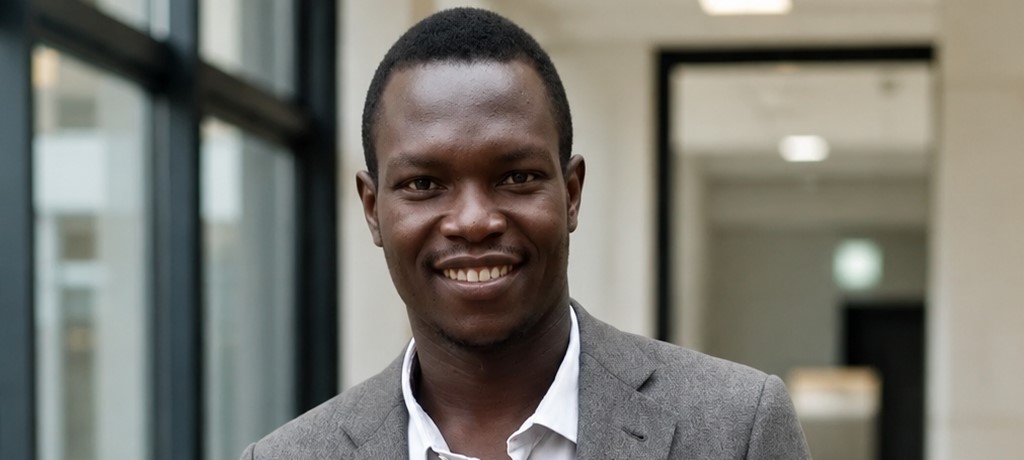
The writer, Lemi Emmanuel John, is a South Sudanese journalist with experience covering social, economic and community affairs.
The views expressed in ‘opinion’ articles published by Radio Tamazuj are solely those of the writer. The veracity of any claims made is the responsibility of the author, not Radio Tamazuj.

 and then