



History remembers rulers in many ways—sometimes as builders, sometimes as tyrants, and often as thieves. In South Sudan, Salva Kiir has fused the latter two roles into a single system of power. The question is no longer whether his government is defined by corruption or authoritarianism, but how those two forces have become mutually reinforcing pillars of the state. He has forced a shattered population to confront a troubling question: Is he our Embezzler-in-Chief, our Dictator-in-Chief—or are these not separate identities at all, but parts of a single structure of power?
To view his regime merely as a corrupt enterprise misses its calculating malice, just as viewing it solely as an authoritarian state ignores the financial machinery that keeps it alive. In reality, these two identities are not distinct vices. They form a predatory system in which public wealth is systematically looted to fund the regime’s security apparatus of intimidation, which works day and night to make sure citizens either live in fear or demonstrate their coerced loyalty with absolute civic silence. Here, the contradiction is not unintended; it is structural.
The Architecture of Plunder: The Case for the Embezzler-in-Chief
To understand this tragedy, one must first recognize that the state does not suffer from accidental mismanagement. It is the victim of an intentional, sophisticated financial heist engineered from the highest office in the country. Kiir’s tenure has redefined the relationship between a government and its resources, transforming a sovereign nation into a private family franchise and a playground for well-connected kleptocrats who operate as professional plunderers with complete financial impunity.
Under Kiir’s rule, the country’s vast oil revenues, central bank reserves, and international aid do not serve as instruments for national development, infrastructure, or public healthcare. Instead, they function as a primary funding source for a ruling elite that treats the national treasury as a personal checking account. This structural embezzlement scheme has left large segments of the population impoverished and vulnerable to hunger—a deliberate ruin that Juba hypocritically blames on external sanctions. Yet how can a state that claims its economic problems are caused by external sanctions simultaneously command vast, unchecked oil wealth and a mining sector allegedly controlled by Kiir’s family members and members of the ruling elite during years of prolonged national starvation, as documented by multiple independent transparency watchdog organizations?
While sanctions, conflict, and economic shocks have contributed to South Sudan’s challenges, they do not explain why years of oil wealth have brought little improvement for ordinary citizens. The key question is why elites remain insulated while most people bear the costs of national decline.
How many South Sudanese are aware that the Ministry of Finance and Economic Planning and the Ministry of Petroleum, though led by publicly appointed officials, are widely perceived to operate under the shadow of the Presidency’s Special Programs Office? If these ministries are truly independent, why do allegations continue to surface that individuals linked to the President’s family and inner circle influence what is disclosed about oil production, revenues, and national finances? In a country where oil wealth is the economy’s lifeblood, who is really making the decisions—the formally appointed officials or an unelected network operating behind the curtain?
The weaponization of this economic plunder is calculated. By keeping the national economy in a perpetual state of hyperinflation and deliberate collapse, the regime forces ordinary citizens into a desperate, daily struggle for basic survival. A population preoccupied with securing its next meal, surviving currency collapse, and coping with the lack of medical supplies becomes too exhausted to sustain political pressure for lasting peace and reform. Whether this economic collapse is intentionally engineered or merely tolerated is ultimately secondary to its political consequences.
When public salaries go unpaid for months, sometimes for more than two years, while millions of dollars allegedly vanish into offshore bank accounts controlled by individuals and entities with ties to the regime, it becomes clear that economic deprivation is being used as a tool of domestic pacification. This reality entirely hollows out Kiir’s claim to legitimacy. A leader who systematically bleeds his own country dry while leaving his citizens dependent on international handouts cannot claim the title of a statesman. He earns, instead, the title of Embezzler-in-Chief—a ruler who views the wealth of a nation not as a trust to be protected, but as spoils to be stolen.
Even if every individual act of corruption cannot be directly traced to the President personally, the persistence of large-scale corruption within a highly centralized political system inevitably raises questions of political responsibility. In a system where authority is concentrated at the top, accountability cannot be permanently delegated downward while power remains centralized there.
However, this system does not persist solely because wealth is extracted. It persists because extraction creates dependencies. A large portion of the political and administrative elite becomes indirectly invested in the continuation of the system, as access to resources, protection, contracts, and status flows through the same heavily centralized channels of power. In this way, the regime is not simply a thief at the top, but rather a network of actors whose survival is tied to the continuity of the very system that impoverishes the broader population.
The Republic of Fear: The Case for the Dictator-in-Chief
However, economic plunder alone cannot sustain a kleptocracy; it requires an iron fist to shield it from public anger. To focus exclusively on Salva Kiir’s financial crimes is to overlook the violent, calculating political architecture he has constructed to criminalize opposition and neutralize accountability. His political worldview is intolerant of any strong opposition voice.
Kiir is known in South Sudan as a leader who publicly preaches peace before any audience, not to demonstrate genuine commitment, but to deceive. In reality, his statements about seeking lasting peace and political reform in the country are merely part of a carefully constructed illusion.
He is a Dictator-in-Chief who has systematically dismantled the foundational pillars of democratic governance to enforce a chilling, nationwide conformity. Under his administration, the transitional constitution has been reduced to a worthless piece of paper, judicial independence has been subordinated to the dictates of the regime, and the National Security Service (NSS) has been transformed into a personalized, coercive, and mafia-like syndicate. While states have a legitimate right to maintain security institutions, concerns arise when such institutions are used to suppress criticism, intimidate political opponents, and silence dissent.
This security structure exists for a single, dark purpose: to hunt down dissenters, intimidate potential opposition leaders through theatrical legal proceedings, silence independent journalists, and ensure that any voice demanding accountability is swiftly and brutally extinguished. Why does a government that claims to be in a temporary “transitional phase” require an ever-expanding security apparatus that behaves as if transition itself is a threat? This approach transforms political disagreement from a normal feature of governance into something portrayed as a danger to the state.
The true hallmark of Kiir’s leadership lies in his total intolerance of political rivalry. By consistently and deliberately impeding the implementation of the September 2018 revitalized peace agreement, engineering repeated fractures within the peace process, weaponizing ethnic divisions, and opting instead for the staged December 2026 elections in utter violation of the peace deal, he has effectively neutralized any credible and legitimate opposition, preferring only weak and regime-managed parties to compete in the elections. If elections are repeatedly delayed in the name of stability, why does every milestone passed result only in the further enrichment of the ruling cartel and the deeper fragmentation of the nation?
Kiir’s leadership increasingly operates through regional and ethnic patronage networks. Furthermore, many key national institutions are led by individuals from the Bahr el Ghazal region. For example, the president, the head of the National Elections Commission, the chairman of the Political Parties Council, the chief of the South Sudan People’s Defence Forces, the head of the National Security Service, the head of the National Police Service, the head of revenue collection, and the heads of many other important departments are from the Bahr el Ghazal region.
When the presidency, the electoral institutions, the security apparatus, and many of the most powerful state offices are concentrated in the hands of people from a single region, where exactly is the evidence of the inclusivity that Kiir so often claims? And if the same regional network dominates the institutions tasked with delivering the next elections, should South Sudanese citizens view those elections as a national democratic project—or as the political agenda of Bahr el Ghazal presented as the will of the entire country? The concern is not who holds public office, but whether the concentration of key positions within a single regional network undermines confidence in the inclusivity and impartiality of state institutions.
In this engineered environment of fear, the regime has created what can only be described as a “Republic of Silence,” where criticizing the presidency or demanding accountability is treated as a threat to the state itself. Kiir’s system operates through a permanent emergency, where crisis is not an obstacle to power, but rather the justification for preserving it. Repression alone does not explain the regime’s endurance, which also relies on selective inclusion, material incentives, and legitimacy narratives that secure at least partial support beyond fear-based compliance.
The Twin Engines of Tyranny: A Symbiotic System
To view Kiir as either just an embezzler or just an authoritarian leader is to misunderstand the deliberate, interlocking mechanics of his rule. In reality, these two identities cannot exist without each other; they are the twin engines of a singular, predatory system of governance. The Dictator-in-Chief relies heavily on the Embezzler-in-Chief to survive. An authoritarian ruler typically cannot maintain absolute power without buying the loyalty of military commanders, paying secret police personnel, and financing a vast security state. Without the millions of dollars systematically siphoned from national oil revenues, the machinery of coercion would instantly run out of fuel. The regime’s iron fist is financed with resources taken from public wealth.
Conversely, the Embezzler-in-Chief requires the Dictator-in-Chief to eliminate oversight and shield himself from accountability. In a functioning society with independent courts and a free press, massive state corruption is quickly exposed and prosecuted. To prevent constitutional reform or to keep stealing the nation’s wealth without consequence, the ruling elite must ensure that the justice system remains completely paralyzed and the public remains terrified.
The result is not two separate crimes; it is a closed loop. Theft funds repression, and repression protects theft. Each becomes the condition for the other’s survival. If the President is neither a tyrant overseeing a security state nor a thief plundering the treasury, how can his apologists or his regime’s opportunists explain a system where the public wealth required to pay doctors and teachers vanishes completely, while the state security forces tasked with silencing those same starving professionals remain fully funded and operational? At this point, South Sudan has ceased to be a conventional state and has become a self-financing extraction-and-control machine.
This closed loop is sustained by a third, often underemphasized mechanism: patronage. State-extracted resources are not only diverted for personal gain and repression but are also systematically redistributed to maintain loyalty networks across Kiir’s political, military, and administrative elite. These networks ensure that access to resources, protection, and political survival flows through centralized channels of power, reinforcing dependence on the regime. This transforms the system from a simple binary of theft and coercion into a self-reinforcing triangle of extraction, patronage, and repression.
No system of this magnitude survives on internal dynamics alone. The durability of Kiir’s political order is also reinforced by external relationships that prioritize security alignment over internal governance reform. In particular, Uganda has played an influential role in supporting the survival of Kiir’s administration, including direct military intervention during South Sudan’s civil war and ongoing high-level diplomatic engagement with the current leadership. In this context, external actors help stabilize the regime through strategic preferences for continuity, security cooperation, and economic interests, even without endorsing its internal practices, thereby reducing pressure for structural change. This external buffering does not create the system, but it does help sustain it by lowering the cost of its persistence and insulating it from the full consequences of internal breakdown.
Defenders of the government frequently point to civil war, sanctions, floods, opposition fragmentation, regional instability, and the immense challenges facing the country. These factors are real and deserve acknowledgment. Yet this complexity does not answer the central question raised throughout this essay: why have political power, economic resources, and coercive institutions remained so tightly concentrated despite years of promised reform? Many forces have shaped South Sudan’s trajectory, but under President Salva Kiir, that concentration has turned the nation into a destructive, mafia-like state while weakening rival political parties.
The Final Verdict: A Nation Held Hostage
Ultimately, history will not separate Salva Kiir’s greed from his cruelty, because both have produced the same outcome: the systematic degradation of South Sudan’s political, economic, and civic life. Whether history remembers him as a thief who starved his people or a tyrant who silenced them is a distinction that means nothing to the millions trapped in displacement camps or the families mourning victims of extrajudicial violence. South Sudan has not been governed; it has been absorbed into a predatory system that treats national survival as secondary to elite preservation.
The central illusion of Kiir’s regime is the belief that stolen wealth and permanent coercion can produce lasting stability. Yet stability built on extraction and fear is not stability—it is merely a delay.
By fusing the worst impulses of kleptocracy and dictatorship, Salva Kiir has not secured a lasting legacy; he has merely guaranteed a deferred collapse. A country cannot survive when its leader treats it simultaneously as a personal bank and a private prison. True liberation will not come from engineered peace deals or performative political dialogues, but from completely dismantling this toxic system, breaking the chains of fear, and reclaiming both the wealth and the freedom that rightfully belong to the people of South Sudan. The people of South Sudan did not fight against Sudan’s regime and lose millions of lives only to find themselves governed by a system they believed they had left behind when they gained independence in July 2011.
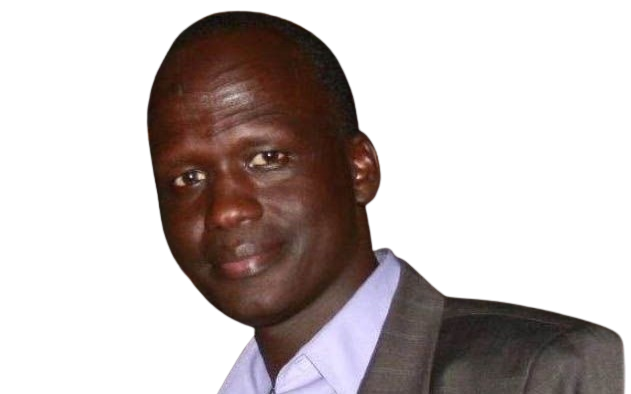
The writer, Duop Chak Wuol, is an analyst, critical writer, and former editor-in-chief of the South Sudan News Agency. He is a graduate of the University of Colorado and writes on geopolitics, security, and social affairs in South Sudan and the broader East Africa region. His work has appeared in leading regional and international outlets, including AllAfrica, Radio Tamazuj, The Independent (Uganda), The Arab Weekly, The Standard (Kenya), The Chronicle (Ghana), Addis Standard (Ethiopia), and Sudan Tribune. In 2017, the Ethiopian Broadcasting Corporation highlighted his article on Meles Zenawi’s role in Ethiopia’s economic transformation. He can be reached at duop282@gmail.com.
The views expressed in ‘opinion’ articles published by Radio Tamazuj are solely those of the writer. The veracity of any claims made is the responsibility of the author, not Radio Tamazuj.

 and then