



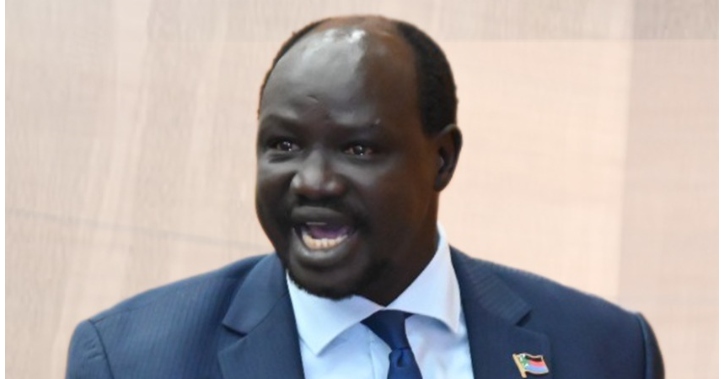
The opposition National Democratic Movement (NDM) on Friday questioned the ruling SPLM’s push to hold elections in December, saying repeated delays in implementing key provisions of the 2018 peace agreement have left the country unprepared for a credible vote.
The NDM, led by veteran opposition politician Dr. Lam Akol Ajawin, said previous commitments to hold elections in 2022, 2023 and 2024 all ended with extensions of the transitional period, fuelling public scepticism over the government’s latest timetable.
“The public understandably wonders whether the current campaign is not merely another political smokescreen, ultimately leading to a third extension under the existing status quo,” the party said in a statement issued after a meeting of its National Executive Committee and read by Acting Secretary-General Bol Joseph Agau at a news conference in Juba.
South Sudan is due to hold its first elections since gaining independence in 2011 under the 2018 Revitalized Agreement on the Resolution of the Conflict in South Sudan (R-ARCSS). The vote has been postponed repeatedly, while opposition groups, civil society organisations and international observers have questioned whether conditions exist for credible elections in December, citing insecurity, delays in implementing the peace agreement and inadequate funding.
However, President Kiir’s camp says the country is ready to transition from a transitional unity government to an elected administration through the December polls, arguing that elections are necessary to end the prolonged transitional period.
The NDM, which aligns with a faction of the South Sudan Opposition Alliance (SSOA) led by Josephine Lagu that is a signatory to the peace agreement, said the country had achieved neither lasting peace nor a democratic transition nearly eight years after the accord was signed.
It said the agreement envisaged elections only after key reforms, including security sector restructuring, constitution-making, judicial reforms and the creation of an enabling political environment. Those conditions remain unmet, it said, making credible elections impossible.
The party said the security situation had instead deteriorated, citing clashes involving parties to the peace agreement in parts of Jonglei State, recurring communal violence and growing insecurity in several regions.
It also questioned the preparedness of the National Elections Commission (NEC), saying the commission had reportedly received less than 5% of its approved budget while key electoral activities, including voter registration, voter education and other preparations, remained incomplete with less than five months before the planned polls.
The NDM added that worsening economic and humanitarian conditions, including irregular salary payments to civil servants and declining public confidence in state institutions, would further undermine the credibility of any election held under current circumstances.
While rejecting elections under the current conditions, the party also ruled out supporting another extension of the transitional government, describing the current administration as “bloated and ineffective” and warning that prolonging it without meaningful reforms would only deepen the country’s political crisis.
Instead, it proposed an inclusive national political dialogue involving signatories and non-signatories to the peace agreement, political parties, civil society organisations, faith-based groups, women’s organisations, youth representatives and other stakeholders. It said the process should be facilitated by the African Union, the Intergovernmental Authority on Development (IGAD) or another mutually acceptable mediator, with the aim of negotiating a new political arrangement to replace the current peace agreement.
The NDM said it would consult with like-minded political parties on a joint position if the government proceeds with elections without addressing what it described as fundamental shortcomings in the peace process.
The party also criticised regional guarantors and peace monitoring mechanisms, saying repeated violations of the peace agreement over the past eight years had largely gone unchallenged.
Akol, a veteran opposition politician, founded the NDM in 2016. He previously led the SPLM-Democratic Change (SPLM-DC) and unsuccessfully challenged President Salva Kiir in the 2010 presidential election before South Sudan’s independence.

 and then