



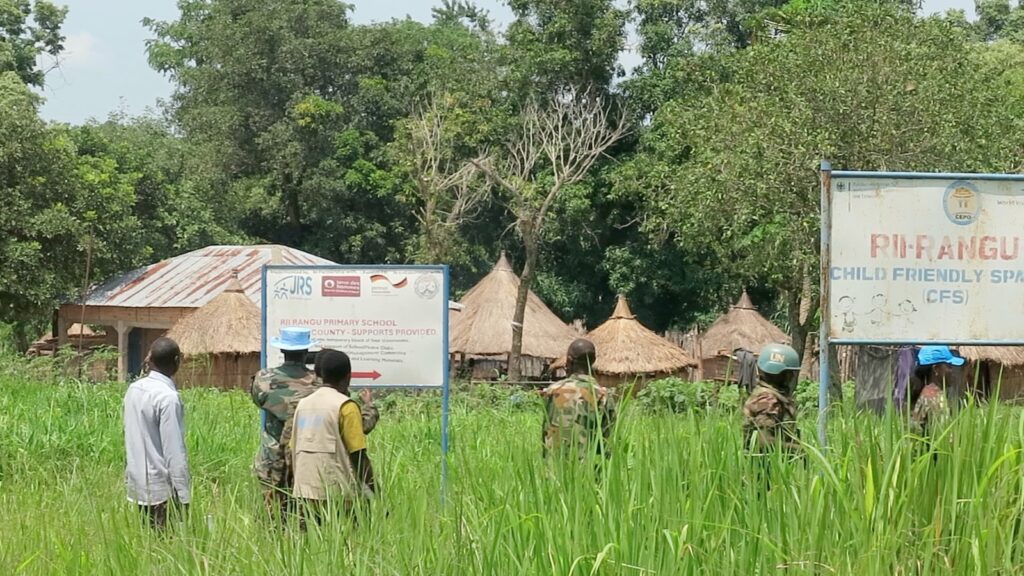
Residents of the remote Rii-rangu area in Western Equatoria State say years of conflict and isolation have left them without safe drinking water, healthcare, schools and other essential public services, despite an improvement in security in the area.
Located about 15 miles from Yambio, Rii-rangu was heavily affected by fighting involving armed groups, including the SPLM-IO, and was previously used as a cantonment area.
A recent UNMISS patrol reached the village after travelling along flood-damaged roads to assess security conditions and hear residents’ concerns under the mission’s civilian protection mandate.
Residents said women and children continue to bear the brunt of the humanitarian challenges, citing the lack of clean water, healthcare, education and livelihood opportunities.
“Our biggest problem is the lack of safe drinking water. We have no schools, no boreholes and no medical supplies,” said Hellena Mborihidie, a resident of Rii-rangu.
“When someone falls sick, there is no medicine. As women, we do not feel secure in our own homes. We are appealing to the government to intervene because this is the place we call home,” she added.
Women in the community said the absence of maternal healthcare has made pregnancy and childbirth increasingly risky.
“There are no health facilities or medicines. Pregnant women have nowhere to receive antenatal care, and there is no transport to the nearest hospital,” said Ojilia Barnaba, a mother of six.
“We also have no schools or markets. Women and girls do not even have access to menstrual hygiene supplies. We are suffering.”
Residents said years of insecurity have also disrupted farming, the community’s main source of livelihood, leaving many households vulnerable to hunger.
“We cultivate our farms, but when it is time to harvest, armed groups force us to flee,” said Suzy John, a mother of five.
“When we return, everything is gone. Hunger is severe. We cannot move to town because this is where we farm and feed our children. Our house was burned down, and now we are living under a temporary shelter.”
UNMISS said its patrols to remote areas are intended to assess security conditions, identify protection concerns and engage local authorities and humanitarian partners on urgent needs.
Senyo Kofi Dzamefe, a UNMISS military observer, said residents raised concerns during the visit about the closure of the area’s health facility and primary school.
“We are here under the UNMISS mandate to protect civilians and monitor possible human rights violations,” Dzamefe said.
“We assessed the situation and will report our findings to the UNMISS leadership.”
According to UNMISS, such patrols help assess threats facing civilians and support efforts to create conditions for displaced families to return safely and rebuild their lives.

 and then