



It is encouraging that our President has recently been on the ground with his people in Greater Bahr el Ghazal. Such visits matter because they reassure citizens that their leader is present, attentive, and committed to their concerns. They also strengthen the sense among people in the states that the government has not forgotten them.
The people of Greater Upper Nile, especially in Malakal, are equally hopeful that the President will one day visit their town. It has been many years since he last visited Malakal, reportedly even before the independence of South Sudan. A visit would not only be symbolic; it could also help unlock practical attention to the urgent needs of the town, especially the rehabilitation of Malakal Airport and the improvement of roads and other basic services.
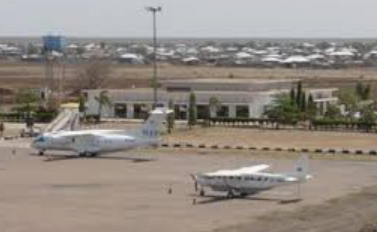
Malakal Airport was once considered one of the best airports in South Sudan before independence. Sadly, after the destruction caused during the 2013–2016 war, it has become one of the worst-affected facilities in the country. Today, passengers are forced to wait under the hot sun or in the rain, while airport staff continue to operate in plastic tents. This is not only uncomfortable; it is a clear sign of the neglect of public infrastructure in a strategic regional town.
One of the most serious concerns is the cost of air travel. Many passengers pay around USD 130 for a ticket from Malakal to Juba, yet that amount does not go entirely to the airline company. In practice, the ticket price is divided into several parts. A portion goes to the airline for the flight itself, while other parts are collected as taxes and fees by state institutions such as the Civil Aviation Authority and the National Revenue Authority. In some cases, the taxes and charges take up more than half of the total ticket price, leaving passengers to bear a heavy financial burden without receiving corresponding service in return.
For instance, when a passenger pays USD 130 for a ticket, the airline may receive less than half of that amount, while the remainder is collected through aviation fees, security charges, passenger service fees, and revenue-related deductions. In effect, the traveler is paying a high total fare, but much of it is absorbed by taxes rather than reinvested in visible improvements in airport facilities or passenger services.
This problem is not unique to Malakal. The same situation affects other airstrips across Greater Upper Nile, where people pay high prices for air travel but receive very little in return. In a region that relies heavily on air transport because of poor roads and insecurity, such costs are especially burdensome. They also deepen the sense that citizens are paying for a service that does not match the price they are charged.
A presidential visit to Malakal could help change this situation. It could bring the needed political attention to rehabilitate the airport, improve road connectivity, and address the wider infrastructure deficit. More importantly, it would send a message that the people of Upper Nile matter and that their needs deserve urgent national attention.
Malakal also has deep historical significance. It is the town where the President once worked as an army officer and from where he later departed on a path that contributed to the beginning of the May 16 revolution and the formation of the SPLA/M. Because of that history, many people in Malakal believe that the President has not forgotten the town or its people.
For these reasons, a visit to Malakal would be both meaningful and timely. It would recognize the town’s historical importance, respond to the frustrations of its people, and help push forward the long-overdue rehabilitation of Malakal Airport and related infrastructure.
May God Bless South Sudan.
William Sunday D. Tor is a political and social researcher and currently a Lecturer of Security Studies, International Development, and Regional Planning at Starford International University, Juba. He can be reached via williamtor2011@gmail.com
The views expressed in ‘opinion’ articles published by Radio Tamazuj are solely those of the writer. The veracity of any claims made is the responsibility of the author, not Radio Tamazuj.

 and then