



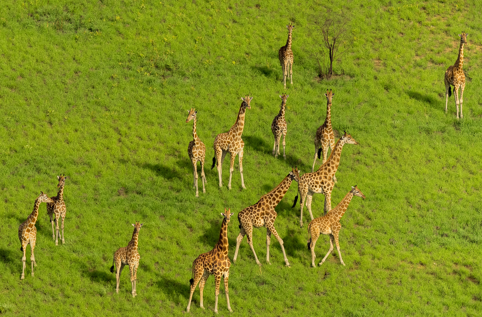
The Government of the Republic of South Sudan on Friday announced that the Boma-Badingilo Migratory Landscape (BBML) has been inscribed on the UNESCO World Heritage List, becoming South Sudan’s first UNESCO World Heritage Site.
The inscription acknowledges the landscape’s outstanding universal value and secures international recognition for one of the planet’s most remarkable migratory systems.
Spanning Boma National Park, Badingilo National Park and the vast network of wildlife corridors that connect them, the landscape covers approximately 12 million hectares of savannas, floodplains, wetlands and woodlands. One of the largest intact and ecologically functional landscapes in Africa, it forms the heart of the Great Nile Migration ecosystem and supports the largest terrestrial mammal migration on Earth.
Denay Jock Chagor, Minister of Wildlife Conservation and Tourism, said the inscription of the Boma–Badingilo Migratory Landscape as South Sudan’s first UNESCO World Heritage Site is a proud and historic moment for the nation.
“It is international recognition of the extraordinary natural heritage that South Sudan holds for the benefit of the world, and of our commitment to protecting it for future generations,” he said. “This achievement reflects years of collaboration between the Government of the Republic of South Sudan, local communities, African Parks and supporters who have worked tirelessly to safeguard this remarkable landscape.”
“The Boma–Badingilo Migratory Landscape is home to one of the greatest wildlife migrations on Earth and stands as a powerful symbol of our country’s resilience, beauty and potential. We thank UNESCO, our partners, and the people of South Sudan who have helped make this achievement possible,” Minister Jock added.
For his part, Peter Fearnhead, Chief Executive Officer of African Parks, said this is a proud day for South Sudan, and a substantive symbol of nation building in the world’s youngest country.
“There are very few landscapes left on Earth where a natural system of this scale still exists. World Heritage status will not safeguard the landscape on its own, but it does shine an international spotlight on its importance and helps build the support needed to secure its future,” he said. “We congratulate the Government of South Sudan for its leadership in achieving this milestone. African Parks is honoured to stand alongside the Government, local communities, traditional authorities and partners in safeguarding this landscape into the future.”
In 2024, the results of the first comprehensive aerial survey of the landscape confirmed what had long been suspected but never fully quantified: approximately six million antelope, including white-eared kob, tiang, Mongalla gazelle and Bohor reedbuck, move across this vast ecosystem each year in response to seasonal rainfall. These immense herds follow ancient migratory routes that have shaped the region’s ecology for millennia, across an interconnected landscape that reaches beyond South Sudan’s borders into neighbouring Ethiopia.
“The importance of the BBML extends well beyond the Great Nile Migration. Spanning a large portion of the Nile Basin, it supports extraordinary biodiversity and sustains critical ecological connectivity, with seasonal flooding, wildlife movement, grazing and nutrient flows maintaining the ecological processes that underpin its resilience and productivity,” the statement reads. “Importantly, the inscription also recognizes the people who have lived in this landscape for generations. Throughout the nomination, local communities played a central role, sharing knowledge through extensive consultation and helping shape a vision for the landscape’s future.”
The scale of the Great Nile Migration, and of the landscape that sustains it, is matched by the responsibility to ensure that it survives into the future. As South Sudan grows and develops, the region will inevitably see new infrastructure and investment – an understandable and necessary part of the country’s future. The task is to balance competing demands on land, water and wildlife so that development and this living system advance together, rather than at each other’s expense. Some of these pressures are already being felt, with extractive interests and, in particular, commercial poaching, rising to a scale not witnessed before. Together with the mounting effects of a changing climate, they make the coming years decisive for the landscape’s future.
Sarah Nyanath Elijah Yong, Minister of Culture, Museums and National Heritage, said the inscription of the Boma–Badingilo Migratory Landscape on the UNESCO World Heritage List marks a defining milestone in South Sudan’s history.
“As our country’s first World Heritage Site, it represents international recognition of a landscape whose value extends far beyond our borders and whose protection is a shared responsibility,” she said. “This achievement is the culmination of a collaborative effort involving government institutions, local communities, UNESCO, African Parks and many dedicated partners. It demonstrates South Sudan’s commitment to preserving both its natural and cultural heritage and sharing these treasures with the world.”
“We are proud that the stories, traditions and perspectives of the people who live within and around this landscape have been integral to this journey, and we look forward to building on this recognition for generations to come,” Minister Nyanath added.
This combination of global significance and pressure is what underpins the nomination: World Heritage status offers a framework to strengthen protection and mobilise the support this irreplaceable landscape will need,” the statement said. “Ensuring that the future will depend on government, communities and conservation partners working together. Since 2022, African Parks has worked alongside the Government of South Sudan under a long-term, renewable management partnership for Boma and Badingilo National Parks and the wider landscape – grounded in the recognition that the landscape and its people cannot be separated. Through ongoing engagement with local communities and traditional leaders, the partnership is helping to strengthen livelihoods, safeguard cultural heritage and support the sustainable management of natural resources.”
The inscription follows years of work led by the Government of the Republic of South Sudan, through the Ministry of Culture, Museums and National Heritage, as the national authority responsible for heritage conservation, in close collaboration with the Ministry of Wildlife Conservation and Tourism (MWCT), the South Sudan Wildlife Service (SSWS), local communities, IUCN, UNESCO and African Parks.
As South Sudan marks its first World Heritage Site, the inscription is both a recognition of an extraordinary landscape and a call to action — a reflection of the country’s commitment to safeguarding a source of immense national pride and one of the world’s last great functioning natural systems, whose survival will be measured not by what is celebrated today, but by what is protected for those who will inherit it. Paulino Warnyang, community representative, said that for generations, communities have lived alongside the wildlife and landscapes of Boma and Badingilo.
“This recognition honours not only the animals and the land, but also the people whose lives, traditions and cultures have always been connected to them,” he said. “We are proud that the world can now see the importance of this place. We hope this recognition will bring new opportunities for our communities while ensuring that our natural heritage remains protected for our children and grandchildren.”

 and then