



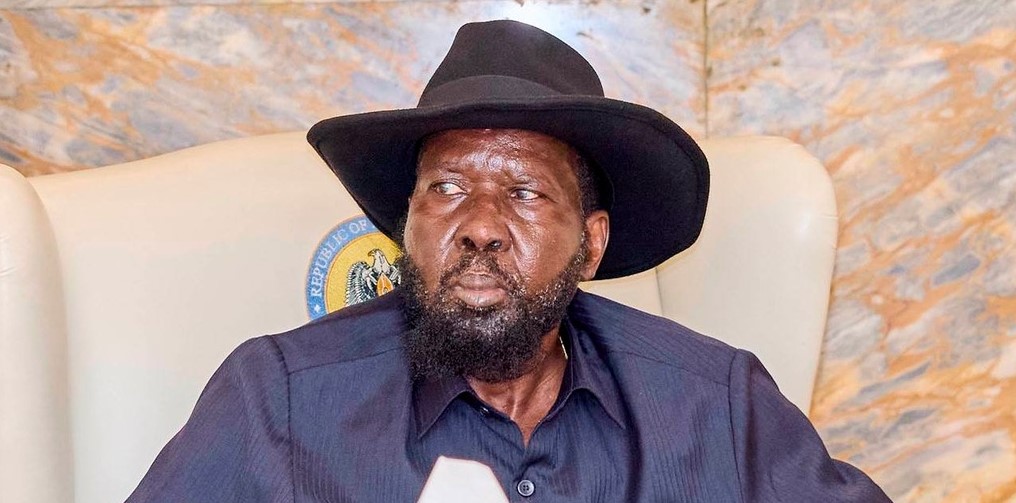
When President Salva Kiir sat down for a televised interview with Citizen TV Kenya’s Jeff Koinange on 22 July 2026, the expectation from the public was high. The interview was widely anticipated as an opportunity for President Kiir to reassure South Sudanese citizens, regional leaders, and the international community that the country’s long-promised elections remained on course and that the government possessed both the political will and institutional readiness to deliver them.
Instead, the interview exposed the country’s unpreparedness for elections and has generated the very conversations the government wants to avoid.
Rather than strengthening confidence in the electoral process, the interview prompted renewed scrutiny of the state of governance, the preparedness of national institutions, and the country’s political direction. Across South Sudan and among observers abroad, the attention quickly shifted from election planning to broader questions about leadership, state capacity, and whether the country is genuinely prepared for a democratic transition.
Throughout the interview, many viewers commented that the president appeared less energetic than expected and, at times, relied heavily on brief or general responses. Television appearances, however, are not a reliable basis for judging a person’s health or capacity, and no medical conclusions should be drawn from them. Nevertheless, perception matters in politics. Citizens naturally assess how their leaders communicate during moments of national importance, and public confidence is shaped as much by clarity and preparedness as by policy announcements.
The greater issue raised by the interview is therefore not the president’s personal appearance but what it revealed about the government’s preparedness to answer the difficult questions surrounding South Sudan’s future.
Elections require institutions, not just political declarations.
For years, South Sudan’s elections have been postponed because essential requirements remained incomplete. The implementation of the Revitalized Peace Agreement has progressed selectively. Constitutional reforms remain unfinished. Questions surrounding electoral legislation, permanent institutions, civic space, security arrangements, voter registration, and political freedoms continue to dominate discussions among national and international stakeholders. These are the foundation upon which credible elections depend.
History demonstrates that elections conducted without broad political consensus and robust legal safeguards can create more conflicts instead of resolving them. The legitimacy of an election is determined not simply by whether ballots are cast, but by whether competing political actors and ordinary citizens believe the process was lawful, transparent, free and fair.
The interview raised questions the government must answer
Perhaps unintentionally, the interview highlighted the widening gap between official assurances and public expectations.
South Sudanese citizens deserve clear answers to questions that remain unresolved. Is the constitutional framework for elections fully complete? Are the institutions responsible for administering elections independent and adequately resourced? Can political parties campaign freely across the country? Will internally displaced persons and refugees be able to participate meaningfully? Can security agencies guarantee peaceful political competition? What mechanisms exist to resolve electoral disputes peacefully?
These questions are more important than any television interview because they determine whether elections become an instrument of peace or a fermenting pot of political instability.
The responsibility of regional and international partners
The African Union, IGAD, the East African Community, the United Nations, and South Sudan’s international partners have invested heavily in the country’s peace process. Their responsibility extends beyond encouraging elections according to a timetable. They must also support conditions that make elections credible.
International legitimacy should not depend solely on whether an election is held. It should depend on whether the election reflects constitutional order, political inclusion, peace, respect for civil liberties, and public confidence.
An election that lacks these elements may only satisfy a deadline while failing to strengthen democracy and creating more conflicts in the country.
Leadership and public confidence
Leadership is tested most visibly during periods of uncertainty. Citizens expect their leaders to explain national challenges candidly, demonstrate preparedness, and inspire confidence through substance rather than symbolism.
The interview reminded South Sudanese that citizens’ confidence cannot be boosted by public relations stunts, but earned through institutional reform, transparent governance, respect for the rule of law, and meaningful implementation of the peace agreement.
The real story
The real story emerging from the Citizen TV interview is not whether President Kiir performed well before the cameras. The more consequential question is whether South Sudan is institutionally prepared for the democratic exercise it has promised its citizens for years.
The answers to that question cannot be found in a television studio. They lie in the country’s constitution, its laws, its independent institutions, its political freedoms, and its commitment to implementing the peace agreement in both letter and spirit.
If the interview has accomplished anything, it has opened an overdue national conversation: Will South Sudan’s future be secured merely by announcing an election date and dishing out party t-shirts and caps, or will it be secured only when citizens are convinced that the process is lawful, inclusive, peaceful, and worthy of their trust?
Disclaimer: This article is an opinion and analytical commentary based on publicly available information and the televised interview aired on 22 July 2026. The views expressed are those of the author and are intended to encourage public discussion on governance, constitutionalism, and electoral preparedness in South Sudan. Any observations about the interview reflect the writer’s interpretation of the public broadcast and should not be construed as a medical or professional assessment of any individual.
The writer is a scholar of International Relations and Diplomacy and Security Studies.
The views expressed in ‘opinion’ articles published by Radio Tamazuj are solely those of the writer. The veracity of any claims made is the responsibility of the author, not Radio Tamazuj.

 and then