



Introduction
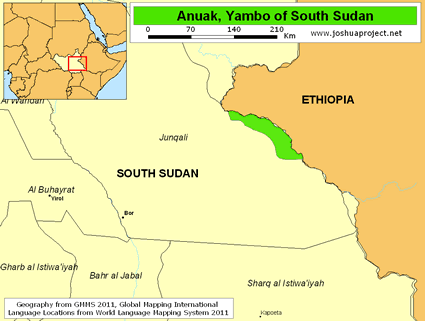
The decision by Chief Administrator Gola Boyoi Gloa of the Greater Pibor Administrative Area (GPAA) to send armed civilians to occupy Raad, based on the claim that the area does not belong to the Anywaa, appears to stem either from a lack of understanding of the area’s history, an overconfidence associated with the authority of his office, or a desire to gain control over the area’s mineral resources, particularly gold. For those who have lived in and understand the history of the region, Okwa has played a significant role in both the historical development of the area and the liberation struggle that ultimately led to the creation of the country we know today.
The Ilemi Triangle
The Ilemi Triangle, a territory covering approximately 11,000 square kilometers, is not merely a geographical term created by scholars or geographers. Rather, it derives its name from King Ilemi, whose headquarters were located at Okwa in Upper Raad. When British colonial officials arrived in Sudan, they found that King Ilemi’s influence extended across a vast territory reaching the present-day borders of South Sudan, Kenya, and Ethiopia. It was this sphere of authority that gave rise to the name “Ilemi Triangle.”
For those who have lived in the area and are familiar with its history, this is a well-known and uncontested fact. The present King Gilo is the great-grandson of King Ilemi, and his headquarters remain at Okwa, the same place from which his ancestor ruled and extended his influence throughout the region. This continuity reflects the enduring historical significance of Okwa as a center of political authority and cultural identity for the Anywaa people.
The Establishment of Raad
The establishment of Raad as a base for the SPLA/M during the liberation struggle was made possible through the efforts and support of King Okwanga, the grandson of King Ilemi. He allowed SPLA/M soldiers to settle in Raad and provided them with food and other essential supplies during a critical period of the struggle.
More importantly, King Okwanga endured accusations from Sudanese area commanders based in Pochalla Town, who alleged that he was supporting the rebels by providing them with food, shelter, and protection at a time when the SPLA/M forces were still weak and vulnerable. His support played a significant role in sustaining the movement during those difficult years and contributed to the broader struggle for self-determination.
Implications
The history of Okwa cannot be separated from the history of Anywaaland. It has long served as a center for the Anywaa people’s interactions with neighboring communities, including the Murle of Jebel Boma, the Kecipo, and other groups living within the present-day Ilemi Triangle region.
Rather than creating or encouraging intercommunal conflict, administrators and political leaders should study how traditional authorities in the eighteenth and nineteenth centuries developed political and economic systems that fostered cooperation, coexistence, and mutual benefit among neighboring peoples. The experience of Okwa offers valuable lessons that the GPAA can draw upon in building lasting relationships among its communities and strengthening peace, stability, and cooperation throughout the region and beyond.
History should be a source of wisdom and guidance, not a tool for division. A careful understanding of the historical role of Okwa and its leaders can help promote dialogue, mutual respect, and peaceful coexistence among all communities that share this region.
The writer is a former GPAA Deputy Chief Administrator.
The views expressed in ‘opinion’ articles published by Radio Tamazuj are solely those of the writer. The veracity of any claims made is the responsibility of the author, not Radio Tamazuj.

 and then