



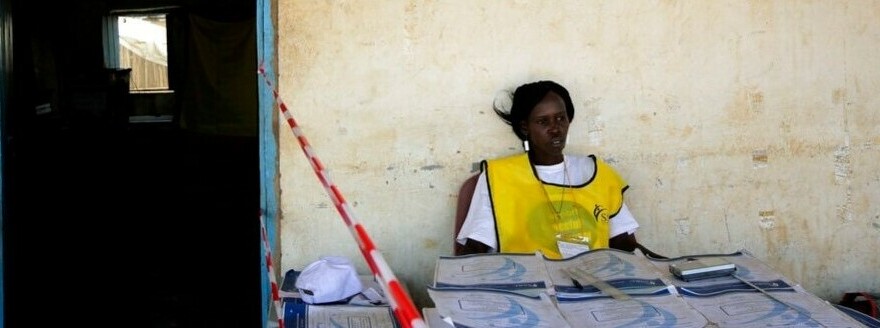
Residents and officials in the Greater Pibor Administrative Area (GPAA) say the area still has no election office, raising concerns about preparations for general elections scheduled for Dec. 22.
With only four months until the vote, voter registration, civic education and other key electoral activities have yet to begin in the administrative area.
GPAA Information Minister Jacob Werchum Jouk told Radio Tamazuj on Sunday that no election office had been established despite the National Elections Commission (NEC) appointing two local coordinators.
“Up to now, an electoral office has not been established in Pibor, although two natives of GPAA have been appointed by the National Elections Commission as coordinators,” Werchum said.
“No electoral activities are taking place as we wait for voter education and voter registration to begin,” he said, urging the NEC to accelerate implementation of its election timetable so residents could participate in the process.
Werchum said the administrative area planned to officially launch its local election activities within a week and endorse its chief administrator.
Residents say the absence of an election office has cast doubt on whether authorities can complete the necessary preparations before polling day.
“As citizens, we are ready for the Dec. 22 elections,” resident Nyany Korok said. “But no election office has been established in Greater Pibor. When will electoral officials be appointed and trained, and when will voter registration begin? These unmet prerequisites are creating doubts.”
Bol Deng Bol, head of the National Civil Society Coalition, said the concerns were justified.
He said the three administrative areas—Greater Pibor, Abyei and Ruweng—were expected to be administered by neighbouring states instead of having their own electoral committees.
“The information we have is that Greater Pibor will be managed from Jonglei State,” Bol said. “We understand the concerns of the administrative areas. They should have their own independent electoral committees.”
Bol said election preparations remained slow across the country.
“No tangible activities are taking place in the states, let alone in Greater Pibor,” he said. “People still do not know who is eligible to vote or the criteria for voting.”
He also questioned constituency arrangements, saying newly created payams and bomas had yet to be reflected in electoral representation.
Under the 2010 elections, Greater Pibor formed part of Jonglei State.
South Sudan is due to hold its first general elections since gaining independence in 2011 on Dec. 22, after repeated postponements linked to conflicts and delays in implementing the country’s 2018 peace agreement.
President Salva Kiir has remained de facto president even though he was only authorized for one 4-year term following South Sudan’s vote for independence in 2011.

 and then