



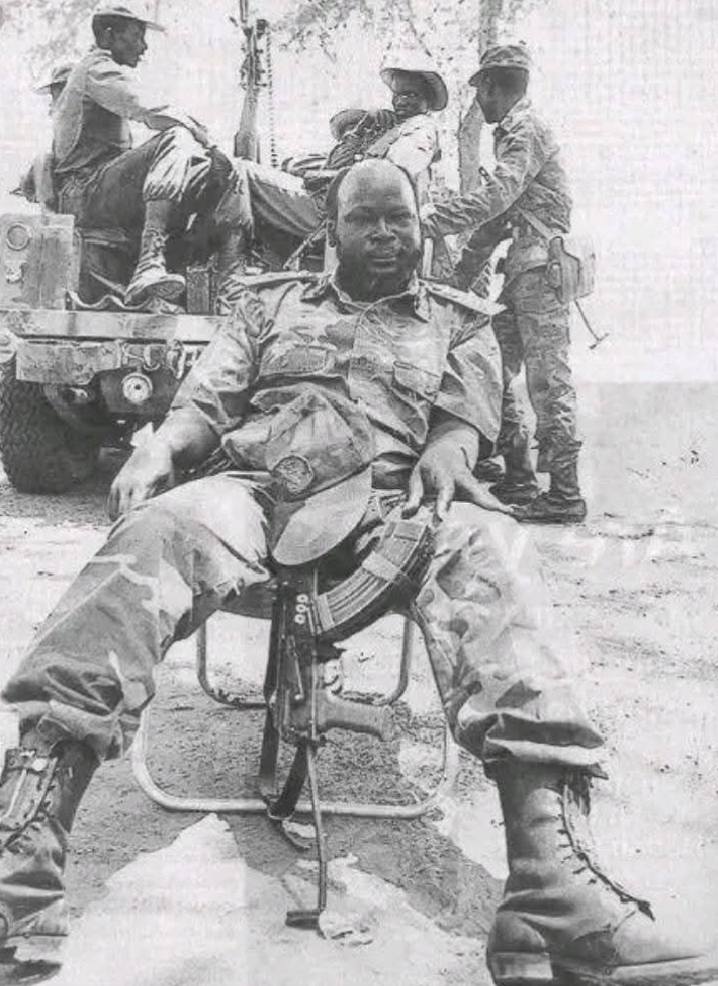
Every year on 30 July, we pause to honor the memory of South Sudan’s heroic martyrs. Their blood has nourished the tree of our freedom from the 1950s to the present day. This is a day of remembrance, reflection, and renewed commitment to the ideals for which they gave their lives, so that future generations might inherit a nation founded on freedom, justice, equality, and human dignity.
Martyrs’ Day reminds us not only of the suffering of the past but also of the hope that sustained our people’s long struggle. A martyr is not merely one who falls on the battlefield, but anyone who willingly sacrifices everything for a cause greater than themselves. South Sudan’s martyrs came from every community, every faith, and every region. They left behind their families, abandoned personal ambitions, and endured unimaginable hardships because they believed that one day their children would live in a homeland where every citizen enjoys equal rights, equal opportunities, and equal protection under the law.
This day also reminds us that our shared history was written through the courage and sacrifice of ordinary men and women who refused to surrender to oppression. Many never lived to witness the birth of the Republic of South Sudan on 9 July 2011, yet it was their sacrifice that laid the foundation upon which our nation was established.
Let us always remember, especially on this memorial day, that the goal of the national liberation struggle was never to replace one form of oppression with another. This struggle was not waged to concentrate power in the hands of a privileged few while millions suffer from poverty, insecurity, displacement, and a lack of opportunity. Nor was it waged to divide citizens along ethnic, regional, or political lines.
Today, fifteen years after independence, we commemorate our martyrs with heavy hearts. The ideals for which they sacrificed their lives remain painfully unfulfilled. Instead of becoming the foundation of a just and democratic republic, the promise of liberation has been overshadowed by political exclusion, corruption, insecurity, and the concentration of power. The liberation movement that once inspired millions has, in the eyes of many citizens, become increasingly focused on preserving its authority rather than serving the people.
Our martyrs did not sacrifice their lives so that fear would replace freedom, moral decay would replace the values that sustained our society, or public office would become a pathway to personal enrichment. They fought believing that every South Sudanese—regardless of tribe, religion, or region—would enjoy equal citizenship, equal justice, and equal protection under the law. Their struggle was for a nation that belongs equally to all its people.
Nor did they endure decades of suffering merely to replace one privileged elite with another. They did not dream of a country where corruption would become institutionalized, public resources squandered, and millions condemned to poverty despite the nation’s abundant natural wealth. They did not envision a society where fear silences dissent, political competition is suppressed, and the hopes of an entire generation are consumed by despair.
Independence was meant to mark the beginning of a new chapter in our national history—a chapter defined by democratic governance, accountability, reconciliation, and national unity. Yet many South Sudanese believe that this historic opportunity has not been realized. The dream of building a republic governed by the rule of law, where public office is a sacred trust rather than a privilege, remains unfinished.
Perhaps the greatest betrayal has been the abandonment of the true purpose of independence. Independence was never intended to be the final destination; it was meant to be the beginning of building a democratic, inclusive, accountable, and prosperous state in which sovereignty genuinely belongs to the people.
The greatest tribute we can pay to our martyrs is not found in speeches, official ceremonies, or symbolic wreaths. It is found in continuing the mission they left unfinished. We honor their memory when we defend justice, uphold responsible citizenship, reject oppression and corruption, resolve differences through peaceful dialogue rather than violence, and place the national interest above personal, ethnic, or partisan loyalties.
Martyrs’ Day must therefore become more than an annual commemoration. It should serve as a national covenant—a solemn promise that the blood shed for our freedom will never be forgotten and that the principles for which our heroes died will continue to guide the future of our nation.
On this National Martyrs’ Day, we remember every patriot who sacrificed everything for the independence of South Sudan. Their sacrifice belongs to the entire nation—not to any political party, government, or individual. Their legacy should inspire every generation to defend justice, reject tyranny, oppose corruption, and resist all forms of exclusion and abuse of power.
Our martyrs liberated the land. The responsibility that remains belongs to the living: to liberate the state from injustice, corruption, mismanagement, and division, and to fulfill the aspirations for which so many gave their lives. The unfinished struggle of our generation is no longer for independence itself, but for the realization of a Second Republic.
In conclusion, let us bow our heads in gratitude and reverence before the heroes whose sacrifices made our freedom possible. Their courage remains a beacon for future generations, calling every South Sudanese to continue the struggle to build a nation worthy of their sacrifices: a peaceful, federal, secular, democratic, and prosperous South Sudan, where every citizen lives in dignity, equality, and freedom.
May the souls of all our martyrs rest in eternal peace, and may their sacrifice continue to inspire our nation to complete the unfinished dream for which they gave everything.
The writer, Sokiri Lo Poni, is a concerned South Sudanese. He can be reached via Sokiril8@gmail.com.
The views expressed in ‘opinion’ articles published by Radio Tamazuj are solely those of the writer. The veracity of any claims made is the responsibility of the author, not Radio Tamazuj.

 and then