



Few realities compel deeper reflection than the trajectory of a nation that once fought so courageously for its freedom. In contemplating the condition of South Sudan today, one is inevitably drawn to the philosophical principle of noncontradiction, the enduring idea that something cannot simultaneously be and not be in the same respect and at the same time. Though rooted in classical philosophy, this principle extends far beyond the confines of academic inquiry. It speaks to the integrity of individuals, the coherence of societies, and the moral consistency upon which nations are built.
Yet contemporary political and intellectual discourse among South Sudanese often presents a troubling departure from this principle. One frequently encounters respected intellectuals, political leaders, and former liberation figures advancing positions that seem fundamentally incompatible with the values they once championed. This reality provokes an uncomfortable but necessary question: What happened to the ideals that animated our struggle? How did many who once stood firmly against injustice, exclusion, and domination come to tolerate or even defend similar practices today?
During the era of Sudan, our grievances were neither imagined nor exaggerated. We lived under systems that marginalized us politically, neglected us economically, and denied us justice, cultural recognition, and human dignity. We clearly understood the structures that relegated us to the margins of national life. We named those injustices without fear, and when peaceful efforts repeatedly failed to yield meaningful change, many embraced the difficult and costly path of armed resistance, a choice made at great personal sacrifice.
The governments in Khartoum routinely dismissed our concerns. Our demands were portrayed as unreasonable, our aspirations ridiculed, and our suffering minimized. Yet despite these obstacles, we remained steadfast because we believed in the moral legitimacy of our cause. We believed that every human being deserved dignity, equality, and freedom. Thousands sacrificed their lives not for personal gain but for principles they regarded as universal and nonnegotiable.
The tragedy of the present moment is that many of the conditions that once united us against oppression have resurfaced within our own independent state. The symbols have changed, the flag has changed, and the institutions have changed, yet certain patterns remain disturbingly familiar. Political exclusion persists in various forms. Patronage often overshadows merit. Access to opportunities remains uneven. Citizens who voice criticism are too frequently viewed as enemies rather than participants in a legitimate democratic conversation.
More troubling still is the transformation of some former opponents of injustice into defenders of practices they once condemned. Those who passionately denounced exclusion often fall silent when exclusion affects others but not themselves. Those who celebrated resistance under one system sometimes condemn dissent under another. In certain instances, the language of liberation has gradually been repurposed into a language of justification, protecting the very tendencies it was originally intended to overcome.
This is not simply a political inconsistency; it is a profound moral contradiction. If oppression was wrong when directed against us, it remains wrong when directed against fellow South Sudanese. If discrimination was unjust under Sudan, it cannot become acceptable under South Sudan. Principles do not acquire legitimacy because power changes hands. Justice remains justice regardless of who governs, and injustice remains injustice regardless of who commits it.
For this reason, we must summon the courage to ask difficult questions of ourselves and of our nation. Was our struggle truly aimed at creating a society grounded in justice, equality, and human dignity? Or, at least in some instances, did liberation become confused with the mere transfer of power from one ruling group to another? These questions are uncomfortable precisely because they force us to examine not only our institutions but also our collective conscience.
Independence was never intended to be the culmination of our aspirations. It was meant to be the beginning of a new political and moral journey. The raising of a new flag, the adoption of a new anthem, and the establishment of new governmental structures were important achievements, but they were never ends in themselves. Their significance lay in the promise of a different future, a future in which citizenship would replace exclusion, justice would replace favoritism, and human dignity would become the foundation of public life.
The true measure of liberation is therefore not found in ceremonies, symbols, or declarations. It is found in the everyday experiences of ordinary citizens. It is measured by whether people are treated fairly before the law, whether opportunities are distributed equitably, whether communities feel secure, and whether political power serves the public good rather than private interests.
History repeatedly teaches that nations rarely decline simply because they lack resources. More often, they decline because they lose sight of the moral principles that once gave them purpose and direction. When values are applied selectively, they cease to be values and become instruments of convenience. When justice is demanded only for ourselves and denied to others, it loses its ethical authority. A society cannot sustain moral credibility while practicing double standards.
South Sudan stands at a pivotal crossroads in its history. Our challenge extends beyond constructing roads, schools, and public institutions, vital as these tasks undoubtedly are. Our deeper challenge is to cultivate a political culture rooted in consistency, accountability, and respect for the inherent dignity of every citizen. We must recover the ethical vision that inspired the liberation struggle and apply it with honesty, even when doing so requires self criticism.
The future of our nation will depend not only on the victories of the past but also on our willingness to confront the contradictions of the present. Until we do so, we risk remaining trapped in a paradox: politically independent yet morally unfulfilled, sovereign in form yet incomplete in substance. The unfinished struggle before us is therefore greater than a contest for power. It is a struggle for moral integrity, national renewal, and the realization of the ideals for which generations sacrificed their lives and property.
Only when our actions reflect the principles we profess will liberation achieve its fullest meaning. Only then will South Sudan become not merely a nation that won its independence, but a nation that fulfilled the promise of its multifaceted freedom.
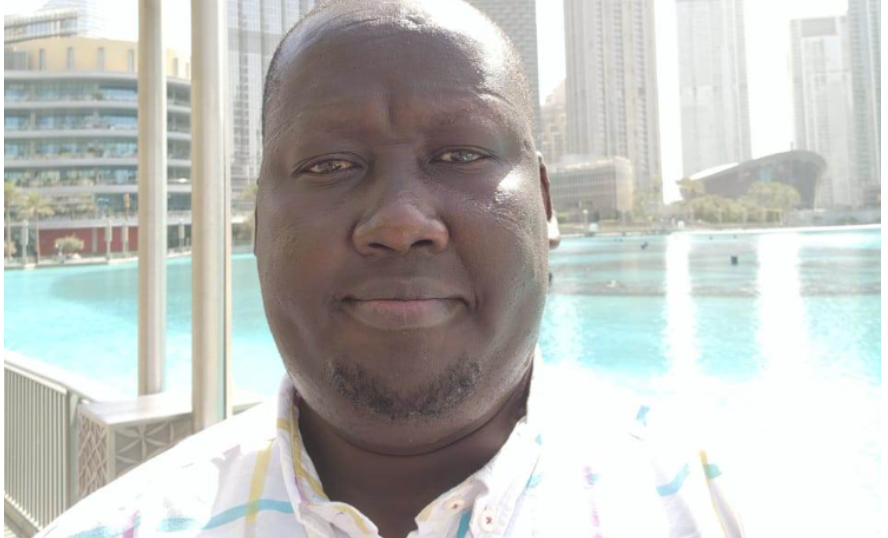
The writer, Gatkuoth Lok Gatwich Diet, is a PhD candidate at Tangaza University, Nairobi, Kenya. He can be reached via email: dietlok7@gmail.com
The views expressed in ‘opinion’ articles published by Radio Tamazuj are solely those of the writer. The veracity of any claims made is the responsibility of the author, not Radio Tamazuj.

 and then