



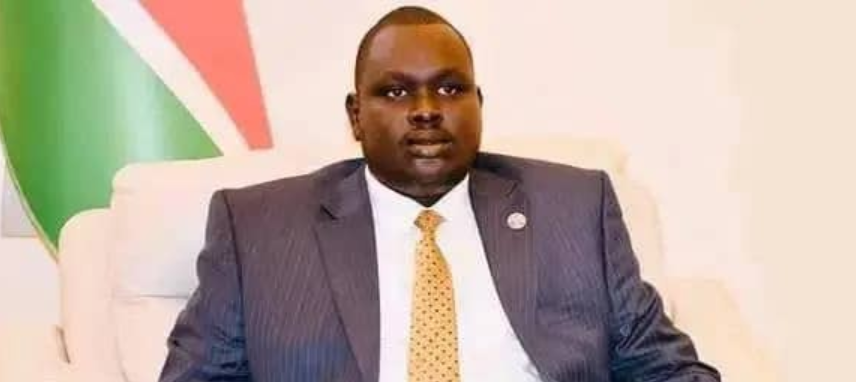
The slow reopening of political space around Dr. Riek Machar Teny is beginning to shift the tone of South Sudan’s fragile transition, pointing to what may be a carefully managed breakthrough. For the first time since his house arrest on 26 March 2025, the SPLM IO has been allowed to formally engage with the African Union envoy, H.E. Jakaya Kikwete. Is South Sudan witnessing the early stages of a negotiated release for Dr. Riek Machar and other political detainees, or is this merely a calibrated opening? The question now sits at the centre of national debate.
Dr. Machar’s continued confinement, alongside the ongoing trial of Puot Kang and seven others, including himself since 22 September 2025, underscores the weight of this moment. What appears procedural on the surface carries deep political symbolism beneath it. Even limited engagement signals a shift, suggesting that dialogue channels, long constrained, may be cautiously reopening.
The timing reinforces this interpretation. It follows closely on the heels of President Salva Kiir’s Easter message, which framed forgiveness not simply as a moral appeal but as a strategic political instrument. That message now reads as a prelude, subtly preparing both domestic and international audiences for de escalation. What is unfolding may be the first real test of whether that signal was rhetorical or deliberate.
Kikwete’s mission reflects a broader continental recalibration. His appointment through the AU C5 mechanism in Addis Ababa, followed by consultations in South Africa and Uganda, signals renewed regional focus on South Sudan. His stop in Kampala to meet Yoweri Museveni before arriving in Juba on 8 April 2026 highlights the stakes. This is a structured fact finding mission designed to determine whether conditions are ripe for political movement.
All signatories to the peace agreement including SPLM IG, SPLM IO, SSOA, and OPP have now engaged the envoy, creating a sense of consultative balance. Meetings with cabinet ministers, civil society, and diplomats further deepen this process. Yet the most consequential shift remains the re entry of the SPLM IO into formal dialogue, however limited, despite the ongoing legal constraints on its leadership.
Such openings are rarely accidental. In the region’s political history, they often precede broader settlements, tested incrementally to manage both risk and perception. The convergence of President Kiir’s internal messaging and the AU’s external engagement suggests coordination rather than coincidence.
Still, caution is warranted. South Sudan has witnessed similar moments in which optimism briefly rises before giving way to renewed stalemate. What may distinguish this moment is the alignment of regional pressure, AU coordination, and domestic political signalling. If sustained, this alignment could generate enough momentum to move beyond symbolic gestures.
For now, the country remains in a state of calculated anticipation. The engagement between SPLM IO and the AU envoy has reignited speculation and shifted the political conversation. Whether it leads to Dr. Machar’s release, a broader settlement, or another cycle of managed tension will depend on decisions unfolding behind closed doors.
What is clear is that the conversation has changed. And in South Sudan’s politics, that shift is often the earliest sign that something bigger is quietly taking shape.
For one people, one nation
The writer, Bec George Anyak, is a former Deputy Minister of Finance and Planning, South Sudan.
The views expressed in ‘opinion’ articles published by Radio Tamazuj are solely those of the writer. The veracity of any claims made is the responsibility of the author, not Radio Tamazuj.

 and then