



Prime Minister Abiy Ahmed is offering to bring Sudan’s warring military, political and civilian parties together while leaving his own unfinished work in South Sudan unexplained. ENA’s report of 24 November 2026 describes an ambitious proposal for inclusive dialogue, transitional arrangements and a national unity government. Abiy insists that “No externally imposed solution can deliver sustainable peace”, a principle that South Sudanese have every reason to support. What we have reason to question is his confidence in presenting another peace initiative when the agreement he helped celebrate in Addis Ababa eight years ago has been stripped of much of its substance. Before asking Sudanese parties to trust his leadership, he owes an explanation to the people still living with the failure of the South Sudan settlement, including the Ethiopians whose communities have absorbed its consequences.
Abiy’s part in that settlement appears in his government’s own public record. Ethiopia’s embassy account, published on 14 September 2018, states that he chaired the IGAD summit at which South Sudan’s revitalised peace agreement was signed, following negotiations that included a substantial Sudanese role. It records him urging the leaders that “you must not allow a single drop of blood to be spilt” and promising IGAD support for implementation. Eight years later, IGAD’s communiqué of 15 September 2026 was still calling for inclusive dialogue to restore confidence and agree a path to elections. In November, ACHPR expressed concern about abandonment of the agreement’s implementation, political detention and changes adopted outside its procedures. Abiy’s record should be judged against those findings, because the promises made in 2018 were supposed to protect people after the signing ceremony, when the parties returned home and the difficult work began.
General Salva Kiir Mayardit and the other South Sudanese leaders who break their commitments bear responsibility for their decisions. That responsibility does not release Abiy and his regional counterparts from answering for the support they undertook to provide. Abiy cannot reasonably seek recognition for helping bring the parties together while treating the collapse of their commitments as somebody else’s problem. His South Sudan record is poor because the process he helped lead has not secured the lasting protection and inclusive political settlement our people were promised. He now appears to be seeking another mediation assignment before accounting for the unfinished one, as though a larger negotiating table could make the earlier failure less visible. Sudanese parties are entitled to know what Ethiopia learned when the South Sudan settlement began to unravel and what it would do when another leader signs an agreement and later decides its restrictions no longer suit him.
The treatment of opposition parties in South Sudan makes Abiy’s language about inclusion especially difficult to accept without scrutiny. ACHPR’s Resolution 680, adopted in November 2026, described electoral conditions as “inadequate to guarantee free, fair, inclusive and credible elections”. It called for review of the September amendments and the dissolution undertaken outside the R-ARCSS, alongside protection of journalists and opposition members, an independent NEC and dialogue involving excluded opposition representatives. These concerns go to the heart of whether people can challenge those governing them. Ethiopia’s commitment to inclusive talks should extend to dissenting political and armed opposition in South Sudan, where negotiations must address disagreements that cannot be settled by inviting only those willing to accept Juba’s terms. The difficult test for Abiy is whether he will defend those principles when doing so requires pressure on a government with which Ethiopia must maintain relations.
For Ethiopians living near South Sudan, the consequences already reach beyond diplomatic disappointment. UNHCR’s displacement overview for July 2025 described people crossing the Baro River at Burebiey before “shots fired across the river at civilian locations” forced both the arrivals and their Ethiopian hosts farther inland. Ethiopian residents who had provided refuge were themselves driven to seek safety. By 31 October 2026, the government and UNHCR dashboard recorded 468,777 South Sudanese refugees and asylum-seekers in Ethiopia, representing 45.8 per cent of the country’s registered refugee and asylum-seeker population. Gambella hosted 438,572 refugees and asylum-seekers of all recorded origins. These are consequences inside Ethiopia’s borders, borne by people whose security should weigh heavily in their prime minister’s decisions. Abiy’s statements about the close connection between neighbouring countries’ security must be measured against what his diplomacy achieves for those communities.
The pressure on local services is also documented. In its emergency assistance announcement of 30 April 2026, the EU described Gambella’s limited humanitarian resources and overstretched host communities while providing support for food, clean water, shelter, healthcare and protection. Families on both sides of the border are carrying the cost of decisions made far from them, while local services must respond to additional needs without dependable resources. Ethiopian communities deserve support for the responsibilities they have accepted, and refugees deserve safety without being blamed for the violence that forced them from their homes. Neither group should be expected to endure repeated emergencies while regional leaders continue to announce peace without securing it. Abiy’s South Sudan record must therefore be examined through the conditions of those families, including whether they can obtain treatment, find clean water and live without having to flee again.
Weapons must also be part of that examination. A BICC study published in 2002 documented illicit arms trafficking and weapons circulation in the Gambella border area, showing that the connection between conflict in southern Sudan and insecurity inside Ethiopia has long been understood. UNDP’s July 2024 article, Building safe communities in South Sudan, subsequently stated that “illegal weapons have flooded the country due to decades of war, violence and insecurity” and explained why disarmament requires protection and trust within affected communities. UNSC Resolution 2821 of May 2026 extended South Sudan’s arms measures until 31 May 2027, subject to the applicable exceptions and exemptions. Ethiopia and its neighbours should account for their enforcement of those measures, their investigations into suspected trafficking and their cooperation with monitors. Agreements lose their force when those prepared to violate them can continue acquiring the weapons with which to do so.
Ethiopia’s involvement has also cost Ethiopian lives. In a statement published on 25 August 2026, the UN reported that two Ethiopian peacekeepers had been killed and three others injured when unidentified gunmen ambushed a UNMISS patrol in Jonglei. Their service deserves respect, and their deaths place a further responsibility on the political leaders whose diplomacy is supposed to help make such missions safer. Peacekeepers cannot repair every failure of a peace agreement, prevent every attack or replace the political decisions that governments refuse to make. Ethiopian personnel can serve honourably while the arrangements intended to support their work continue to fail them. Abiy should be judged on how his government presses for cooperation from Juba, supports investigations and works with regional partners to confront the political failures that leave peacekeepers and civilians exposed to continuing violence.
The pressures within Ethiopia make his confidence in another undertaking harder to take at face value. The Ethiopia Protection Cluster’s analysis of 6 October 2026 described continuing armed violence and insecurity in Amhara, Benishangul-Gumuz, Gambella and Oromia, incomplete recovery in Tigray, strained community resources and constraints on humanitarian access. Ethiopia can help a neighbour while addressing its own problems, but its government must be honest about the demands on its attention and resources. Announcing another initiative does not establish that Abiy can sustain the patient work required when negotiations stall, participants distrust one another and implementation threatens the interests of powerful leaders. His claim to regional leadership needs to survive that examination. South Sudan provides a record against which the public can assess it, and that record gives considerably less reason for confidence than his latest invitation suggests.
His offer to Sudan also comes amid a serious dispute over Ethiopia’s own conduct. Radio Tamazuj’s report of 24 November described Sudan’s accusations that Ethiopia had facilitated RSF operations and drone attacks, Ethiopia’s denial, and the reciprocal closure of consulates in Assosa and Gedaref earlier in November. Those accusations require evidence and should not be treated as established findings. The distrust surrounding them nevertheless creates a problem that Abiy cannot remove simply by declaring Ethiopia neutral. Sudanese participants would need dependable guarantees of safety, a way to raise concerns about the mediator’s conduct and a clear understanding of how Ethiopia’s involvement would support other peace efforts. Civilian organisations, women, displaced people and independent political groups must also have a say in what is negotiated, rather than be invited to endorse arrangements already settled between armed leaders.
Abiy’s proposal asks Sudanese parties to trust another process without explaining how it would avoid the failures of the South Sudan settlement. South Sudan already had a negotiated agreement, monitoring arrangements and years of regional engagement, yet those provisions did not prevent political leaders from departing from its terms. Ethiopia needs to say what it would do differently, including how it would work with IGAD, the AU and the UN, support independent monitoring and press for compliance when relations with a government become uncomfortable. The value of mediation becomes apparent after the delegations leave, when promises have to be honoured and leaders begin calculating what they can disregard. That is the part of his record Abiy must defend before another opening ceremony is presented as proof of diplomatic success.
The Sudanese deserve every serious opportunity to end their war, but they also deserve a mediator willing to confront his own failures before asking them to trust his assurances. Abiy owes the region an account of what Ethiopia has learned from South Sudan, which breaches it will no longer excuse and what it will do with neighbouring governments to protect border communities, control weapons and support negotiations that include those who disagree with Juba. Until he provides that account, his proposal asks for confidence that eight years of unfinished work have weakened. South Sudanese refugees, Ethiopian hosts, border residents and peacekeepers have already paid a far higher price for this failed peace than the leaders who continue to announce it. Their experience should weigh more heavily than Abiy’s ambition to preside over another negotiation.
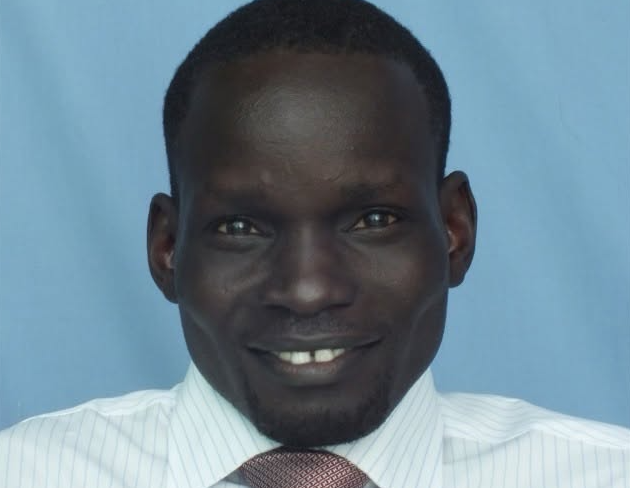
The writer, Dr. Deng Bol Aruai Bol, is the chairman and commander-in-chief of the South Sudan People’s Liberation Movement/South Sudan People’s Liberation Army (SSPLM/SSPLA). He can be reached at dengbolaruaibol@gmail.com.
The views expressed in ‘opinion’ articles published by Radio Tamazuj are solely those of the writer. The veracity of any claims made is the responsibility of the author, not Radio Tamazuj.

 and then