



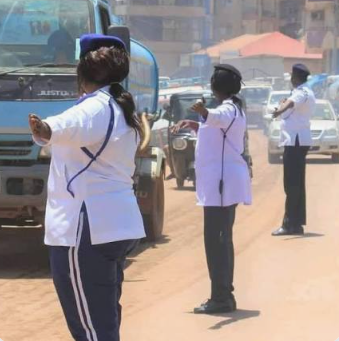
Introduction: The Citizen’s Most Frequent Encounter with the State
A citizen may live an entire lifetime without meeting a minister, a governor, a judge, or even the President. Yet almost every motorist will eventually encounter a traffic police officer. For many South Sudanese, that interaction has become the most visible and frequent representation of state authority.
A few months ago, while driving through Juba, I was stopped at what appeared to be a routine traffic checkpoint. The exchange was courteous enough at first, and then the conversation drifted, as such conversations often do, towards what might be offered for tea. The experience was neither unusual nor surprising. In fact, it was familiar. Like thousands of South Sudanese motorists, I had come to expect that a routine interaction with traffic police could quickly become an exercise in uncertainty, negotiation, and quiet financial pressure. What troubled me most was not the incident itself. It was the realization that almost everyone I spoke to afterwards had a similar story to tell.
In theory, traffic police perform an essential public service. They regulate movement on public roads, enforce safety standards, prevent accidents, and maintain public order. Their presence should reassure citizens that the law is functioning and that public institutions are working in their interest.
Yet for many South Sudanese motorists, the reality is often very different.
Across Juba and other urban centers, accounts of unofficial payments, arbitrary enforcement, intimidation, harassment, and extortion have become common features of everyday conversation. Whether speaking to taxi drivers, private motorists, government employees, business owners, humanitarian workers, or transport operators, one encounters remarkably similar descriptions of roadside encounters that appear to have little to do with public safety and much to do with extracting money from ordinary citizens.
Not every officer engages in misconduct. Many members of the police service perform their duties professionally and honestly despite difficult circumstances. Yet the consistency, frequency, and persistence of public complaints suggest that misconduct within traffic enforcement is not merely the work of a few isolated individuals. Rather, it appears to be a problem serious enough to threaten public confidence in the institution itself.
This essay argues that corruption and abuse within traffic policing have become more than a law enforcement problem. They represent a governance crisis, a failure of accountability, and a challenge to state legitimacy. More importantly, they raise difficult questions about nearly two decades of police reform programmes supported by international donors and development partners.
If millions of dollars have been invested in training, capacity building, institutional development, human rights education, and police professionalization, why do so many citizens still report experiences that appear fundamentally inconsistent with those objectives?
That question deserves an answer.
The state as experienced by ordinary citizens
International conferences often discuss state-building in terms of constitutions, institutions, peace agreements, and development frameworks. Yet the average citizen encounters the state very differently. Citizens encounter it at a checkpoint, a police station, a government office, a border crossing, or a traffic stop.
For most South Sudanese, the traffic police are among the most visible representatives of government authority, encountered far more regularly than any official who governs from behind an office desk. Consequently, the conduct of traffic police shapes public perceptions of the state itself. If those interactions are professional, lawful, and respectful, confidence in government grows. If they are characterized by intimidation, extortion, or arbitrary enforcement, public trust declines.
The traffic checkpoint, therefore, becomes more than a place of enforcement. It becomes a daily referendum on the credibility of public institutions.
A problem hidden in plain sight
One of the most troubling aspects of the issue is that it has become normalized. Many motorists now budget for unofficial payments in the same way they budget for fuel, exchanging advice on which checkpoints are likely to demand money and which officers are known for aggressive behavior. Stories of roadside extortion circulate so widely that they are often treated as ordinary facts of life rather than as symptoms of institutional dysfunction.
Normalization is dangerous because it lowers expectations. Citizens begin to believe that corruption is inevitable, honest officers become discouraged, and leaders face less pressure to act. Gradually, an abnormal situation becomes accepted as normal. The greatest danger is not merely the amount of money involved; it is the message such practices communicate about the very nature of governance.
The economics of roadside extortion
Corruption at traffic checkpoints is often dismissed as a minor inconvenience. In reality, it functions as an informal tax imposed upon economic activity.
The taxi driver pays.
The transport operator pays.
The trader pays.
The truck owner pays.
Ultimately, the consumer pays.
Every unofficial payment increases operating costs, and those costs are transferred onward through higher transport fares, more expensive goods, and reduced economic productivity. Unlike legitimate taxation, however, this informal burden produces no public revenue, funds no public services, and appears in no national budget. It is an invisible tax imposed upon citizens without legal authority or democratic oversight.
Every development strategy speaks of economic growth, private sector expansion, investment attraction, and job creation. Yet these goals become difficult to achieve when citizens and businesses encounter informal costs at every stage of economic activity. Corruption, therefore, acts not merely as a governance problem but as an obstacle to national development itself.
Twenty years of reform: where are the results?
One of the most difficult questions concerns the apparent gap between investment and outcomes. International support for policing in this country is neither recent nor vague. The Comprehensive Peace Agreement of 2005 already provided for joint police arrangements, and when UNMISS was established in July 2011 under Security Council Resolution 1996, its mandate carried a dedicated component for police, justice, and corrections, complete with specialist advisers attached to the mission for precisely that purpose. UNMISS, UNDP, bilateral donors, and numerous implementing organizations have since invested substantial resources in police training, institutional development, human rights education, community policing, and professionalization initiatives.
Workshops have been conducted, training manuals distributed, capacity building programmes launched, consultants hired, and reports written. Two decades have now passed since the first of these commitments, and a generation of officers has been recruited and trained under them. Yet ordinary citizens continue to describe experiences that appear fundamentally inconsistent with the objectives of those programmes. This raises an uncomfortable question. What exactly has changed?
The issue is not whether training occurred. The issue is whether training translates into institutional transformation. South Sudanese citizens, taxpayers, and international partners deserve answers. How much funding has been invested? How many officers have been trained? What indicators were used to measure success? What evidence exists that public trust has improved? A reform programme should be judged by outcomes, not by the number of workshops conducted or reports produced.
Can poor salaries justify corruption?
Some observers argue that delayed salaries, inflation, and difficult working conditions contribute to corruption among public officials. There may be some truth in this observation, for economic hardship can create powerful incentives for misconduct. However, acknowledging a contributing factor is not the same as accepting a justification.
Citizens cannot become an unofficial payroll system for government institutions. If salaries are delayed, the solution lies in administrative reform and fiscal responsibility, not in transferring the burden onto motorists through roadside extortion. Otherwise, an absurd logic emerges, in which the citizen becomes responsible for financing the very institution charged with regulating him. Such a system undermines the rule of law and transforms public authority into a mechanism of private extraction.
It is also worth saying plainly what is too often left unsaid. The officer standing at the checkpoint is frequently the most visible point of a longer chain, and the money collected at the roadside does not always remain in the hands of the person who collects it. To treat the matter solely as the failing of individual officers under economic strain is therefore to mistake the symptom for the system.
If citizens stop driving to avoid extortion, should they walk? And if walking becomes subject to harassment, should they remain at home? A society cannot build prosperity by creating fear around ordinary economic activity.
Corruption and the crisis of state legitimacy
Political scientists often describe legitimacy as the most important asset a government possesses. Legitimacy cannot be purchased, nor can it be imposed by force. It is earned through consistent, lawful, and accountable governance.
Citizens obey laws most willingly when they believe those laws are being applied fairly. When that belief weakens, compliance becomes increasingly dependent upon coercion. Every act of extortion weakens confidence in public institutions, every abuse of authority reduces public willingness to cooperate with law enforcement, and every failure of accountability creates further distance between citizens and the state.
Over time, this erosion of trust becomes a security concern. A government that loses public confidence finds it more difficult to enforce laws, maintain order, collect revenue, and implement reforms. Trust functions as a form of social capital, and once depleted, it is difficult to restore.
The honest officer’s burden
Lost amid public frustration is another victim of corruption: the honest police officer. Every institution contains men and women who take their responsibilities seriously, who obey regulations, refuse bribes, and attempt to serve the public with professionalism.
Yet when corruption becomes widespread, or even widely perceived, these officers suffer alongside the public. Their reputation is damaged by misconduct they did not commit, and their professionalism becomes invisible beneath the weight of institutional suspicion. Accountability, therefore, serves not only citizens; it protects the integrity of honest officers whose service deserves recognition rather than association with misconduct.
The way forward
The solutions are neither radical nor complicated.
The lawful schedule of fines and the locations of authorized checkpoints should be published and made widely known, so that every motorist knows in advance precisely what a lawful stop may and may not cost. Predictability is the natural enemy of discretionary extortion.
Traffic officers conducting roadside enforcement should display clearly visible identification.
Independent complaints mechanisms should be established and widely publicized.
Complaints should be investigated promptly and transparently.
Disciplinary action against officers found guilty of misconduct should be visible and consistent.
Digital payment systems should replace cash transactions wherever possible.
Professional ethics training should be strengthened.
Most importantly, accountability must become a reality rather than a slogan.
Conclusion: What kind of state are we building?
Ultimately, this essay is not about traffic police alone. It is about the nature of the South Sudanese state and the relationship between citizens and public authority.
Nations are not judged solely by the speeches of their leaders, the promises contained in development plans, or the declarations issued at conferences. They are judged by the everyday conduct of the officials who meet citizens on roads, in offices, at checkpoints, and in communities. Every traffic stop communicates something about governance, and every interaction either strengthens or weakens public trust.
After nearly two decades of international support, institutional reform programmes, capacity building initiatives, workshops, seminars, and donor-funded training, ordinary citizens are entitled to ask a simple question. If public trust is still collapsing at the roadside checkpoint, what exactly has all this reform achieved?
South Sudan does not lack laws. It does not lack policies. It does not lack training programmes. What it lacks is consistent accountability. Until accountability becomes stronger than impunity, the gap between official promises and everyday reality will continue to widen.
The citizen standing at a checkpoint deserves better.
The honest police officer deserves better.
And South Sudan deserves better.
The writer is a lawyer based in Juba, South Sudan, with interests in constitutional governance, federalism, post-conflict state building, and the rule of law in East Africa. He can be reached via mcmarialdit@gmail.com.
The views expressed in ‘opinion’ articles published by Radio Tamazuj are solely those of the writer. The veracity of any claims made is the responsibility of the author, not Radio Tamazuj.

 and then