



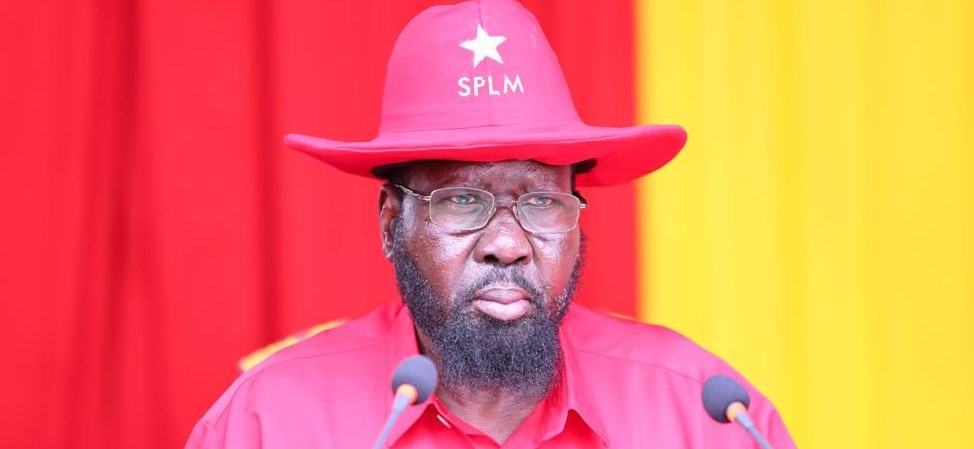
At the moment, South Sudan presents a paradox that persists in antiquity: a regime that seems politically overriding, governmentally pervasive, and militarily rooted, yet progressively fragile under the hood. President Salva Kiir and his hollow Sudan People’s Liberation Movement (SPLM) regime appear to be holding the reins of formal authority by controlling the security infrastructure, the republic, albeit from Juba, and what is left of the economy, yet face widespread opposition, never-ending revolts, extraordinary collective disaffection, and ethical collapse. This illogicality is structural rather than accidental.
When scrutinized through the postulations of the great 14th-century Tunisian Arab scholar Ibn Khaldun—principally his theory of ʿasabiyyah (social cohesion)—the route of the SPLM junta reveals itself not as an abnormality, but as a near definitive illustration of how long-ruling and self-serving organizations degenerate and finally fall.
The Khaldunian Cycle is a 14th-century theory developed by historian Ibn Khaldun in The Muqaddimah that explains the rise and fall of empires over a roughly 120-year (three to four-generation) span. [It has not even been a generation since the SPLM junta rose to power in an independent South Sudan]. The theory posits that nomadic groups with strong social cohesion (‘asabiyyah) conquer sedentary civilizations, gain luxury, become decadent, and are eventually conquered by a new, cohesive group.
The cycle involves distinct stages of development and decay:
- Genesis and Expansion: A new ruling group with strong ‘asabiyyah overcomes opposition, establishing authority through martial prowess and shared hardship.
- Prosperity and Consolidation: The dynasty secures power, leading to economic growth and cultural flourishing, but the ruling elite begins to embrace luxury and complacency.
- Decline and Collapse: Social cohesion erodes as the elite becomes self-indulgent and corrupt; the loss of ‘asabiyyah makes the state vulnerable to conquest by a new group with stronger solidarity, restarting the cycle.
Ibn Khaldun argued that this decay is inevitable because the luxuries of settled urban life weaken the fighting spirit and communal bonds that originally enabled the dynasty’s rise, creating a structural vulnerability that allows newer, more cohesive groups to replace the established power.
I am not going to write this small missive in academic fashion, but rather simply, for wider reach and easier understanding by the common South Sudanese. I will relate the current circumstances of the SPLM junta, and by extension, South Sudan, to certain aspects of Ibn Khaldun’s theory.
SPLM’s ʿasabiyyah, which ‘conquered’ South Sudan
The SPLM/SPLA was indeed born from many of the conditions Ibn Khaldun identified as fertile ground for political ascendancy. Indeed, successive governments in Sudan were not strong or stable after independence in 1956. Sudan experienced chronic political instability, characterized by a rapid succession of weak democratic governments, multiple successful and failed military coups, and long-lasting civil wars, almost immediately after gaining independence.
Emerging from marginalization of the then Southern Sudanese and other Sudanese peoples by successive Islamic-led regimes in Khartoum, insecurity, and violent state failure since the 1950s, the late Dr. John Garang’s SPLM/SPLA was forged in hardship. It possessed:
• Ideological clarity and a semblance of internal discipline
• Strong personal loyalty among most cadres
• A mutual sense of historical mission
• Inclination to subordinate individual gain to mutual survival
This was typical ʿasabiyyah. The liberation struggle in Sudan was sustained not because the SPLM had superior resources or technology, but because it was cohesive while the state it confronted was delegitimized, disjointed, and internally hollow.
In Khaldunian terms, the SPLM junta was a marginal force that conquered the center, albeit by being handed Southern Sudan through a peace agreement after 21 years of war, and later, the Republic of South Sudan, through a referendum. At this juncture, you might have realized that I use junta and regime interchangeably to refer to the SPLM. Technically, a junta is a group, often military leaders, that seizes power by force, typically following a coup. A regime is a broader term for any system of government, often used negatively to describe an authoritarian, illegitimate, or non-democratic rule. While all juntas are regimes, not all regimes are juntas. Due to its history, SPLM presents as both!
From revolutionary unity to institutional luxury
Conversely, Ibn Khaldun’s dominant intuition is what comes after conquest.
Once triumphant, conquering groups inevitably settle. They inherit wealth, bureaucracy, urban comfort, and the temptations of permanence. No other group has aptly demonstrated this more than the SPLM political and military elite and their children and cronies, who flaunt their loot in South Sudan and in the region, and even in the diaspora. Over time, the very conditions that once produced unity dissolve it.
The Republic of South Sudan, under the SPLM junta, has now traversed all the intermediate stages of this cycle:
1. Settlement and prosperity – crude oil inflows, donor inflows, relative stability [it was brief, with war erupting barely two years after independence], regional influence [By way of being the entire region’s largest market, a net importer of goods and services, and one of the largest exporters of refugees.]
2. Proliferation of institutions– an amorphous state contraption to stay in power
3. Elite reproduction – power circulates within families, networks, and patronage systems
4. Moral erosion – ideology dies, and privilege takes over
5. Disunity– loyalty becomes strong-armed, transactional, or compulsory
Nowadays, the SPLM regime does not rule through shared ideological belief, but through bribes, terror, surveillance, division, and fear—strong pointers that ʿasabiyyah has broken down.
Force, wealth, and technology as signs, not solutions
The regime’s defenders often point to control of the military, the police, the courts, and the economy, all of which have collapsed under the SPLM junta, as evidence of invincibility. Ibn Khaldun cautions otherwise.
Resources and technology do not create power; they only sustain it when cohesion already exists. Once unity is lost, these same tools accelerate decay:
• A large army becomes an encumbrance when loyalty is bought rather than believed
• Surveillance breeds resentment rather than legitimacy
• Patronage disintegrates capability and trust
• Longevity produces fatigue, not reverence
South Sudan increasingly looks like a shell whose capacity for intimidation disguises an internal emptiness of accord.
Proliferation of rebellion and the re-emergence of the margins
The rise of numerous armed opposition groups under the likes of the politically incarcerated First Vice President Dr. Riek Machar, and Generals Thomas Cirillo, Stephen Buay, Pagan Amum, Simon Gatwech et al., symbolizes the reemergence of the margins challenging a corrupt and inept center in Juba.
The support for the various opposition groups and their leaders is drawn disproportionately from:
- Unemployed and other youth excluded from economic mobility
- Veterans of the liberation struggle who were discarded and never paid pensions or gratuities
- Urban poor, informal settlements, and refugees
- Communities with no stake in the patronage order
- People disillusioned by the SPLM junta’s failure to deliver essential services
- Perennially unpaid civil servants, members of the armed forces, and other government employees
- Citizens who have been denied the right to choose their leaders
- People who are bound more by shared grievance than by material reward
- Individuals and communities who were abused by the SPLM/SPLA during and after the liberation struggle, and there are many
- People who desire a democratic South Sudan
- People who have been chased off their lands
New ʿasabiyyah forms not from abundance, but from shared pressure. The regime’s attempts to suppress this movement through violence paradoxically strengthen its cohesion, confirming Ibn Khaldun’s principle that hardship intensifies solidarity.
The Great Sullen Majority and the collapse of mutual purpose
The scariest and most dangerous moment for any regime is not when it is opposed, but when it is no longer believed in. South Sudan now displays typical signs of this incurable stage:
- Official narratives that are unconvincing
- Explosive anger mixed with prevalent political apathy
- A generational rift between rulers and ruled
- Institutions perceived as instruments, not arbiters
- Many broken promises to deliver essential services
Empires, Khaldun stresses to us, fall long before their walls are penetrated. They fall when citizens no longer see the state as an extension of themselves.
The end is unavoidable, not looming
The SPLM junta will not fall next week. The contention is more fundamental: the SPLM regime has shattered the social unity that once justified its existence during the liberation struggle and sustained its rule during the interim period of the Comprehensive Peace Agreement (CPA) from 9 July 2005 to 9 July 2011, and for a brief period after the country’s independence. The junta now rules by force and lethargy rather than conviction and unity. In Khaldunian parlance, it has entered the final stage of the cycle.
Once the center is disjointed, complacent, and dense, the margins do not need superior weapons to prevail. They need only cohesion, patience, and time.
South Sudan is not exempt from this historical pattern. If anything, it confirms what history has repeatedly shown: States do not fall because they are weak; they fall because they have forgotten how to be one. In our case in South Sudan, the SPLM dictatorship did not even attempt to build a state, but deliberately obliterated the few ingredients and materials that were present and ready for the job. Now, the center cannot hold!
The author, Koka Lo’Lado, is an editor and can be reached via kokalolado@gmail.com
The views expressed in ‘opinion’ articles published by Radio Tamazuj are solely those of the writer. The veracity of any claims made is the author’s responsibility, not Radio Tamazuj’s.

 and then