



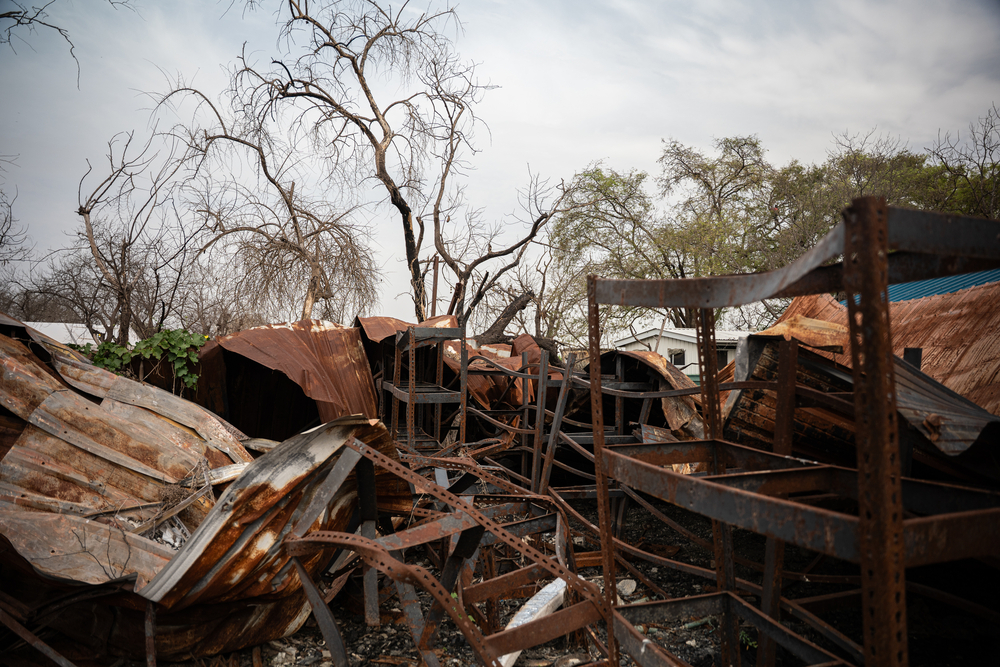
Aid group Doctors Without Borders (MSF) said on Wednesday there has been no accountability one year after a government airstrike on its hospital in Old Fangak, Jonglei State, which it described as part of a wider pattern of attacks that have severely reduced access to healthcare in conflict-affected areas of South Sudan.
MSF said the hospital in Old Fangak was bombed on May 3, 2025, in an attack it attributed to government forces, despite what it said were clearly marked facilities and shared GPS coordinates. It said a drone strike later hit a nearby market. Seven people were killed and 27 were injured, including four MSF staff members. The hospital has not reopened.
The aid agency also cited a separate bombing of its hospital in Lankien in February 2026, along with looting of facilities in Ulang, Pieri and Akobo, and cases of staff abductions. It said all affected facilities were either destroyed, suspended or rendered non operational, with only a partial resumption of basic services at a primary healthcare centre in Pieri.
MSF said that in Jonglei State, where it estimates more than one million people live in conflict affected areas, only two hospitals it supports in Chuil and Paguir are still functioning. It warned that any further disruption could collapse remaining access to surgical and emergency care.
“The bombings of Old Fangak and Lankien by South Sudanese government forces cannot go unanswered,” MSF President Isabelle Defourny said in a statement. She called on authorities to explain the incidents and to publicly commit to protecting hospitals and medical workers, saying attacks on healthcare violate international humanitarian law.
South Sudanese authorities could not immediately be reached for comment.
MSF said that since January 2025, it has recorded 12 attacks on its staff and facilities across South Sudan, all in opposition controlled areas. These include airstrikes, looting incidents and abductions. It said none of the affected hospitals have fully resumed operations.
The organisation said the broader conflict has intensified since early 2025, with rising clashes between government forces, the South Sudan People’s Defence Forces and allied Ugandan troops, and opposition groups including the SPLA IO, NAS and the Nuer White Army.
It said airstrikes have increased sharply, with 138 recorded in 2025 compared with two in 2024, and at least 18 more reported between January and March 2026, mostly in Jonglei State. MSF said only government aligned forces and their allies are believed to have aerial strike capability.
MSF said the loss of facilities has left hundreds of thousands of people without access to care. It estimated that more than 400,000 people lost access to MSF supported healthcare after the Old Fangak bombing and looting in Ulang in 2025, and a further 366,000 lost access in early 2026 following the Lankien attack and other incidents.
It said there is now no surgical capacity in the affected areas of Jonglei State.
The group also described deteriorating conditions in Akobo, where it said a government evacuation order in March gave residents and aid agencies 72 hours to leave before a military offensive. It said the hospital was later looted and most of the town was abandoned.
“Elderly people and people with disabilities were left behind. People were killed, they died from hunger and lack of water,” an MSF staff member in Akobo said, according to the statement.
MSF called on all parties to the conflict to end attacks on medical facilities and ensure their protection, adding that those responsible for violations must be held accountable.

 and then