



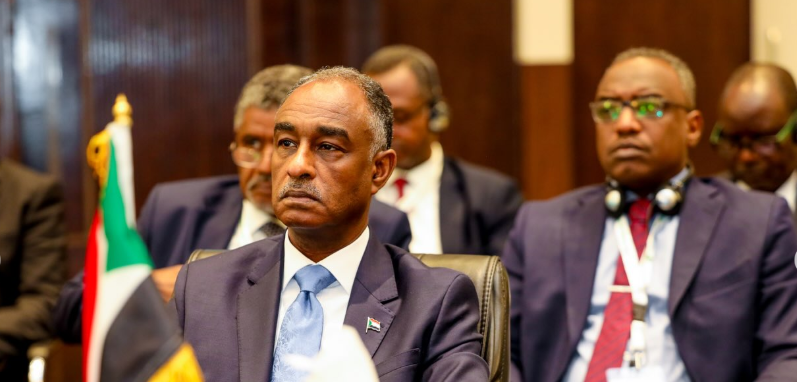
The Intergovernmental Authority on Development (IGAD) has renewed its call for an immediate and unconditional ceasefire in Sudan, urging the warring parties to protect civilians and allow humanitarian aid to reach those in need.
In a communiqué issued after a meeting of its Council of Ministers in Djibouti on Tuesday, the regional bloc said Sudan’s war had created a severe humanitarian crisis and called for a Sudanese-led political process to end the conflict.
IGAD also said mediation efforts should be coordinated, arguing that fragmented initiatives could not replace a coherent peace process.
The regional bloc called for coordinated diplomacy involving the African Union, IGAD, the United Nations, the League of Arab States and other key international partners.
It also demanded the protection of civilian infrastructure and “safe, rapid and unimpeded” humanitarian access.
IGAD said almost 19.5 million people in Sudan are facing crisis levels of hunger, while an estimated 825,000 children under five are expected to suffer severe acute malnutrition in 2026.
It said about nine million people remain displaced by the conflict.
The war between Sudan’s army and the paramilitary Rapid Support Forces (RSF) began in April 2023 after a power struggle between the two sides.
The conflict has since caused widespread displacement, disrupted food supplies and severely damaged civilian infrastructure.
IGAD said Sudan had resumed its full membership of the regional bloc on 9 February 2026 following diplomatic efforts by Djibouti, which currently chairs the organisation.
It also welcomed the reopening of the IGAD mission in Sudan following a visit to Khartoum by IGAD Executive Secretary Workneh Gebeyehu in July.
The regional bloc reaffirmed Sudan’s sovereignty, unity and territorial integrity, saying these principles are “not negotiable”.
IGAD’s latest position comes as international efforts to end the war continue amid worsening humanitarian conditions and concerns over declining humanitarian funding.
The regional bloc said the international community should sustain and, where possible, expand humanitarian financing for the region because of a contraction in global aid.
The IGAD Council of Ministers met on 15 September in Djibouti for its 74th Extraordinary Session.

 and then