



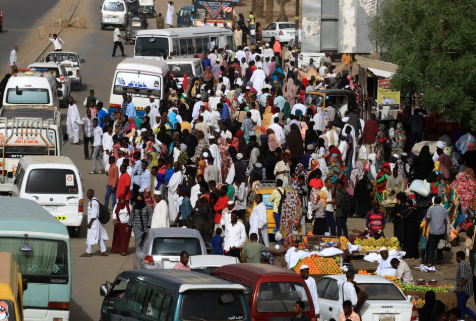
The fuel and transport crisis in Sudan’s capital, Khartoum, has worsened in recent days amid acute supply shortages and a sharp rise in fuel prices.
The situation has brought public transport to a near standstill, placing additional pressure on residents, drivers and farmers, as living costs and service-related challenges mount in several Sudanese cities.
In the Al-Shuhada area of Omdurman, Mohammed Saif, a student, complained of overcrowding and difficulties finding public transport, saying large numbers of passengers had been left stranded while waiting for vehicles.
“The authorities should deploy additional buses to ease the movement of residents,” he said.
Meanwhile, Ali Al-Amin, a Khartoum resident, said drivers are being forced to spend an entire day queuing at petrol stations before returning to work the following day.
“The situation has negatively affected our livelihoods and household incomes,” he lamented.
The impact of the crisis has extended beyond the transport sector to agricultural activities. Mohammed Abdallah, a farmer, said the market price of a jerrycan of diesel, equivalent to four gallons, had risen to around 600,000 Sudanese pounds.
“This sharp increase will drive up agricultural production costs,” he warned. “I appeal to the Ministry of Agriculture and relevant authorities to intervene and ease the burden on farmers.”
In response to the transport crisis, Khartoum State Police have launched a mass transport initiative, deploying ten trucks belonging to the Operations Department to carry residents between different areas of the state. The initiative is intended to ease overcrowding and help stranded passengers reach their destinations.
“The vehicles will be deployed along designated routes, and we will continue this operation until the fuel crisis is resolved,” the Khartoum State Police media department said in a statement.
The developments come amid a wider crisis affecting fuel supplies, transport costs and essential services across Sudan.
Cities including Omdurman, Khartoum and Bahri, as well as Kosti, Wad Madani, Sennar, Damazin, El Obeid, Kadugli, El Fasher and Nyala, are facing varying degrees of difficulty in accessing fuel and maintaining services and transport networks, against the backdrop of the ongoing war and deteriorating economic conditions.
The crisis has raised concerns that its effects could further disrupt residents’ mobility, markets and agricultural activities, at a time when large sections of the population depend on public transport and fuel to meet their daily needs and sustain their livelihoods.

 and then