



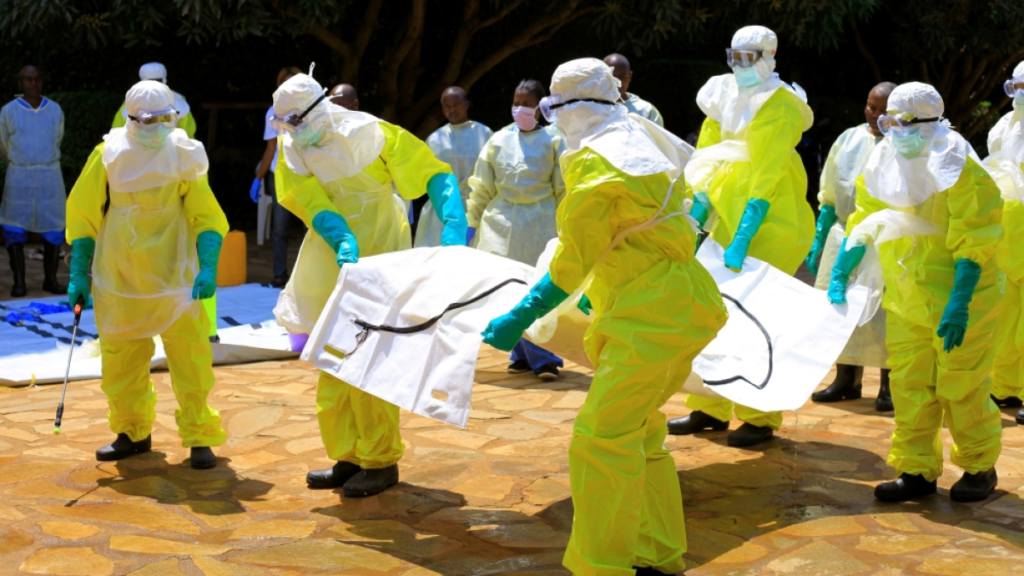
France has confirmed its first case of Ebola, involving a doctor who recently returned from a humanitarian mission in the Democratic Republic of Congo (DRC), the health ministry said on Wednesday.
The ministry said the doctor was “immediately admitted to a specialised facility” and was in a stable condition.
French authorities said the risk of transmission to the general public was “very low” and that efforts were underway to identify and monitor people who may have come into contact with the patient.
The case comes as the DRC battles an Ebola outbreak that was declared last month. Health authorities and international experts believe the virus had been circulating for several weeks before the outbreak was officially announced.
According to health officials, more than 260 people have died and about 1,000 infections have been recorded in the central African nation.
The French case is the first confirmed Ebola infection in Europe linked to the current outbreak. An American doctor who tested positive for the virus in the DRC was treated in Germany last month.
Neighbouring Uganda has also reported Ebola cases. The World Health Organization (WHO) says at least 20 infections and two deaths have been confirmed there.
Healthcare workers are among those most vulnerable to infection because Ebola spreads through direct contact with the bodily fluids of infected people.
The current outbreak is caused by the Bundibugyo strain of the Ebola virus, for which no approved vaccine is currently available.
France has established a dedicated monitoring system for humanitarian workers and other personnel returning from the DRC, the health ministry said.
Africa’s Centres for Disease Control and Prevention (Africa CDC) and U.S. public health authorities have warned that the outbreak could become one of the largest Ebola epidemics on record if transmission is not brought under control.
In the DRC, infections are concentrated in the eastern provinces of Ituri, North Kivu and South Kivu. Ituri accounts for more than 90% of confirmed cases.
The WHO has warned that ongoing insecurity in eastern Congo is hampering efforts to contain the disease. The M23 rebel group controls large areas of North Kivu and South Kivu, complicating access for health workers and response teams.

 and then