



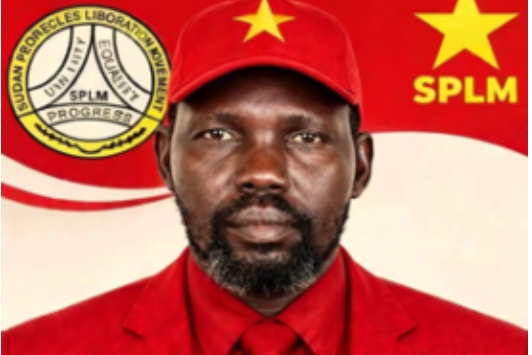
Former Eastern Equatoria State deputy governor who also served as former governor of the defunct Imotong State, Nartisio Loluke Manir, on Thursday officially declared his intention to contest for the governorship of Eastern Equatoria State.
He unveiled an ambitious political agenda centered around security, economic transformation, education, agriculture, and the protection of public resources.
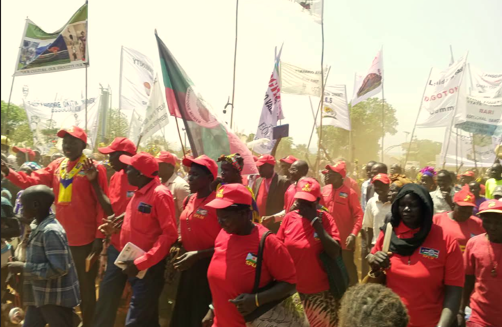
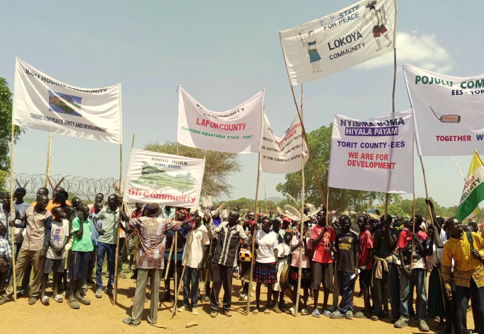
Addressing supporters and political stakeholders in Torit Town, Lokule presented himself as a candidate for what he described as visionary, accountable, and servant-based leadership, repeatedly emphasizing his proposed governing philosophy: “People First!”
“I hereby humbly and officially express my intention to contest for the position of governor of Eastern Equatoria State,” he declared. “Eastern Equatoria is endowed with valuable resources, but our people have not sufficiently benefited from these natural resources.”
He called for greater transparency and accountability in resource management.
He said his ambition was driven by the desire to restore the state’s legacy, improve human dignity, and ensure that its natural resources benefit the people rather than individuals and foreign interests.
“My priority is the provision of security and peace,” Lokule stated. “We must ensure stability, unity, peace and development in Eastern Equatoria State.”
The former governor pledged to pursue reconciliation among communities and rebuild trust between civilians and organized forces. He also proposed tackling cattle raiding through youth employment, modern technology to track criminals, and the recovery of stolen livestock.
His proposed security agenda also includes strengthening the legal framework governing security institutions and supporting sustainable security sector reforms.
In one of the strongest messages of his declaration, Lokule challenged the way natural resources and investment opportunities are handled in Eastern Equatoria.
“We should not give land to investors without first understanding what is beneath it; we must know the resources we have and negotiate from a position of informed decisions,” he said.
He proposed geological and physical surveys to establish the state’s resource potential, saying informed negotiations would strengthen the government’s position and protect the interests of local communities.
On economic development, he argued that electricity, roads, reliable institutions and a favorable business environment were essential for attracting investment.
“For economic development to take off, an enabling environment, robust infrastructure and credible institutions must be created,” Lokule stated.
He also proposed establishing a youth empowerment fund, improving access to banking and microfinance services, expanding the state’s revenue base and promoting private-sector investment.
Lokule identified agriculture as a major opportunity for transforming Eastern Equatoria’s economy and reducing dependence on imported food.
“We must prioritize technology-driven agriculture that ensures quality food on every table and in every household,” he said.
His proposals include developing the green belt, supporting commercial farming, expanding fish production, and improving water harvesting for agricultural purposes.
He also highlighted the agricultural potential of the Lafon plains and other productive areas, proposing increased production of sorghum, groundnuts and tea, including the development of the Apatalanga Tea Project.
On education, Lokule proposed constructing boys’ and girls’ boarding schools across all eight counties of the state, improving learning facilities, motivating teachers and expanding technical and vocational education. He also pledged to pursue the full establishment of Torit University of Science and Technology.
“Education requires an inclusive approach. We must focus on the child, the teacher, the parent, the learning environment, our partners and the government,” he said.
In the health sector, he promised to prioritize qualified and experienced health personnel, strengthen health facilities and improve birth registration to ensure children receive official birth certificates.
He further identified sports as an important tool for youth development, proposing the construction of Father Saturlino Ohure Stadium and greater investment in sporting activities.
Lokule also placed tourism and cultural preservation among his proposed development priorities. He identified Fula Falls as a potentially important tourism attraction and pledged to improve road access to the site to attract visitors from within South Sudan and neighboring countries.
He also called for the protection of Eastern Equatoria’s cultural heritage, saying children should be encouraged to learn their mother tongues alongside regional and international languages.
“Our cultural heritage must be promoted and protected. Our children should know their languages alongside regional and international languages,” he said.
On livestock, particularly in Greater Kapoeta, he proposed strengthening animal health services and improving livestock production to create opportunities for meat exports.
Lokule thanked the leadership of the Sudan People’s Liberation Movement (SPLM) Party, particularly party chairman, President Salva Kiir. He said he was submitting his declaration for the party’s scrutiny, consideration, and approval.
“I now put this declaration before you, the people of Eastern Equatoria State, especially the voters, to carefully make your individual and informed decisions,” he said.
Manir previously served as Deputy Governor of Eastern Equatoria under Governor Louis Lobong Lojore following the 2010 elections. He was later appointed Governor of the former Imotong State in 2015, after South Sudan created 28 states.
His declaration adds to the political activity surrounding the anticipated gubernatorial contest in Eastern Equatoria.
Whether his people-first agenda will translate into broad political support will ultimately depend on the SPLM’s internal selection process and the decisions of voters.

 and then