



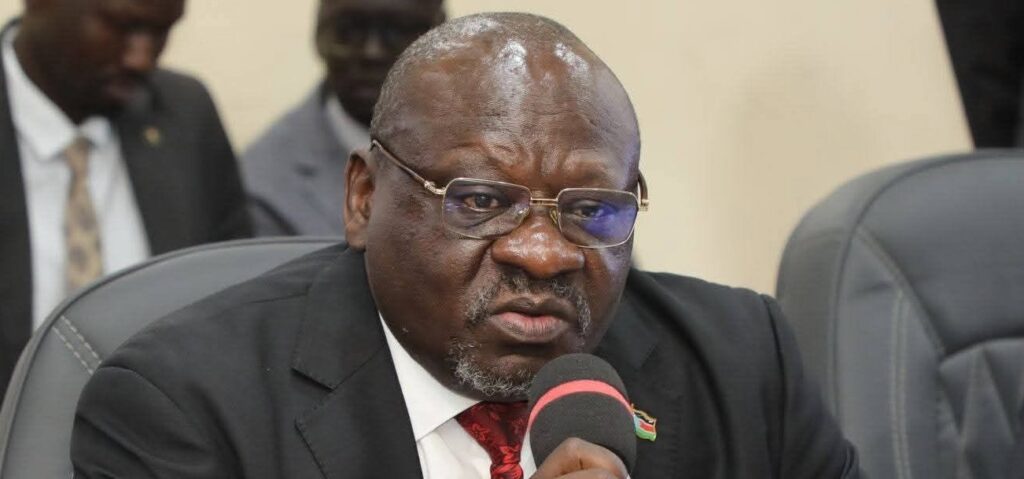
A senior government official on Wednesday proposed the construction of a ring road around Juba as part of a long-term strategy to modernize the capital and accommodate rapid urban growth.
Speaking during the launch of the World Bank’s South Sudan Urbanization Review Report in Juba, Benjamin Ayali, undersecretary for planning at the Ministry of Finance and Planning, said the city needed a phased development approach that prioritizes critical infrastructure while addressing existing urban challenges.
Ayali said authorities could establish a ring road around the city and focus future development outside the current urban centre before gradually redeveloping older sections of Juba.
“We can have a ring road that keeps where the problem is because we are not going to displace people. We need to have a long-term plan, have a ring road, develop outside, and then come back to Juba and reset it in a better way,” he said.
He said urban development requires a clear framework to guide investment decisions and the allocation of limited resources. While roads, schools, health facilities, drainage systems and electricity are all important, Ayali said the government must prioritize projects that address the most pressing needs.
He identified poor roads and the lack of an effective sewage system as among the biggest challenges facing residents, particularly during the rainy season.
“If I am to decide and suggest, my suggestion should be roads tied together with the sewage system because that is where our people suffer most. When it rains, you can physically see how people are suffering,” he said.
Ayali said urban development would need to be implemented gradually over several years, allowing authorities to expand infrastructure while working within financial constraints.
Juba City Mayor Christopher Sarafino Wani Swaka welcomed calls for increased investment in urban infrastructure but said the city council faces major financial and technical challenges in delivering services.
“We are one level of government that does not have any funding from anywhere,” Swaka said, adding that the city council relies entirely on locally generated revenue.
He said declining economic activity, inflation and lower revenue collection had constrained the council’s ability to address infrastructure gaps in the capital.
Swaka said the council was implementing reforms to improve revenue collection through greater transparency, accountability and the use of technology to reduce leakages.
The mayor also said the council had begun a city-wide mapping exercise for the first time in more than a decade to help authorities better understand Juba’s growth and identify areas requiring investment.
“Since 2014, when we last mapped Juba, the city has never been mapped again. We need to know what we have so that we can properly plan and budget for development,” he said.
Swaka called for stronger coordination between national, state and local authorities, saying urban development requires sustained investment and improved technical capacity within public institutions.
Both officials emphasized the need for long-term planning and increased investment to meet Juba’s growing infrastructure needs as the city continues to expand.

 and then