



Neutrality is often praised as a virtue in international politics. That may be true for states with enough power to compel others to respect their neutrality. For weaker states, however, neutrality is rarely perceived as wisdom. More often, it is interpreted as hesitation, fear, or an inability to make difficult strategic choices. In my view, this is precisely the mistake South Sudan’s government has made since the outbreak of the war in Sudan.
Juba approached the conflict as though it were merely a temporary power struggle between two generals. In reality, it was—and remains—a war that is reshaping Sudan’s political order and, potentially, the geopolitical balance of the entire region. In wars of this magnitude, there is no such thing as “cost-free neutrality.” Every political choice carries consequences, including the choice not to choose.
Niccolò Machiavelli warned of this centuries ago in The Prince. He argued that a ruler who remains neutral between two competing powers risks earning neither gratitude nor trust. The eventual victor is unlikely to reward those who stood aside when the outcome was uncertain, while the defeated side will have little capacity to repay neutrality. History repeatedly demonstrates that neutrality is not automatically respected; its value depends on the state’s ability to defend both its interests and its credibility.
What is particularly striking is that South Sudan has not even secured the principal benefit it appeared to seek: avoiding political hostility. Throughout the conflict, a number of Sudanese politicians, commentators, and activists have accused Juba of sympathizing with the Rapid Support Forces, despite the South Sudanese government’s official policy of neutrality and mediation. Whether those accusations are justified is, in many ways, beside the point. In politics, perceptions often carry greater weight than facts, especially when they shape the thinking of future decision-makers.
In my opinion, Juba fundamentally misread the political nature of this war. Sudanese politics, like politics across much of the region, has a long institutional memory. The end of a war does not erase wartime alignments. If the Sudanese Armed Forces ultimately consolidate military victory, it would be politically naïve to assume that Khartoum will simply overlook how neighboring states positioned themselves during one of the most consequential conflicts in Sudan’s modern history.
This is particularly significant because South Sudan is not in a position to absorb prolonged political tensions with Sudan. Its economy depends heavily on oil exports transported through Sudanese territory. The two countries also share extensive borders, intertwined security concerns, deep commercial ties, and complex social and tribal connections. Any erosion of political trust could therefore have consequences extending far beyond diplomacy, affecting South Sudan’s economic stability and national security.
I believe the leadership in Juba made a strategic miscalculation by assuming that acting as a mediator would automatically grant it political immunity. Mediation is not achieved simply by declaring neutrality; it requires the confidence of all parties involved. Judging by the persistent suspicions surrounding Juba’s role, that confidence was never fully established. In effect, South Sudan neither gained the full trust of either side nor insulated itself from political suspicion.
Some may disagree with this assessment, but I do not believe neutrality itself was the problem. Rather, the problem lay in misunderstanding the nature of the conflict. International politics is not governed by goodwill or moral aspirations alone. It is ultimately shaped by interests, power, and strategic calculations. Alliances are remembered not because of diplomatic statements, but because of actions taken when the stakes are highest.
For that reason, I fear that South Sudan may discover that the true cost of its neutrality will not be paid during the war, but after it ends. History shows that victors often define the political order that follows conflict. They also tend to distinguish between those they considered reliable partners and those they viewed as passive observers.
In my view, one of the gravest mistakes a small state can make is to assume it can indefinitely remain in the middle while a conflict reshapes the regional balance of power. At such historical turning points, there is rarely a true middle ground. There are winners, losers, and those who realize too late that what they believed to be neutrality was, in fact, merely the postponement of an unavoidable political reckoning.
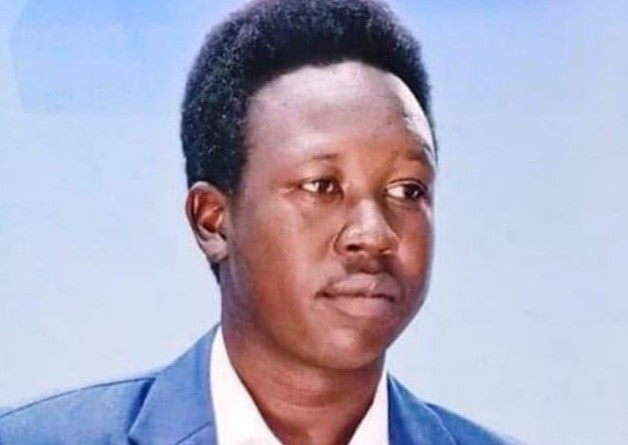
The writer is a South Sudanese political activist based in Paris, France. He can be reached via email: mahmoudakot@gmail.com
The views expressed in ‘opinion’ articles published by Radio Tamazuj are solely those of the writer. The veracity of any claims made is the responsibility of the author, not Radio Tamazuj.

 and then