



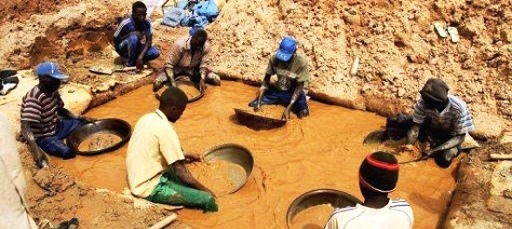
South Sudanese officials, academics and conservation groups have warned that weak laws and limited environmental safeguards could turn the country’s emerging mining sector into a source of conflict, displacement and ecological damage unless reforms are strengthened.
The warning was issued on Thursday during a one-day workshop on community benefits and awareness in mining held at the University of Juba and organised by African Parks in partnership with the Ministry of Wildlife Conservation and Tourism.
Participants said South Sudan’s growing interest in mining and rare earth minerals presents economic opportunities, but also carries risks for communities and wildlife in a country still grappling with fragile institutions and weak governance.
Professor Alikaya Aligo Samson, dean of the School of Architecture, Land Management and Urban and Regional Planning at the University of Juba, said natural resources could drive growth if properly managed.
“Development must not come at the expense of people and the environment,” Samson said, warning that poorly regulated mining could lead to environmental degradation, displacement and loss of livelihoods as well as damage to wildlife habitats.
He said communities in mining areas should be recognised as stakeholders whose land rights and livelihoods must be protected, not treated as obstacles to development.
Samson said the workshop series, which will continue monthly for three months, would examine community rights, environmental impacts, legal gaps and policy reforms needed for sustainable mining.
Deputy Vice Chancellor of the University of Juba, Professor Isaac Cleto Rial, said weak legal frameworks and weak rule of law in fragile states often deter responsible investment and increase risks in extractive industries.
He warned that expanding exploration for rare earth minerals without adequate policy safeguards could undermine both economic stability and the environment.
“The rapid and unprecedented expansion of mining could severely affect our economy, create social divisions and threaten ecological habitats,” Rial said.
He said the university would support research and academic dialogue aimed at promoting responsible mining and sustainable development.
African Parks South Sudan country representative Florington Aseervatham said the organisation, which co-manages Boma and Badingilo national parks, views wildlife migration corridors as a key national asset.
“Our wildlife is our new oil,” Aseervatham said, referring to the annual migration of millions of antelope across the Boma–Badingilo landscape.
He urged mining companies to carry out community consultations and environmental impact assessments before operations begin, adding that properly managed projects elsewhere had contributed to local infrastructure and services.
South Sudan’s Mining Minister Losuba Ludoru Wango said the sector should not only focus on mineral extraction but also on protecting communities, the environment and national security.
“If mining is well managed, it can become a major driver of socioeconomic growth,” Wango said.
He warned that weak oversight could instead result in environmental degradation, displacement, insecurity and loss of livelihoods.
Wango said local communities must remain central to mining policy and called for transparency, consultation and fair distribution of benefits.
He also urged closer cooperation between government institutions, civil society, communities and international partners to promote responsible mining practices.
“Let this workshop not end as a one-day conversation,” Wango said. “It should be the beginning of stronger collaboration, practical policy recommendations and sustained public awareness.”

 and then