



The civil society group Community Empowerment for Progress Organization (CEPO) on Friday welcomed the United Nations Security Council’s renewal of sanctions on South Sudan, saying the measures remain necessary amid ongoing political tensions and slow progress in the implementation of the 2018 peace agreement.
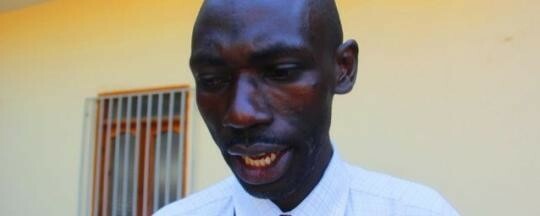
Edmund Yakani, CEPO’s executive director, told Radio Tamazuj that the sanctions reflect what he described as persistent failures by South Sudan’s leadership to fully implement the Revitalized Peace Agreement and complete a transition from conflict to democratic governance.
“If our leaders genuinely commit themselves to moving the country from violence to peace, the sanctions would become irrelevant and could eventually be lifted,” Yakani said.
He said continued international pressure was linked to what he called “political delays, ongoing detentions and shrinking civic space,” warning that a lack of trust among political actors was undermining the peace process.
The U.N. Security Council on Friday adopted Resolution 2821 with nine votes in favour and six abstentions, extending an arms embargo, travel bans and asset freezes, as well as the mandate of the Panel of Experts assisting the South Sudan Sanctions Committee until July 1, 2027.
The African members of the council — the Democratic Republic of Congo, Liberia and Somalia — abstained, alongside China, Pakistan and Russia.
Under U.N. rules, at least nine votes in favour and no veto from any of the five permanent members — the United States, Russia, China, Britain and France — are required for adoption. The resolution was drafted by the United States and renewed without substantive changes to the previous year’s text.
The United States said President Salva Kiir’s government had made insufficient progress in advancing the peace process, contributing to the continuation of the sanctions regime.
The sanctions, first imposed in 2015 after South Sudan’s 2013 civil war, target individuals and entities deemed to be undermining peace, and have been repeatedly renewed due to ongoing political instability and delays in implementing key reforms.
Yakani, one of South Sudan’s leading civil society activists, called for the release of political detainees, including First Vice President Dr. Riek Machar, former officials and other individuals held across the country.
He said such steps would help rebuild trust among political actors and create conditions for dialogue.
“Releasing political detainees is a key confidence-building measure,” Yakani said. “Without it, it is difficult to create an environment for meaningful dialogue or credible elections.”
He also urged authorities to convene an inclusive national political dialogue without preconditions and accelerate preparations for long-delayed elections.
Yakani called on President Salva Kiir to convene an urgent high-level meeting to review obstacles to implementation of the peace agreement and identify steps to move the transition forward.
“The leadership has the primary responsibility to make peace happen,” he said. “A genuine and timely political transition remains the most effective path toward lifting sanctions.”
South Sudan remains under a fragile transitional arrangement under the 2018 peace deal, which has repeatedly missed key deadlines on security unification, governance reforms and election preparations.

 and then