



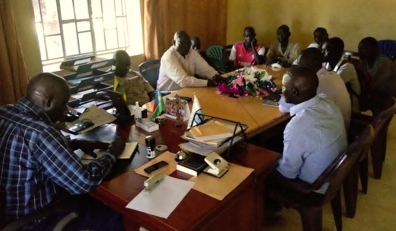
Blood compensation has emerged as a central issue in renewed efforts to end a nearly two-year conflict between the communities of Mura-Hatiha and Tirangore in Hiyalla Payam in Eastern Equatoria State’s Torit County.
Intellectuals from the two communities reaffirmed their commitment to pursuing compensation for lives lost during the violence, saying the process is critical to preventing further revenge attacks and creating a foundation for lasting peace.
The resolution was made during a follow-up meeting chaired by Torit Mayor and Caretaker Commissioner of Torit County, Eddy William Ponsiano Bolye, at his office on Monday.
More than 40 people are reported to have been killed during the conflict, which began over disputes surrounding farmland and later escalated into cyclic revenge attacks, deepening mistrust and prolonged demands for justice and accountability.
Oduho George Ben, a member of the Hatiha Community, called for the communities to confront individuals who instigate violence while rejecting collective blame.
“We have instigators in all these communities,” he stated. “We need to know the consequences of this violence against our brothers and sisters.”
According to Oduho, the close relationship between the two communities makes continued violence particularly painful, noting that people from Mura-Hatiha and Tirangore are intermarried and share social ties.
He warned against revenge and what he described as betrayal within the community, urging local leaders and intellectuals to develop a common vision for their people.
According to him, peace would allow communities to focus on pressing development challenges, including the lack of schools and adequate healthcare.
“The dividends of peace are very important to all of us,” he said.
From the Tirangore Community, Juma Akang appealed to alleged conflict instigators to abandon violence, warning that continued fighting could result in more deaths and further isolate communities from humanitarian assistance.
He said the conflict has already contributed to hunger and hardship, with humanitarian organisations reportedly scaling back or closing some operations in affected areas.
“The two villages are one family, he said. “It will affect us in the future, and many people will die.”
Akang urged residents to change their attitudes toward one another, pray and promote peace rather than encouraging violence.
He also called for communities to protect their livestock and other resources without resorting to armed confrontation.
For Akang, blood compensation is an important component of reconciliation, but he stressed that consultations and community awareness must accompany the process.
“Consultations should be done and awareness on our people to prevent further aggression and to end this conflict once and for all,” he stated.
Former Torit Mayor Joseph Oswaha said the return of relative peace provides an opportunity to address the difficult question of compensation. He described compensation as a sensitive and technical matter that requires careful engagement at the community level.
“Most of those boys are traumatized. They care less, and nothing good can come out of them,” he said. “Let us go and talk to them peacefully with elders and intellectuals.”
Oswaha also suggested that community-level engagement should take place before a larger peace conference so that participants arrive prepared to discuss reconciliation rather than reopening old wounds.
Chairing the meeting, Mayor Eddy William Ponsiano Bolye said compensation must be seriously considered because the scale of bloodshed has become unacceptable.
“The issue of compensation is true because this is too much and it must happen,” he said. “Revenge came because there is no compensation.”
The mayor also cautioned against blaming entire villages for crimes committed by individuals. He said neither Mura-Hatiha nor Tirangore should be collectively labelled as criminal communities, arguing that perpetrators should be identified and held individually accountable.
“No village is criminal, but it is individuals who cause crimes,” he said.
Bolye proposed joint patrols involving the two communities as one way of helping identify individuals responsible for attacks and preventing further violence.
He also said residents should not be prevented from escorting their animals, but stressed that livestock movements should be accompanied by mechanisms that reduce the risk of confrontation.
The mayor further raised concern about songs and chants that allegedly glorify conflict, death, and criminality.
“Let us sing old songs, not the new ones. Let us not chant criminal issues, glorifying death. This must stop,” he stated.
The meeting comes as the two communities attempt to move away from a prolonged cycle of farmland disputes, killings and revenge attacks.
Participants stressed that ending the violence will require more than a declaration of peace. They called for accountability, compensation, trauma healing, community dialogue and mechanisms to prevent fresh clashes.

 and then