



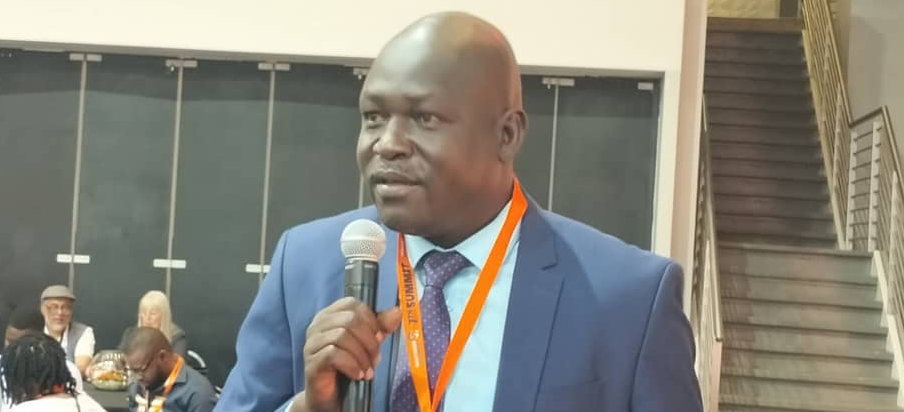
A panel of experts convened by the South Sudan Human Rights Defenders Network (SSHRDN) has found that the country’s enabling environment for civil society is weak.
The South Sudan Human Rights Defenders Network (SSHRDN) convened an Expert Panel last week to assess the enabling environment for civil society in South Sudan against the Six Principles of the European Union Strengthening an Enabling Environment for Civil Society (EU SEE).
Following extensive discussions and assessment of the legal, institutional, political, civic and digital environment, the Expert Panel assigned an overall score of 2 out of 5 “Weak” to South Sudan’s enabling environment for civil society.
“The finding reflects a civil society environment in which important legal and institutional frameworks exist in principle, but their implementation and practical application remain inadequate,” a press statement extended to Radio Tamazuj reads in part. “Civil society organisations, human rights defenders, journalists and other civic actors continue to face significant barriers that limit their ability to operate freely, participate meaningfully in public affairs and contribute to democratic governance.”
“The assessment considered six key principles: respect and protection of fundamental rights; a supportive legal and regulatory framework; access to sustainable resources; an open and responsive state; supportive public culture and discourse on civil society; and access to a secure digital environment.” It added.
The overall rating of “Weak” is a clear indication that substantial reforms are required to create an environment in which civil society can operate safely, independently, and effectively. The assessment also highlights the gap between commitments made in law and policy and the lived realities of civil society actors across the country.
James Bidal, Head of the SSHRDN Secretariat, stressed that a strong and independent civil society is essential to South Sudan’s peacebuilding, democratic transition, accountability and respect for human rights. Civil society organisations and human rights defenders play a critical role in documenting violations, promoting public participation, providing civic education and amplifying the voices of communities that are often excluded from decision-making processes.
“A score of 2 out of 5 is a serious warning that South Sudan’s civic space remains fragile and that the conditions necessary for an independent and effective civil society are not yet in place,” said Bidal. “This assessment should not be viewed simply as a score, but as a call for urgent and concrete action.”
SSHRDN called on the Government of South Sudan to immediately protect fundamental freedoms, including freedom of expression, peaceful assembly and association, and to end arbitrary restrictions and interference with these rights.
“The Government should strengthen the legal and regulatory framework for civil society, remove unnecessary administrative and political barriers, and ensure organisations can access sustainable resources without interference or discrimination,” the statement said. “SSHRDN further demands meaningful civic participation and government responsiveness, including genuine consultation with civil society in policymaking and decision-making processes.”
The Network said South Sudan must protect digital civic space by preventing unlawful surveillance, censorship, digital intimidation and other restrictions on online expression, access to information and civic participation.
SSHRDN further urged international partners, donors and regional and international human rights mechanisms to use the findings of the assessment to strengthen support for South Sudanese civil society and human rights defenders, particularly those working under increasingly challenging conditions.
“The overall score of 2 (“Weak”) should be understood as both an assessment of the current environment and a baseline for reform,” the statement said. “SSHRDN remains committed to engaging constructively with government institutions, civil society, development partners and other stakeholders to advance the reforms necessary to build a more open, inclusive and rights-respecting civic space in South Sudan.”
The Expert Panel brought together a diverse and multidisciplinary group of experts drawn from civil society, academia, independent government commissions, legal practitioners, technology and intellectual property fields, the United Nations Commission on Human Rights in South Sudan, and other independent experts.
“This broad composition ensured that the assessment reflected a range of professional perspectives, technical expertise and practical experience in evaluating South Sudan’s civic and human rights environment,” the statement concluded.

 and then