



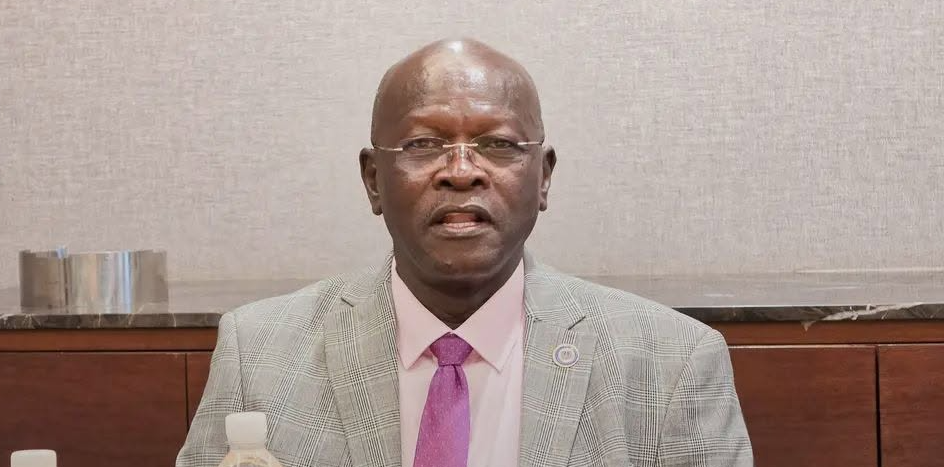
South Sudanese civil servants have continued reporting for work despite going years without regular salaries, a presidential adviser said, describing their endurance as exceptional compared with workers in neighbouring countries, where he suggested three months without pay could trigger widespread unrest.
Joseph Ngere Paciko, the presidential adviser on governance, said South Sudanese workers continued performing their duties despite prolonged salary arrears, raising questions about how public institutions remain operational while government employees struggle to meet their basic needs.
“Try this in one of these countries around us. Somebody staying without salary for three months, you will see fire all over the place,” Paciko said on Wednesday at the conclusion of a two-day China-South Sudan Governance Roundtable in Juba.
“South Sudanese are very resilient. It is not because they enjoy it.”
Paciko’s remarks offer an unusually stark acknowledgement of the hardship facing government employees, highlighting a contradiction at the heart of South Sudan’s governance challenges: workers are expected to maintain public services despite the government’s failure to pay them regularly.
“A South Sudanese goes to work, with his or her money, comes back the same, seven days a week, one month, the money is not paid, and he or she still continues to go to work,” he said.
“Where is this thing coming from? We don’t know.”
He described South Sudanese as among the most resilient people in the world, citing their ability to endure prolonged hardship. However, he acknowledged that their continued attendance at work should not be interpreted as satisfaction with their circumstances.
“No. They know how to deal with this situation, but because they will change their living standard of life. One day,” he said.
His comparison with neighbouring countries underscored the severity of the salary situation, although he did not identify the countries to support his prediction of unrest after three months without pay.
South Sudan has struggled with economic instability, conflict and weak public institutions since gaining independence in 2011. Its heavy dependence on oil revenues has left government finances vulnerable to disruptions in production and exports, alongside reports of widespread corruption.
Professionals, including teachers, health workers and doctors, whose monthly salaries typically range from about $10 to $50, face prolonged payment delays, forcing many to rely on loans, informal work or family support.
Trade unions and civil society groups have repeatedly urged the government to clear salary arrears, warning that chronic non-payment has weakened public services, fuelled staff absenteeism and eroded confidence in state institutions.
Governance under scrutiny
The presidential adviser argued that effective governance requires strong institutions, discipline, respect for the rule of law and long-term planning, citing China’s development experience as a source of lessons for South Sudan.
He described general elections as essential to government legitimacy and accountability, arguing that electoral promises must translate into tangible improvements in people’s lives.
“Elections are the contract. Governance is delivery,” he said. “Because elections are equal to promise. And governance is about delivery.”
The adviser said about 1.8 million people had registered to vote at 3,180 centres, staffed by 22,260 personnel. He defended South Sudan’s approach to elections, arguing that the country should develop its own processes rather than simply adopt models from elsewhere.
“South Sudan also believes in South Sudanese solutions to our own problems,” he said.
Institutional weaknesses
Another government official at the roundtable acknowledged serious weaknesses within South Sudan’s governance institutions, including problems affecting law enforcement and the implementation of legislation.
Dr. Lawrence Kamilo, a consul general in the Ministry of Justice and Constitutional Affairs, said institutional shortcomings are undermining the country’s ability to implement laws effectively.
“The institutions of governance in South Sudan suffer from a lot of problems. And I have observed there are a lot of challenges, from law enforcement agencies to those who implement the law, even my colleagues,” Kamilo said.
He called for stronger coordination among government institutions and increased cooperation with international partners, particularly China, to strengthen governance and accelerate development.
Kamilo also identified inadequate electricity supply as a major obstacle to industrialisation and investment, urging the government to acquire technology and expertise from countries such as China and India to build local capacity.
For his part, Chinese Ambassador to South Sudan Ma Qiang said China’s governance model was based on the leadership of the Communist Party of China, a people-centred approach and efforts to promote a more just and equitable global governance system.
He said China was ready to deepen exchanges with South Sudan on governance and state administration, share its experience in national development and work with Juba towards modernisation.
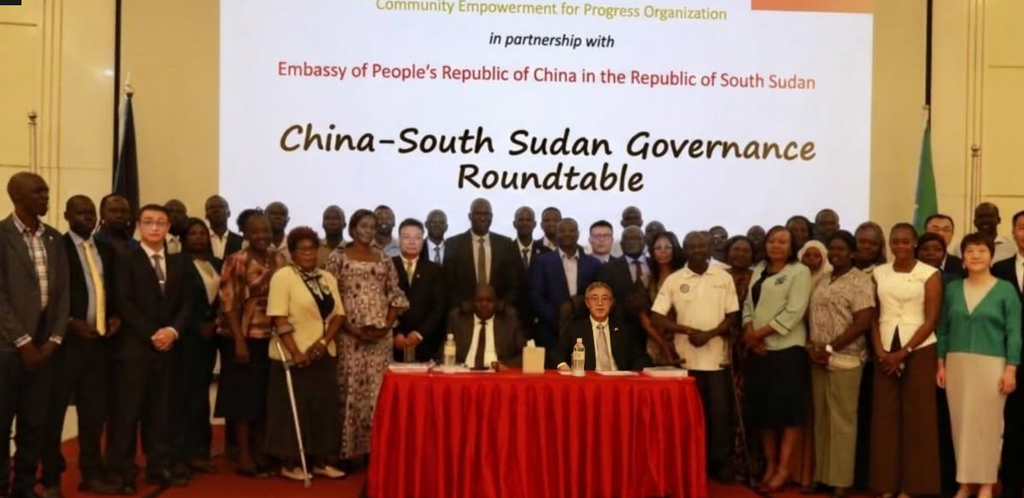
The officials were speaking at the conclusion of the two-day China-South Sudan Governance Roundtable in Juba, which brought together government representatives, diplomats, civil society representatives, experts and other participants to discuss governance, development and institutional cooperation.

 and then