



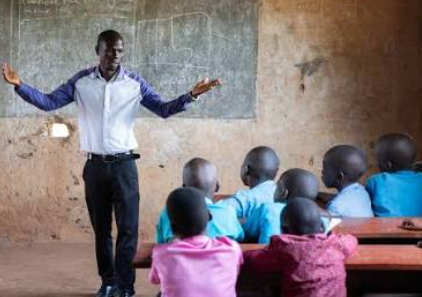
The Yei River County Education Department is concerned over a shortage of professional teachers, saying most primary and secondary schools are now relying heavily on volunteer teachers.
Education officials attribute the situation to economic challenges and prolonged delays in government salaries, which they say have forced many qualified teachers to leave the profession for other opportunities.
Speaking during a stakeholders’ panel meeting, County Education Director Rev. Philip Taban Issa said only a fraction of professional teachers remain in classrooms, with volunteer teachers making up the majority of the teaching workforce.
He called for collective responsibility among education stakeholders, including parents, to address the challenges facing the education sector and improve the quality of learning across the county.
“We have few teachers in schools who are trained, and the few we have are deserting the profession because of the challenges we are facing,” he said. “All of you, the teachers and even parents, are the eyes of the school. If something is wrong, they all have to find solutions.”
Manase Modi, Deputy Education Supervisor of Otogo Payam, linked some of the challenges in classrooms to the involvement of untrained volunteer teachers and called for mandatory teacher training for anyone intending to teach, saying proper training is essential to improving teaching standards and the quality of education.
“Some of the teachers, those who are volunteers, they don’t even know how to deliver a lesson. They go to the class and just talk anyhow, and they cannot simplify their English to a simple form that a learner will understand,” he said. “Next year we are going to make another ideology of changing the training. It must be mandatory training. Before you can become a teacher or a volunteer, you must get those skills from the college.”
Meanwhile, Thomas Muto, a government teacher who quit the profession, described the situation as difficult for professional teachers and cited delayed or no payment from the government compared to NGOs as a key reason for leaving. He added that the profession is now crowded with untrained teachers, particularly senior four leavers.
“I have taught a lot of children, but the reason why other teachers and I quit the profession is that there is poor appreciation of all teachers within Yei and South Sudan at large,” he said. “NGOs and other non-governmental partners pay their employees on time; they give good incentives or salaries in terms of how the market fluctuates, but as teachers, we find it so difficult because we cannot handle the situation right now. You find senior four leavers teaching because they know there is no other way of surviving in Yei other than teaching and riding boda-bodas.”
“Volunteer teachers do not even teach for long because they look for other opportunities,” he added.
Education stakeholders warn that the growing reliance on untrained volunteers risks lowering education standards in Yei.
They are calling on the national and state governments, partners, and communities to prioritize timely salary payments, teacher training, and incentives to retain qualified teachers.

 and then