



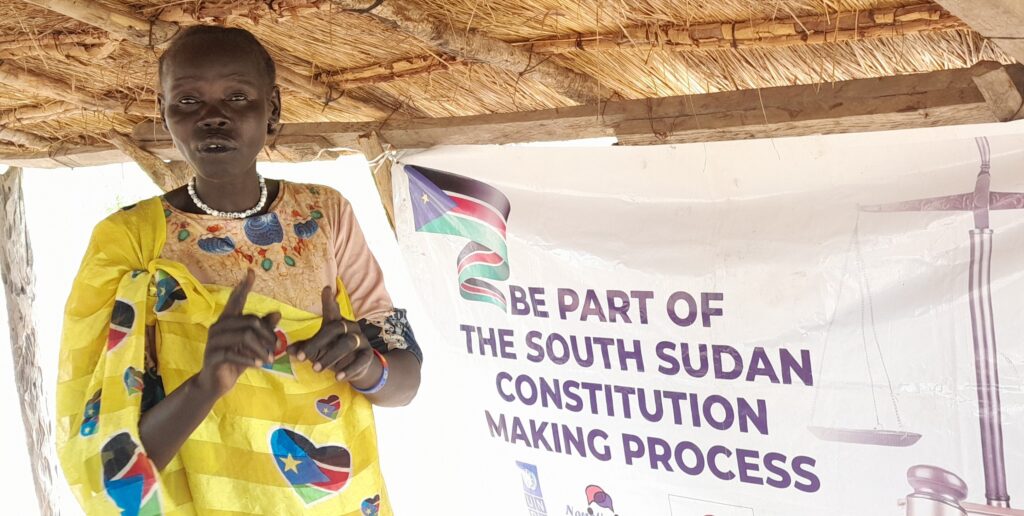
Women in Northern Bahr el Ghazal state have called for greater representation in political decision-making and the upcoming general elections, urging political parties to honour commitments to women’s participation in leadership.
Angelina Agau Thiep, a women’s rights activist based in Aweil, told Radio Tamazuj on Sunday that women could help improve public services and promote development if given opportunities to participate in decision-making.
“The election of leaders means the delivery of services to communities and improving people’s lives. If we women are part of the process as decision-makers, it will be a guarantee for development and service delivery,” she said.
Awut Kuel Kuel, a member of the ruling Sudan People’s Liberation Movement (SPLM), said women in the state had been sensitised about the elections and that some plan to contest governorship and legislative seats.
“We have sensitised women and the people of Northern Bahr el Ghazal state to prepare for the upcoming elections, and many women will contest for governorship and legislative positions,” she said.
Awut urged voters to choose candidates who would prioritise security, peace, child protection and development.
“I want every South Sudanese to be careful when selecting leaders because the elections are important for us, our children, development, security and peace,” she said.
Angelina Achan, a representative of a women’s group in Aweil West County, cited the construction of the county headquarters under former commissioner Abuol Akok as an example of women’s contribution to public leadership.
Achan said Akok had overseen the construction of the headquarters using concrete materials, contrasting the project with the work of previous commissioners.
South Sudan is scheduled to hold its first general elections since independence on Dec. 22, 2026, after repeated delays. The 2018 peace agreement provides for at least 35% representation of women in government institutions, while the National Elections Commission says 35% of seats in the national and state legislative assemblies are reserved for women under the electoral system.
However, the implementation of commitments to women’s representation has faced criticism from women’s rights advocates, who say women remain underrepresented in leadership.
 and then