



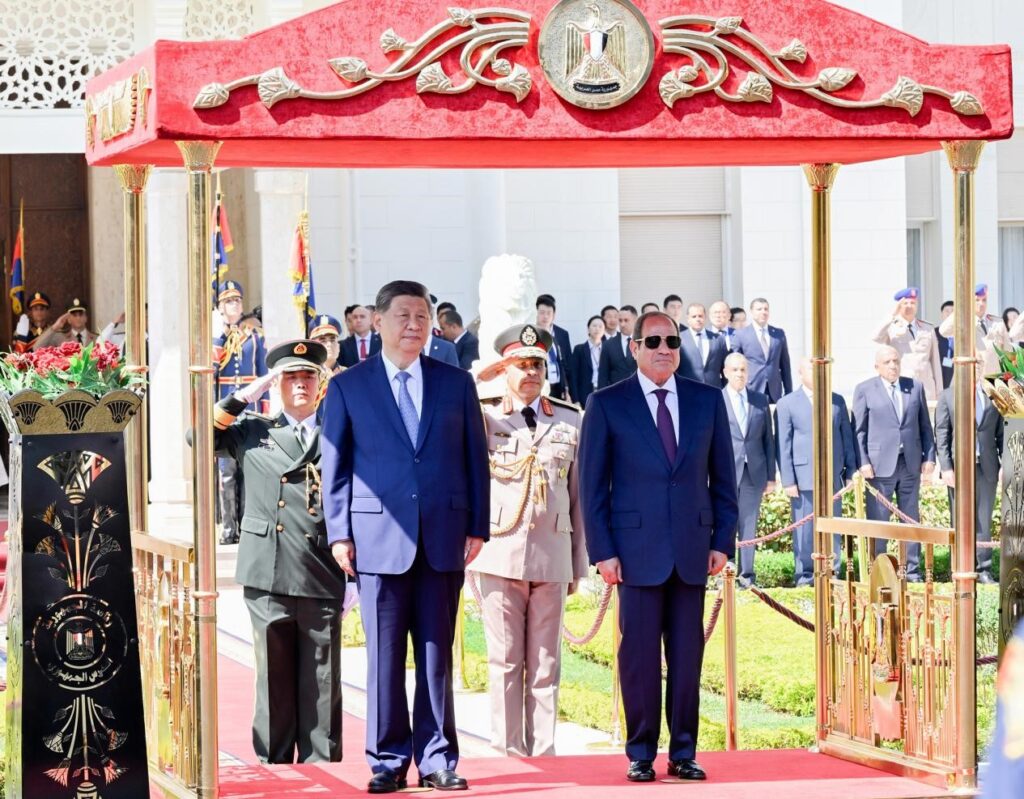
Chinese President Xi Jinping called on Wednesday for a new security architecture in the Middle East based on regional dialogue, development and respect for national sovereignty, as he met Egyptian President Abdel Fattah al-Sisi during a state visit to Cairo.
Xi said countries in the region should take greater responsibility for their own security and reject external interference, according to China’s state news agency Xinhua.
“People in the Middle East should remain masters of their own affairs,” Xi said, adding that regional countries should strengthen dialogue on peace and security and explore a new security architecture.
Xi’s comments come as the Middle East faces renewed instability, including the continuing conflict between Israel and Hamas and tensions involving Iran.
He said a comprehensive approach is needed to address interconnected conflicts and said the Palestinian issue remained at the core of the region’s problems.
Xi also called for stronger international coordination, saying the United Nations Charter and international law should guide the handling of Middle East affairs. He urged the international community, particularly outside powers, to avoid double standards and respect the sovereignty and territorial integrity of regional states.
China is ready to work with Middle Eastern countries to protect international shipping routes, promote economic development and build mutual trust, Xi said.
Sisi welcomed China’s approach, saying Egypt appreciates Beijing’s “consistent, objective and impartial” position on Middle East issues, according to Xinhua.
Egypt is ready to coordinate further with China to ease regional tensions, safeguard stability and explore a new security architecture, Sisi said.
Deeper China-Egypt ties
Xi’s visit coincides with the 70th anniversary of diplomatic relations between China and Egypt. The two countries issued a joint statement on Wednesday pledging to deepen their comprehensive strategic partnership.
The statement said the two sides would strengthen coordination on global governance and support the interests of developing countries and the Global South.
They also agreed to encourage Chinese companies to expand cooperation in industrial localisation and support Egypt’s digital transformation and sustainable development, Xinhua reported.
During the talks, Xi called for greater cooperation in areas including green energy, electric vehicles, aerospace, the digital economy and agricultural technology.
The two sides signed more than 20 cooperation documents covering sectors including digital economy, science and technology, education and transportation, according to Xinhua.
China has become a major economic partner for Egypt, including through investment and infrastructure projects linked to the Suez Canal economic corridor.
The China-Egypt TEDA Suez Economic and Trade Cooperation Zone near Ain Sokhna has attracted more than 200 companies, according to China’s state-run Global Times.
China’s expanding economic ties with Egypt come as Cairo seeks investment and technology to support its industrial development and address economic pressures.

 and then