



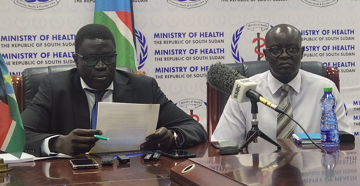
South Sudan’s preparedness capacity against Ebola Virus Disease has improved to 65 percent in July from 29 percent in May, the World Health Organization (WHO) has said, as the country strengthens measures to prevent possible importation of the virus from neighbouring countries.
WHO’s Health System Development Team Lead in South Sudan, Moses Ongom, said the country had progressively improved its readiness since an Ebola outbreak was reported in the Democratic Republic of Congo (DRC), with preparedness efforts focusing on surveillance, laboratory capacity, infection prevention and control, and emergency response systems.
“As of July, the total readiness capacity for South Sudan was at 65 percent, up from 45 percent in June and also up from 29 percent in May when the Ebola virus disease was first announced in the DRC,” Ongom told journalists in Juba on Tuesday.
He said the increased preparedness was necessary because continued Ebola transmission in the DRC and cross-border movement posed a risk of the virus being imported into South Sudan.
“South Sudan does not have any confirmed Ebola virus disease; however, given that we share borders with DRC, the risk of importation is therefore high,” Ongom said.
The Ministry of Health said South Sudan has not recorded any confirmed Ebola case, despite testing 13 suspected cases reported through surveillance systems and border screening points.
Dr Michael Mading, Acting Undersecretary at the Ministry of Health, said all suspected samples tested negative, with most alerts coming from Yambio and Nimule areas.
“South Sudan does not have any case of Ebola as of 28 July 2026,” he said. “We had 13 suspected cases, and they are all tested negative,” Mading said.
The government said it has intensified screening at key points of entry, including Nimule, Kaya, Yei River, and Juba, while surveillance has been strengthened in 15 counties bordering Uganda and the Democratic Republic of Congo.
WHO said county surveillance officers are conducting daily reporting to detect any possible Ebola alerts, with rapid response teams ready to investigate suspected cases.
The regional health concern comes as Ebola transmission remains active in parts of the DRC, where health authorities have reported 3,262 confirmed cases and 1,437 deaths, representing a case fatality rate of about 44 percent.
Uganda, which previously reported Ebola cases, has started a 42-day countdown after the discharge of its last patient on 16 July, according to the Ministry of Health.
South Sudan’s Ministry of Health urged communities to remain vigilant but avoid panic, saying current preparedness activities are preventive measures aimed at reducing the risk of an outbreak.
Preparedness efforts include enhanced surveillance, laboratory readiness, rapid response teams, infection prevention measures, public awareness campaigns, and coordination with health partners.

 and then